
What Are the Different Classes of Forklifts?
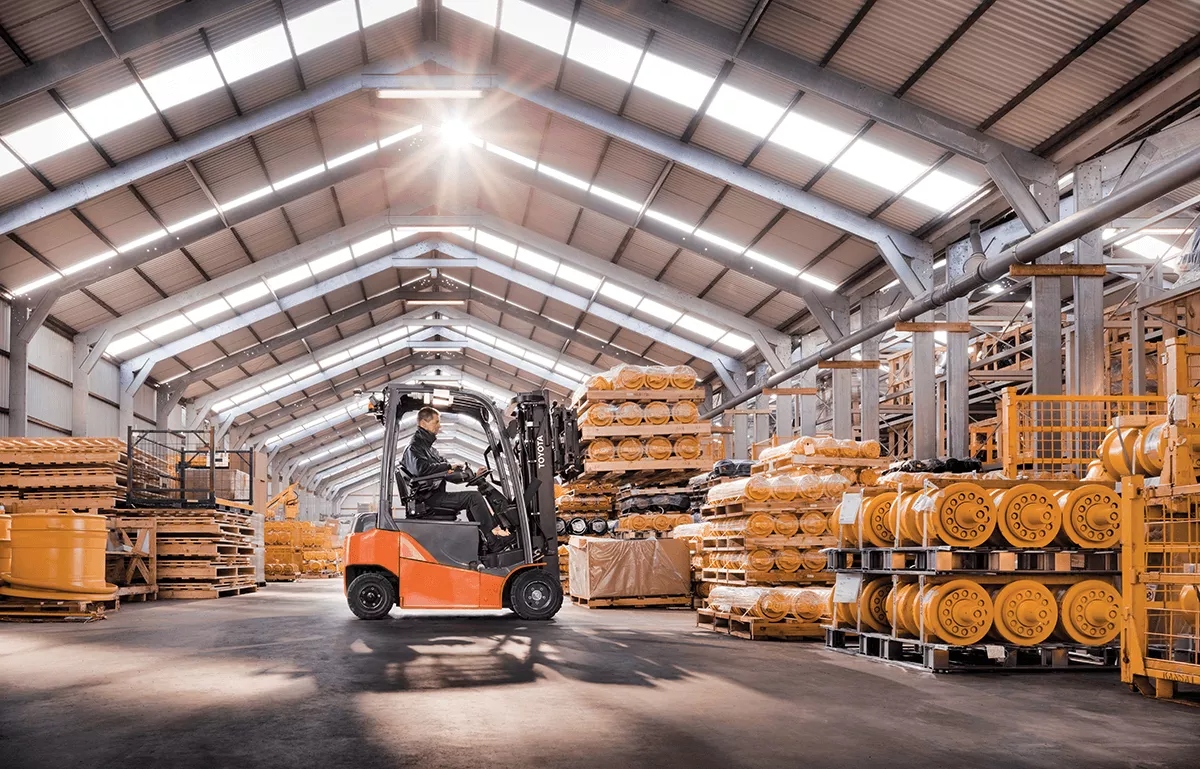
Understanding the different classes of forklifts is essential for warehouse safety, equipment selection, and OSHA compliance. OSHA classifies powered industrial trucks into seven distinct categories based on their power source, tire type, and operating environment. These classifications help businesses choose the right equipment, including modern Liftron forklifts, for specific job requirements.
Overview of the 7 OSHA Forklift Classes
Class I: Electric Motor Rider Trucks
These are battery-powered forklifts commonly used indoors. They are quiet, emission-free, and ideal for warehouses.
Class II: Electric Narrow Aisle Trucks
Designed for tight warehouse spaces and high stacking operations.
Class III: Electric Hand/Rider Trucks
Includes pallet jacks and walk-behind stackers used for short-distance material movement.
Class IV: Internal Combustion Cushion Tire
Used indoors on smooth floors; powered by gas or LPG with solid tires.
Class V: Internal Combustion Pneumatic Tire
Heavy-duty forklifts used both indoors and outdoors with air-filled tires for rougher surfaces.
Class VI: Electric/IC Tow Tractors
Designed primarily for pulling loads rather than lifting them.
Class VII: Rough Terrain Forklifts
Built for construction sites and uneven outdoor surfaces with large rugged tires.
Detailed Forklift Class Comparison
| Class | Description | Best Use Case |
|---|---|---|
| Class I | Electric rider forklifts | Indoor warehouses |
| Class II | Narrow aisle forklifts | High-density storage |
| Class III | Hand/pallet trucks | Short distance transport |
| Class IV | Cushion tire IC forklifts | Indoor smooth floors |
| Class V | Pneumatic tire IC forklifts | Mixed indoor/outdoor use |
| Class VI | Tow tractors | Material towing |
| Class VII | Rough terrain forklifts | Construction sites |
Which Class Do Liftron Forklifts Belong To?
Modern Liftron forklifts belong primarily to Class I electric motor rider trucks. They are powered by lithium-ion battery systems and are designed for indoor warehouse environments where zero emissions and quiet operation are essential.
These advanced forklifts provide long runtime, fast charging, and reduced maintenance compared to traditional internal combustion models.
Step-by-Step Guide to Choosing the Right Forklift Class
- Identify your work environment (indoor vs outdoor)
- Determine load weight requirements
- Evaluate aisle width and space limitations
- Choose power type (electric or IC)
- Select appropriate OSHA forklift class
Why Forklift Classification Matters
Forklift classification ensures that operators use the right equipment for the right job. Misusing forklift classes can lead to instability, reduced efficiency, and workplace injuries.
Companies using advanced systems like Liftron forklifts benefit from better energy efficiency, lower emissions, and improved warehouse productivity.
Conclusion
The 7 OSHA forklift classes cover a wide range of equipment designed for different environments and applications. Understanding these classifications helps businesses choose the right machine for maximum safety and efficiency.
Modern electric solutions like Liftron forklifts represent the future of Class I warehouse operations with cleaner, safer, and more efficient performance.

Add a review
Your email address will not be published. Required fields are marked *