
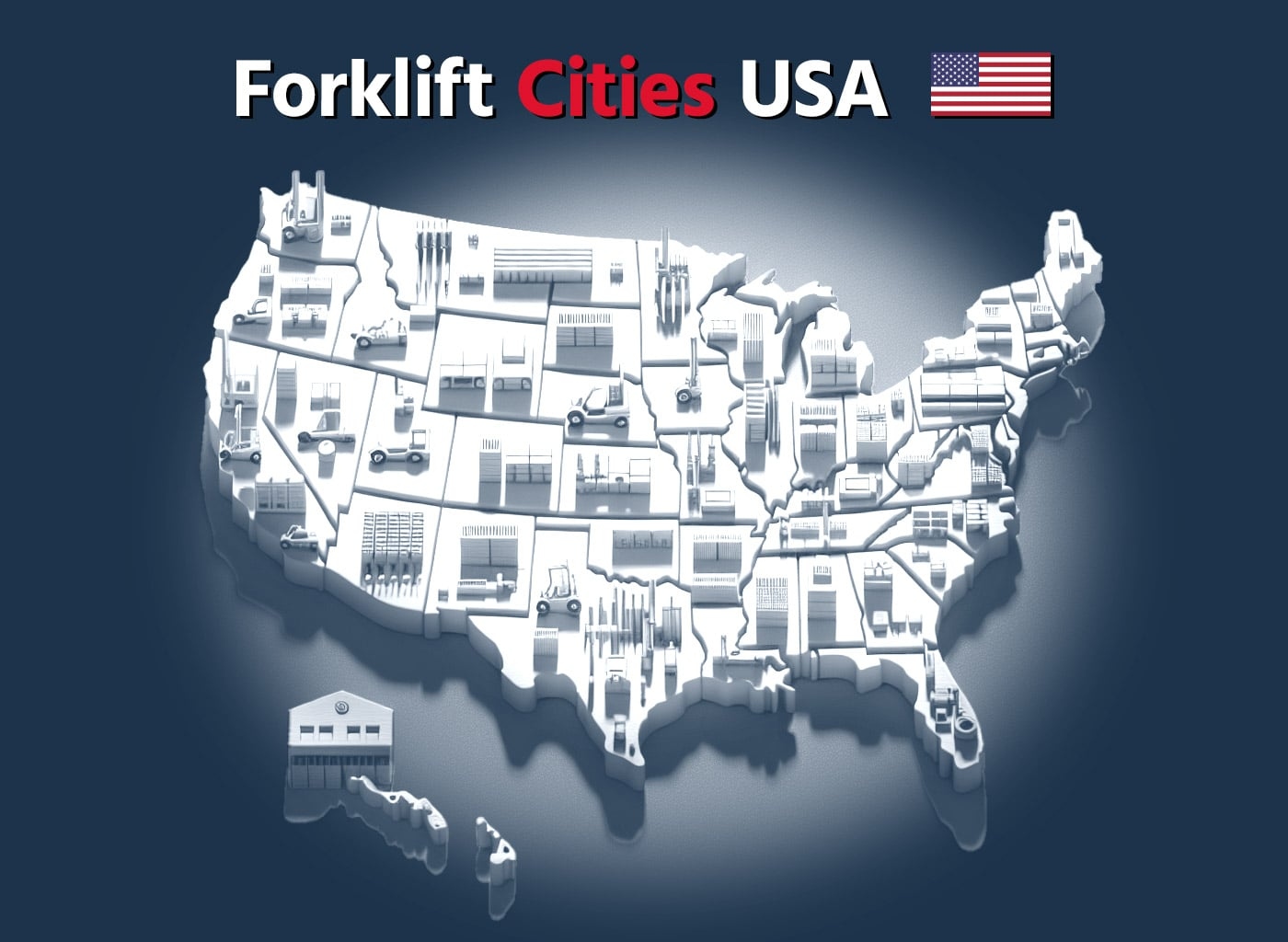
How Many Forklifts Are in the USA?
How Many Forklifts Are in the United States?
The United States has one of the largest forklift markets in the world. Industry safety and material handling sources commonly cite more than 850,000 forklifts operating across the country. These machines are used every day to move pallets, load trailers, unload containers, stack inventory, and support production lines.
Forklifts are essential because modern supply chains depend on fast movement of heavy goods. From a small warehouse with one forklift to a national distribution center with hundreds of lift trucks, these machines help businesses move products safely and efficiently.
The number also reflects the wide range of forklift types in use: electric counterbalance trucks, internal combustion forklifts, reach trucks, order pickers, pallet trucks, rough terrain forklifts, and specialized material-handling equipment.
Key Forklift Industry Statistics
The forklift industry is large because it serves nearly every physical-goods sector. Warehousing, manufacturing, retail, construction, food distribution, ports, agriculture, and recycling all depend on powered industrial trucks.
| Statistic | Estimated Figure | What It Means |
|---|---|---|
| Forklifts in operation in the USA | More than 850,000 units | A large national fleet supports daily material handling |
| Annual U.S. shipments and sales | Frequently above 200,000 new units | Demand remains strong across logistics and industry |
| Electric forklift share | Roughly 60% of operational forklifts | Electric adoption is growing due to lower emissions and indoor use |
| Material moving machine operators | Hundreds of thousands of workers | Forklift operation is a major part of the U.S. labor market |
| Main use environments | Warehouses, factories, ports, yards, and distribution centers | Forklifts are used wherever goods must be moved efficiently |
Why Are There So Many Forklifts in the USA?
There are so many forklifts in the USA because the country has a massive logistics network. Goods move through ports, rail yards, trucking terminals, warehouses, stores, manufacturing plants, and construction sites. At nearly every step, a forklift may be needed to lift, move, store, or load materials.
The rise of e-commerce has also increased demand for warehouse equipment. Online orders require fast picking, packing, replenishment, and shipping. Distribution centers need reliable forklifts to move pallets from receiving docks to storage racks and from storage areas to outbound shipping lanes.
Manufacturing is another major driver. Factories use forklifts to move raw materials, finished goods, parts, dies, packaging, and waste. In many plants, forklifts are part of the daily production flow.
What Industry Uses Forklifts Most?
Warehousing and storage is one of the biggest forklift-using industries in the United States. Distribution centers, third-party logistics providers, e-commerce warehouses, cold storage facilities, and retail fulfillment centers all rely heavily on forklifts.
Manufacturing is another major user. Automotive plants, metal fabrication shops, food processing facilities, plastics manufacturers, building material producers, and chemical plants use forklifts throughout production and shipping operations.
In general, the industries that use forklifts most are those that move palletized goods, heavy materials, or large-volume inventory every day.
| Industry | Why Forklifts Are Used | Common Forklift Types |
|---|---|---|
| Warehousing and storage | Receiving, storage, picking, replenishment, and shipping | Electric counterbalance, reach trucks, pallet trucks |
| Manufacturing | Moving raw materials, parts, finished goods, and packaging | Electric and internal combustion counterbalance forklifts |
| Retail distribution | Moving pallets from suppliers to stores and fulfillment centers | Reach trucks, order pickers, electric forklifts |
| Construction | Moving lumber, steel, blocks, equipment, and jobsite materials | Rough terrain forklifts and pneumatic tire forklifts |
| Ports and logistics yards | Handling containers, pallets, cargo, and heavy freight | Heavy-duty forklifts and yard equipment |
| Food and beverage | Cold storage, pallet movement, loading, and inventory rotation | Electric forklifts and warehouse trucks |
The Shift Toward Electric Forklifts
A major trend in the U.S. forklift market is the shift toward electric models. Electric forklifts are popular for indoor use because they produce no direct tailpipe emissions, operate quietly, and often require less routine maintenance than internal combustion trucks.
Companies are also paying closer attention to sustainability goals, warehouse air quality, energy costs, and maintenance schedules. These factors make electric trucks more attractive, especially for indoor distribution and manufacturing environments.
A modern electric forklift can help businesses reduce fuel handling, lower noise, and support cleaner warehouse operations. Lithium-ion battery technology has also improved charging convenience and daily uptime.
Why Annual Forklift Sales Matter
Annual forklift sales show how active the material handling market is. When U.S. shipments and sales exceed 200,000 new units, it means companies are expanding, replacing older equipment, or upgrading fleets to improve productivity.
Forklift sales are influenced by warehouse construction, retail inventory levels, construction activity, industrial production, e-commerce growth, and supply chain investment. When companies build more distribution centers or automate more logistics processes, forklift demand often increases.
Main Types of Forklifts Used in the USA
The U.S. forklift fleet includes many different designs. Each type serves a specific purpose based on load size, aisle width, lift height, floor surface, and operating environment.
| Forklift Type | Typical Use | Best Environment |
|---|---|---|
| Electric counterbalance forklift | General pallet handling and indoor loading | Warehouses and factories |
| Internal combustion forklift | Heavy loads and outdoor work | Yards, construction, and industrial sites |
| Reach truck | High-rack storage and retrieval | Narrow warehouse aisles |
| Order picker | Picking individual items from racks | Distribution centers |
| Pallet truck | Moving pallets over short distances | Retail, warehousing, and docks |
| Rough terrain forklift | Handling materials on uneven ground | Construction and outdoor yards |
How Businesses Estimate the Number of Forklifts They Need
A company does not choose forklift fleet size randomly. The right number depends on daily workload, shift length, pallet volume, aisle layout, travel distance, charging schedule, and maintenance planning.
- Calculate the number of pallets moved per shift
- Measure average travel distance from receiving to storage
- Review loading dock volume and truck schedules
- Identify aisle widths and rack heights
- Determine required load capacity and lift height
- Decide whether electric or internal combustion equipment fits best
- Plan for charging time, battery rotation, or fuel availability
- Include backup units for maintenance or peak demand
- Review operator availability and training needs
- Track utilization data and adjust fleet size over time
Forklift Operators in the USA
Forklifts also support a large workforce. The U.S. labor market includes hundreds of thousands of material moving machine operators, many of whom operate forklifts or related industrial trucks. These workers help keep freight, inventory, and production materials moving across the economy.
Because forklifts can be dangerous when operated incorrectly, operator training is essential. Employers must make sure workers are trained, evaluated, and authorized before operating a powered industrial truck.
Why Forklift Safety Matters at This Scale
When more than 850,000 forklifts are operating across the country, safety becomes a national workplace issue. Forklifts often work near pedestrians, racks, dock edges, trailers, and heavy loads. Even a small mistake can cause serious injury, product damage, or facility damage.
Safe operation depends on training, inspections, speed control, load stability, traffic management, and proper equipment selection. Choosing the right forklift for the work environment is also part of safety planning.
Conclusion
There are over 850,000 forklifts in operation across the United States, making forklifts one of the most important pieces of industrial equipment in the country. Annual sales frequently exceed 200,000 new units, and electric forklifts continue gaining share because of indoor air quality, lower noise, and sustainability goals.
The industries that use forklifts most include warehousing, storage, manufacturing, retail distribution, construction, ports, food and beverage, and logistics. As the U.S. supply chain continues to grow, forklifts will remain essential for moving goods safely, quickly, and efficiently.

Add a review
Your email address will not be published. Required fields are marked *