
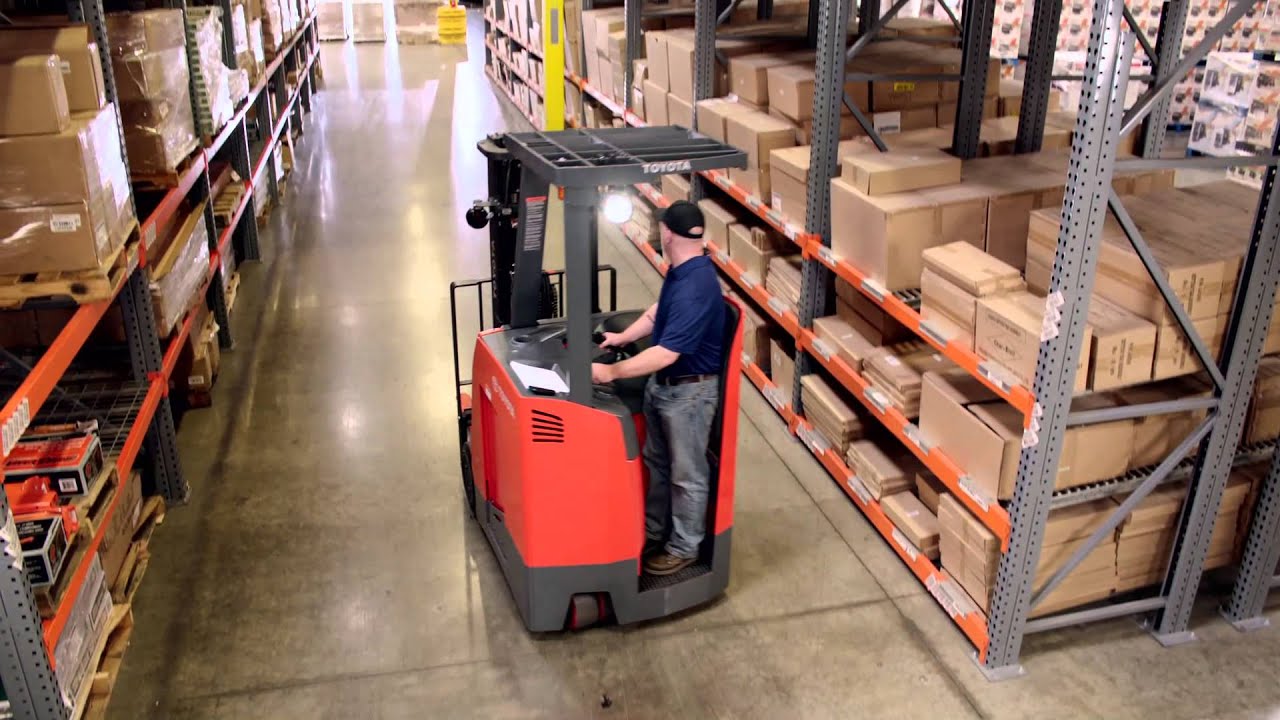
Is Changing the Steering Direction on a Stand-Up Forklift Illegal?
Why Steering Direction Changes Are a Serious Safety Issue
A stand-up forklift is designed with specific steering logic, control response, braking behavior, and operator positioning. When a company changes the steering direction, such as making the tiller or steering control respond in the opposite direction, the forklift may no longer operate the way the manufacturer originally certified it.
This matters because operators build muscle memory. If one truck turns one way and another truck turns the opposite way, a trained operator may react incorrectly in a tight aisle, near pedestrians, near racks, or while handling a pallet. Even a small steering-control difference can lead to rack impacts, product damage, dock incidents, or injuries.
For this reason, changing steering direction should be treated as a safety-related modification, not a simple preference adjustment.
Is It Illegal to Change the Steering Direction?
It depends on how the change is made and whether proper approval is obtained. In general, it is not automatically illegal to modify a forklift. However, making a modification without required approval can violate safety rules if the change affects capacity, stability, controls, or safe operation.
Under OSHA Standard 29 CFR 1910.178(a)(4), modifications and additions that affect capacity and safe operation must not be performed without the manufacturer’s prior written approval. If changes are approved, capacity, operation, and maintenance instruction plates, tags, or decals must be updated accordingly.
Because steering direction directly affects how the operator controls the truck, it can reasonably affect safe operation. That means changing it without manufacturer approval can create compliance and liability risks.
Critical Details to Consider
1. Manufacturer Approval
If you modify the steering direction on a stand-up forklift, the manufacturer must approve the change in writing when the modification affects safe operation. This applies whether the forklift is made by Crown, Raymond, Hyster, Yale, Toyota, or another manufacturer.
The approval should be documented and kept with maintenance records. If the manufacturer approves the modification, the truck’s instruction plates, control labels, and operating information may need to be updated so operators clearly understand the altered behavior.
2. Uniformity Is Key
Fleet consistency is extremely important. If one stand-up forklift steers differently from the others in the same facility, operators may become confused. This is especially dangerous in fast-paced warehouse environments where drivers switch between machines.
Many employers choose to keep all stand-up forklifts in the same facility configured the same way. This reduces training errors, improves consistency, and lowers the risk of wrong-direction steering during emergencies.
3. Safety Training
Any changed control system requires operator refresher training. Operators must understand how the modified steering works, how it affects travel direction, and how to control the truck safely in tight spaces.
Training should include hands-on practice, supervised evaluation, and documentation. Operators should not return to normal floor operation until they demonstrate safe control of the modified truck.
4. Updated Labels and Documentation
If the steering logic is changed, control markings and warning labels may need to be revised. A forklift with modified controls should not rely on outdated labels that describe the old steering response.
Clear documentation protects both operators and employers. It also helps maintenance teams and safety inspectors understand exactly what was changed.
Forklift Steering Modification Compliance Table
| Requirement | Why It Matters | Recommended Action |
|---|---|---|
| Manufacturer approval | Confirms the modification is allowed and safe | Get prior written approval before changing controls |
| Updated plates or labels | Prevents confusion about altered operation | Update instruction plates, tags, or decals as required |
| Operator refresher training | Ensures drivers understand changed steering behavior | Train and evaluate operators before use |
| Fleet consistency | Reduces operator confusion between machines | Keep steering configuration uniform where possible |
| Maintenance documentation | Creates a record of approved changes | Save approvals, service notes, and training records |
Why Changing Steering Direction Can Be Dangerous
Stand-up forklifts are commonly used in tight warehouse aisles, dock areas, and high-density storage environments. These areas leave little room for error. A steering-direction mismatch can cause immediate confusion.
For example, an operator who expects the truck to turn left may accidentally turn right after a steering modification. In a narrow aisle, that mistake can send the truck into racking, pallets, walls, or pedestrians.
The risk is even higher when operators move between different forklifts during the same shift. A safe forklift fleet should be predictable, consistent, and clearly labeled.
How to Steer a Stand-Up Forklift
A stand-up forklift does not always steer like a car or sit-down forklift. Many models use a steering knob, control handle, tiller, or multifunction joystick instead of a full steering wheel. The operator often stands sideways, allowing easier visibility in both forward and reverse directions.
The exact steering method depends on the model. However, safe steering usually requires smooth control inputs, slow travel in tight aisles, and constant awareness of the forks, load, rear swing, and pedestrians.
Basic Stand-Up Forklift Steering Tips
- Keep both hands positioned according to the manufacturer’s instructions
- Look in the direction of travel before moving
- Use slow, controlled steering inputs
- Remember that the rear of the forklift can swing during turns
- Keep forks low while traveling
- Slow down before entering narrow aisles or dock areas
- Avoid sudden steering while carrying elevated loads
Step-by-Step: What to Do Before Changing Steering Direction
- Identify the exact forklift make, model, serial number, and control system
- Review the operator manual and manufacturer steering specifications
- Determine whether the change affects safe operation or control behavior
- Contact the manufacturer or authorized dealer for written approval
- Do not perform the modification until approval is received
- Update instruction plates, tags, decals, or control labels if required
- Document the modification in the maintenance record
- Provide refresher training to all affected operators
- Evaluate each operator on the modified truck
- Keep fleet steering configurations consistent whenever possible
When Should a Steering Change Be Avoided?
A steering-direction change should be avoided if the manufacturer will not approve it, if the modification cannot be clearly labeled, or if it would make one forklift behave differently from the rest of the fleet.
It should also be avoided if operators are not given enough time to practice. A warehouse environment is not the place to “figure it out” during normal production.
Common Mistakes Employers Make
- Changing control direction without written manufacturer approval
- Assuming a software setting is not a safety modification
- Failing to update control labels or instruction plates
- Allowing operators to use the modified forklift without retraining
- Mixing different steering configurations in the same fleet
- Ignoring operator confusion after the change
- Failing to document the modification
Should All Stand-Up Forklifts Have the Same Steering Configuration?
In most facilities, yes. Keeping the same steering configuration across the fleet helps operators build consistent habits. This is especially important when workers use multiple machines during the same shift.
If different configurations are unavoidable, each machine should be clearly labeled, operators should be assigned only to equipment they are trained on, and supervisors should verify that drivers understand the difference.
Best Practices for Safe Stand-Up Forklift Operation
| Best Practice | Purpose |
|---|---|
| Use manufacturer-approved settings | Maintains safe design and compliance |
| Keep controls consistent | Reduces operator confusion |
| Train operators on each truck type | Improves safety and confidence |
| Inspect controls before each shift | Identifies steering or brake issues early |
| Report unusual steering immediately | Prevents accidents and equipment damage |
Conclusion
Changing the steering direction on a stand-up forklift is not automatically illegal, but it is heavily restricted. If the change affects safe operation, OSHA rules require prior written manufacturer approval, and the truck’s operating information may need to be updated.
Because steering direction affects operator reaction, control habits, and workplace safety, any change must be documented, approved, labeled, and supported with refresher training. Before modifying any forklift, always confirm manufacturer approval and keep the fleet as consistent as possible.


Add a review
Your email address will not be published. Required fields are marked *