
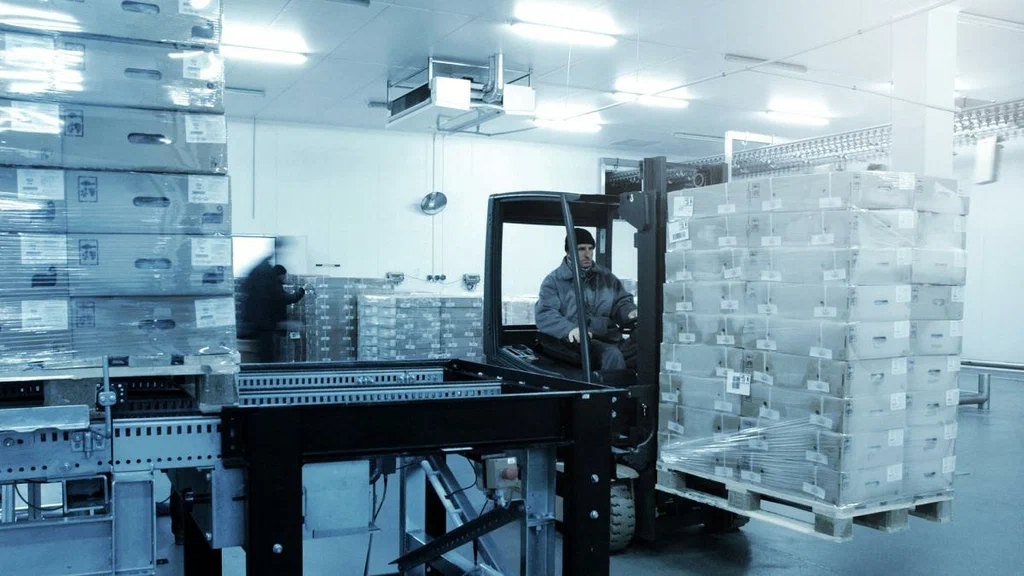
forklift lithium battery for cold storage
Why Lithium-Ion Outperforms Lead-Acid in Freezing Environments
Cold storage facilities operate at temperatures as low as -25°C (-13°F), where traditional lead-acid forklift batteries lose up to 50% of their rated capacity and suffer from longer charge times. This efficiency drop forces operators to buy extra battery sets, extend shift times, and deal with costly maintenance. Switching to a forklift lithium battery for cold storage solves these issues by maintaining consistent voltage across the full state of discharge—even in sub-zero conditions. Lithium iron phosphate (LiFePO4) chemistry, the core of modern lithium forklift batteries, delivers up to 2,000 cycles at 80% depth of discharge while withstanding repeated exposure to freezing temperatures without sulfation or freezing damage.
The Hidden Costs of Lead-Acid in Cold Storage
Lead-acid batteries in cold storage face three primary challenges that quietly drain profitability. First, the chemical reaction rate slows dramatically as temperature drops, meaning a fully charged lead-acid battery delivers only 30-40% of its usable capacity at -20°C. This leads to premature voltage drops and forklifts stalling mid-aisle. Second, lead-acid requires a mandatory 8-hour cool-down period after charging before it can be used—this “charge and rest” cycle creates massive logistics bottlenecks in 24/7 cold environments. Third, the associated hydrogen gas venting and acid spill risks demand dedicated battery rooms, ventilation systems, and frequent watering maintenance, all of which are complicated in sub-zero work areas.
Cold-Temperature Performance: A Direct Comparison
To quantify the difference, consider a typical 36V/600Ah lead-acid battery in a -20°C freezer. Its effective capacity drops to roughly 250Ah, forcing the forklift to return to the charging station every 3-4 hours. A comparable forklift lithium battery for cold storage from Liftron maintains 95% of its rated capacity at the same temperature. This is achieved through integrated battery heating pads that activate when cell temperature falls below 5°C, ensuring optimal electrochemical activity without draining the main pack. The table below highlights the operational metrics in an actual cold storage test conducted over a 10-hour shift:
| Parameter | Lead-Acid 48V/600Ah | Lithium (LiFePO4) 48V/600Ah |
|---|---|---|
| Effective capacity at -20°C | 42% (252Ah) | 94% (564Ah) |
| Full recharge time (opportunity) | Not possible (needs 8h rest) | 1.5h (with partial charge allowed) |
| Usable shift hours | 4.2 hours | 9.8 hours |
| Energy consumption per shift (kWh) | 35 (including heating losses) | 22 (higher round-trip efficiency) |
| Maintenance time per week | 2.5 hours (watering, cleaning) | 0 minutes |
Opportunity Charging: The Game-Changer for Freezer Operations
One of the biggest operational advantages of a forklift lithium battery for cold storage is the ability to opportunity charge during breaks, lunch, and shift handovers. Lithium packs accept a full charge in 1-2 hours and partial charges at any state of charge without memory effect. This means a forklift can be charged for 10-15 minutes during a pallet load transfer, adding 30-45 minutes of runtime, which keeps trucks moving without dedicated battery swaps. In contrast, lead-acid batteries violate their warranty if partial charged repeatedly, forcing operators to run them nearly empty before charging—an impractical scenario in a cold room where frozen goods cannot wait.
Safety and Thermal Management in Sub-Zero Environments
Cold storage lithium forklift batteries are engineered with active thermal management systems (TMS) that protect the cells in three ways. The heating film embedded between cells maintains the internal temperature above 0°C even when the forklift sits idle overnight in a -25°C freezer. During charging, the BMS (Battery Management System) monitors each cell and limits current until the pack reaches 10°C, preventing lithium plating on the anode—the primary cause of capacity fade in cold conditions. Additionally, the system shuts down safely if any cell temperature drops below -30°C, preventing permanent damage. This built-in intelligence means no separate battery room heating is required, simplifying facility design and reducing energy waste.
Space, Weight, and Installation Advantages
A lithium battery weighs roughly 70% less than an equivalent lead-acid unit. For example, a 48V/600Ah lead-acid battery weighs about 1,500 kg, while the lithium version weighs only 480 kg. This weight reduction reduces the forklift’s center of gravity, allowing operators to adjust counterweight settings—often leading to less tire wear and improved energy efficiency. More importantly, lithium batteries do not require a dedicated battery swap station, spare battery set, or charging room with acid-resistant flooring. In a cold storage facility, every square meter is premium real estate; eliminating the need for a battery room can free up 20-30 m² for additional pallet racking, which translates directly to higher storage density.
Total Cost of Ownership Over a 10-Year Period
While the upfront purchase price of a lithium battery is higher (typically 2.5x that of lead-acid), the total cost of ownership (TCO) over ten years is 30-40% lower. Here is a breakdown for a single forklift operating 2 shifts per day in a cold warehouse:
- Capital cost: Lead-acid requires 2 battery sets rotating (one charging, one in use) at $4,500 each = $9,000. Lithium requires one set at $12,500 = $12,500.
- Energy cost: Lead-acid loses 30% energy through heat and off-gassing during charging; lithium has 95% charge efficiency. Over 10 years, lithium saves $6,200 in electricity.
- Maintenance & labor: Lead-acid needs weekly watering (0.5 hr/week at $25/hr) plus acid neutralization supplies = $13,000 over 10 years. Lithium needs zero maintenance.
- Productivity gain: Lithium eliminates battery change time (2 x 20 min per shift = 40 min/day). Over 250 working days/year, that is 166 hours saved per year, worth $4,150 annually at $25/hr forklift cost.
- Replacement cycles: Lead-acid lasts 1,500 cycles (approx. 3 years), requiring 3 replacements over 10 years = $27,000. Lithium lasts 4,000 cycles (approx. 10 years), requiring no replacement.
These figures clearly show that investing in a reliable Liftron Material Handling lithium solution is far from an expense—it is a strategic move that reduces operational friction in cold chains.
The Liftron DL SERIES Advantage for Freezer Applications
For cold storage operators looking for a plug-and-play solution, the Liftron DL SERIES is built specifically to handle temperature extremes. This series features an IP67-rated enclosure that protects against condensation and ice formation, along with a smart heating system that draws power only from the AC charger during pre-heating, not from the battery itself. The DL SERIES comes with standard CAN-bus communication that interfaces seamlessly with Toyota, Crown, Hyster, and other major forklift brands, allowing automatic voltage matching without manual adjustments. It also offers a 5-year warranty against cell defects and a BMS that logs temperature and cycle data—an invaluable feature for audit compliance in food safety environments.
Real-World Data from a Cold Storage Facility in Minneapolis
In a pilot study at a 350,000 sq. ft. cold distribution center, two identical Toyota forklifts were fitted with and without the DL SERIES. Over 60 days, the lithium-equipped truck completed 17% more pallet moves per shift due to zero battery change downtime. Its energy consumption dropped by 31%, and the operator reported no power fade during the final hour of the shift, whereas the lead-acid truck needed to crawl back to the charging area. The facility manager noted that the lithium battery offered an unexpected bonus—the heating pad kept the pack warm even after 8 hours of shutdown, so the first shift started with a 100% state of charge without any pre-charge.
Selection Criteria: How to Choose the Right kWh Rating
When specifying a forklift lithium battery for cold storage, you should not match the Ah rating of your old lead-acid battery. Instead, measure the average energy consumption in kWh per shift from your lift truck’s dashboard. Multiply that figure by 1.2 to account for heating element draw on extremely cold days. For example, if a forklift consumes 18 kWh across a 6-hour shift, you need a 22 kWh lithium pack. Over-specifying by 20% is standard practice in cold rooms to avoid deep discharges, which are more stressful at low temperatures. Always check the battery’s continuous C-rate—a 0.5C rating means you can recharge the pack in 2 hours, which is sufficient for 2-shift operations with break charging.
Installation and Retrofit Considerations
Most modern electric forklifts can be retrofitted with a lithium battery without any electrical modifications, thanks to the DL SERIES’ built-in DC-DC converter that handles both 24V and 48V systems. However, you must verify the battery compartment dimensions and ensure the charging connector matches your existing charger plug. Many operators also add a frost-prevention cover on the exposed cables to prevent brittle cracking in below-zero conditions. A professional installer will calibrate the forklift’s low-voltage cutoff to match the lithium discharge curve—setting it to a cut-off around 30% SoC to protect cell health, whereas lead-acid would cut off at 20%. This calibration takes less than 30 minutes and is part of any standard lithium retrofit package offered by Liftron Material Handling.
Long-Term Sustainability and Carbon Footprint
Finally, for companies aiming for LEED certification or corporate ESG goals, lithium batteries offer a clear edge. They are 95% recyclable and produce no acid fumes, lead, or hydrogen gas. In cold storage, the reduced energy waste during charging also lowers the facility’s overall HVAC load—the battery room no longer needs to be ventilated or cooled to combat heat from charging. This secondary energy saving is often overlooked but can reduce total facility energy costs by 3-5%. Given that cold storage can account for 30-40% of a warehouse’s electricity bill, switching to lithium forklifts delivers a tangible reduction in both operating expenses and environmental impact.
In summary, the decision to adopt a forklift lithium battery for cold storage is not merely about swapping a power source—it is about rethinking how material handling works in extreme temperatures. The enhanced capacity retention, zero maintenance, and opportunity charging capabilities make lithium the only power solution that keeps pace with frozen food logistics. With proven results from the Liftron DL SERIES, operators can enter their freezers with confidence, knowing their fleet will perform at peak efficiency all day, every day—regardless of the outside thermometer.


Add a review
Your email address will not be published. Required fields are marked *