
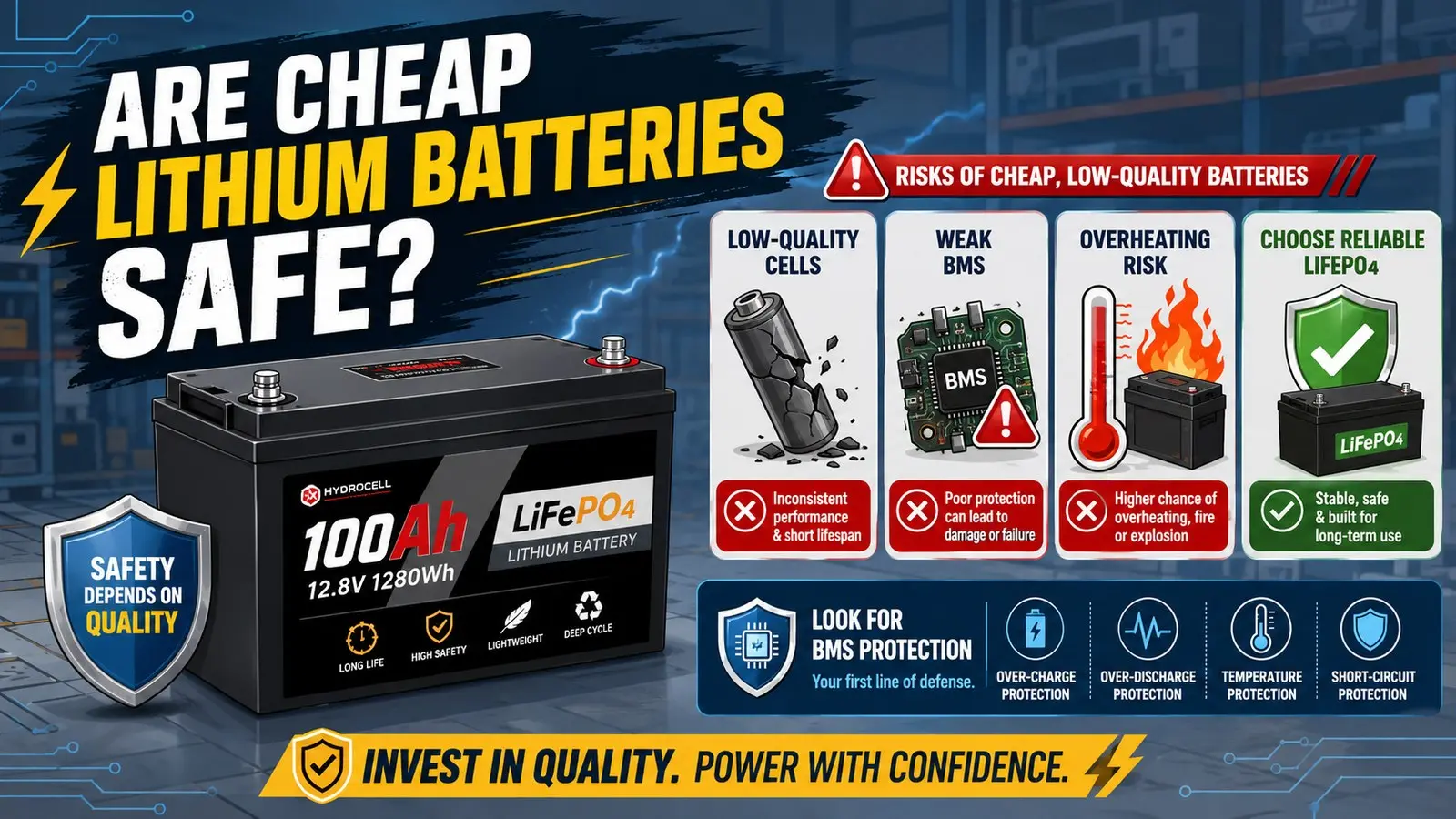
Are Cheap Lithium Batteries Safe
Cheap Lithium Batteries are not always unsafe, but extremely low-cost batteries from unknown sources often carry higher risks due to poor-quality cells, missing safety protections, and unreliable Battery Management Systems (BMS).
Lithium batteries have become popular for golf carts, RVs, marine systems, solar storage, and portable power applications because they provide high energy density and long service life. However, not all lithium batteries are manufactured with the same quality standards.
Low-cost batteries from unknown manufacturers may use inferior cells, weak internal protection systems, or inadequate quality control. Choosing a reliable battery supplier is essential for both performance and safety.
Why Can Cheap Lithium Batteries Be Dangerous?
Lithium batteries store a large amount of energy in a compact package. When properly designed, they are safe and reliable. However, manufacturing defects or missing protection systems can increase the possibility of dangerous failures.
| Safety Risk | Cause |
|---|---|
| Overheating | Poor thermal management or low-quality cells |
| Internal short circuit | Manufacturing defects or damaged components |
| Thermal runaway | Uncontrolled heat generation causing fire risk |
| Reduced lifespan | Low-quality battery materials |
| Performance failure | Weak cells and poor quality control |
The Importance of Battery Management Systems (BMS)
A Battery Management System is one of the most important safety components inside a lithium battery.
A quality BMS continuously monitors battery conditions and protects against dangerous operating situations.
| BMS Protection | Function |
|---|---|
| Overcharge protection | Stops charging when voltage becomes too high |
| Over-discharge protection | Prevents excessive battery depletion |
| Temperature monitoring | Controls operation during extreme temperatures |
| Cell balancing | Keeps individual cells operating evenly |
| Short circuit protection | Reduces electrical safety risks |
A lithium battery without a reliable BMS should be avoided, especially for high-power applications such as golf carts, RVs, boats, and solar systems.
Cheap Batteries vs Quality Lithium Batteries
The difference between cheap and premium lithium batteries is usually not only the price. It often involves cell quality, testing procedures, protection systems, and manufacturing standards.
| Feature | Cheap Lithium Battery | Quality Lithium Battery |
|---|---|---|
| Battery cells | Unknown or lower-grade cells | Verified high-quality cells |
| BMS protection | Limited or unreliable | Advanced monitoring and protection |
| Safety testing | May have limited testing | Strict quality control procedures |
| Warranty | Short or unclear warranty | Long-term manufacturer support |
| Service life | Often shorter | Designed for extended use |
Why Battery Quality Matters for Golf Carts
Golf carts require batteries that can deliver consistent power during acceleration, hills, and long-distance driving.
A poor-quality lithium battery may cause:
- Reduced driving range
- Sudden power loss
- Charging problems
- Short battery lifespan
- Safety concerns
For golf cart applications, selecting a reliable Hydrocell battery can provide improved performance, safety protection, and long-term value.
What Is a Good Cheap Lithium Battery?
The best affordable lithium battery depends on the application. A low price does not necessarily mean poor quality, but buyers should focus on value rather than the cheapest option.
| Application | Recommended Battery Characteristics |
|---|---|
| Golf carts | LiFePO4 chemistry, strong BMS, long cycle life |
| RV systems | Reliable capacity and temperature protection |
| Marine applications | Water-resistant design and stable output |
| Solar storage | High cycle performance and safety controls |
Why LiFePO4 Batteries Are Safer
For larger applications, LiFePO4 (Lithium Iron Phosphate) batteries are often preferred because their chemistry provides excellent thermal stability.
Compared with some other lithium chemistries, LiFePO4 batteries are more resistant to overheating and provide a strong balance between safety, performance, and lifespan.
| Battery Chemistry | Characteristics |
|---|---|
| LiFePO4 | High stability, long lifespan, strong safety performance |
| NMC | Higher energy density but requires careful thermal management |
How to Identify a Safe Lithium Battery
- Check the manufacturer.
Choose companies with established product information and customer support. - Verify safety certifications.
Look for recognized certifications such as UL, CE, or ISO-related quality standards. - Confirm battery chemistry.
For demanding applications, consider stable LiFePO4 technology. - Review the BMS features.
Ensure protection against overcharge, over-discharge, and temperature problems. - Compare warranty coverage.
A strong warranty indicates manufacturer confidence. - Avoid unknown sellers.
Be cautious with extremely cheap products from unverified sources.
Common Mistakes When Buying Lithium Batteries
| Mistake | Why It Is Risky |
|---|---|
| Choosing only based on price | May sacrifice safety and lifespan |
| Buying from unknown sellers | Product quality may be uncertain |
| Ignoring battery specifications | Battery may not match the application |
| Skipping warranty checks | Future support may be unavailable |
Select Hydrocell Battery for Better Performance
For golf cart applications, choosing a reliable lithium battery can significantly improve performance and safety.
Hydrocell battery products are designed as replacements for traditional lead-acid batteries and provide advanced lithium technology for modern electric vehicles.
| Hydrocell Battery Advantage | Benefit |
|---|---|
| Built-in BMS | Protects against voltage and temperature issues |
| Bluetooth monitoring options | Allows users to check battery information remotely |
| LiFePO4 technology | Provides stable and reliable performance |
| Drop-in replacement design | Compatible with many golf cart models |
How to Extend Lithium Battery Safety and Lifespan
- Use the correct charger
- Avoid extreme temperatures
- Store batteries properly
- Perform regular inspections
- Follow manufacturer charging recommendations
- Keep battery connections clean
Conclusion
Cheap lithium batteries may save money initially, but poor-quality products can create safety risks and higher replacement costs over time.
A safe lithium battery should include quality cells, a reliable Battery Management System, proper safety certifications, and strong manufacturer support.
For golf carts and other demanding applications, choosing a trusted solution such as a Hydrocell battery helps provide better safety, longer lifespan, and more reliable performance.
Add a review
Your email address will not be published. Required fields are marked *