
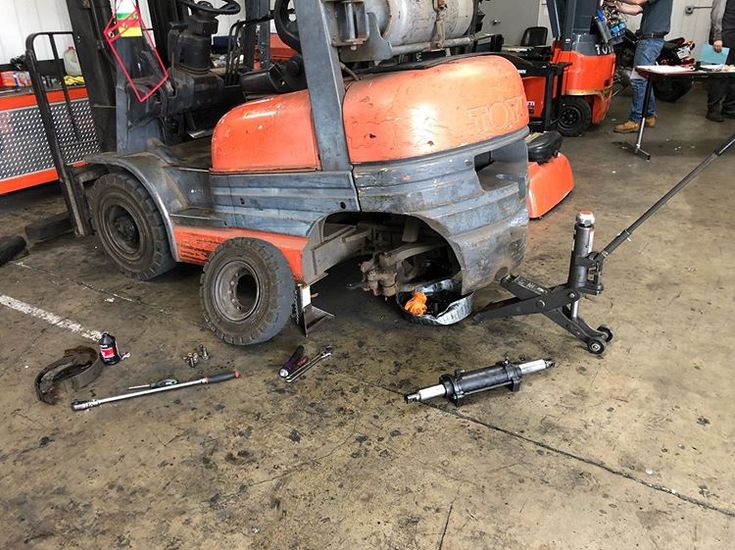
can you jack a forklift
Can you jack a forklift? Yes, but doing it safely requires the right equipment, procedure, and a clear understanding of load capacities—because a mistake can send thousands of pounds crashing down. This guide covers every critical step, from choosing jacks to stabilizing the mast, so your maintenance crew works like pros every time.
Understanding Forklift Jacking: What You Need to Know
Forklifts are heavy, ranging from 3,000 to over 30,000 pounds, and their low ground clearance makes jacking a unique challenge. Unlike a car, you cannot simply place a floor jack under a frame rail or axle. The lifting points, weight distribution, and stability all differ dramatically. Before you even position a jack, you must determine the forklift’s total weight, the rated capacity of the jack, and the specific lifting points specified by the manufacturer. If you skip these steps, you risk bending the carriage, damaging the steer axle, or worse—causing the forklift to shift and fall.
Safety First: The Golden Rules of Forklift Jacking
- Never work under a jacked forklift without jack stands. Hydraulic jacks can fail or leak, and the forklift’s center of gravity is high, making it unstable on a narrow jack pad.
- Chock the wheels on the opposite end of the lift. If you’re lifting the front, chock the rear tires; if lifting the rear, chock the front tires. This prevents unintended rolling.
- Remove the battery or counterweight when possible. For electric forklifts, disconnecting and removing the battery lowers the weight dramatically and shifts the center of gravity, making the lift safer. For internal combustion (IC) models, consider draining fuel or removing the counterweight if the manual allows.
- Use a jack rated for at least 1.5 times the axle weight. For example, if the rear axle of a 10,000-lb forklift carries 4,500 lbs, use a 6-ton (12,000-lb) jack, not a 5-ton.
- Wear steel-toe boots and full PPE. This is non-negotiable. A dropped fork or falling jack can crush a foot instantly.
Jacking Points: Where to Place the Jack on a Forklift
Every forklift model has designated jacking points, but common locations exist across most brands. For the front axle, the ideal point is the center of the drive axle housing, directly under the differential or the axle tube—never on the brake drums or wheel hubs. For the rear axle, the ideal point is the center of the steer axle pivot pin or the flat spot on the axle housing’s underside. If a forklift has a removable mast, you can also jack under the mast’s mounting plate, but this is risky if the mast is tilted. Always consult your operator’s manual for the exact diagrams—they are not suggestions; they are engineering specifications.
What About Lifting the Entire Forklift?
If you need to elevate all four wheels (e.g., for undercarriage cleaning or tire rotation), you must use a two-jack method: lift the front with one jack, place jack stands under the frame’s reinforced areas, then lift the rear with a second jack and place stands. Never rely on a single jack to hold the whole unit. Also, never use a floor jack on a forklift with an integrated side-shift carriage—the weight is too concentrated. Instead, use a transmission jack or a low-profile air jack with a wide saddle to distribute the load.
Step-by-Step Process to Jack a Forklift Safely
- Position the forklift on a flat, solid surface. Concrete is ideal. Put the transmission in neutral, engage the parking brake, and turn off the ignition. For electric units, disconnect the battery connector.
- Set the forks to the lowest position and tilt the mast fully forward. This lowers the center of gravity and shifts weight onto the front axle, which is usually better for rear-jacking.
- Chock the opposite end’s wheels on both sides. Use rubber or wood chocks, never concrete blocks.
- Slowly pump the jack under the chosen jacking point. Keep the jack’s saddle centered and level. If the forklift has a steering axle with a central pivot, ensure the jack head fits into the recessed area—not on the tie rod.
- Raise the forklift 1 to 2 inches off the ground. Stop, verify the jack is stable, and check that the forklift hasn’t tilted sideways. For the front axle, the forklift should rock slight forward; for the rear axle, it should rock back.
- Place jack stands under the reinforced frame rails (not the axle) if you need to work underneath. Lower the forklift gently onto the stands, then release hydraulic pressure from the jack.
- Test stability: push the forklift’s counterweight gently. It should not wobble. If it moves, lower, reposition, and start again.
Common Mistakes That Cause Forklift Jacking Accidents
| Mistake | Consequence | Safe Alternative |
|---|---|---|
| Using a car jack on a forklift | Jack collapses under high weight; forklift drops suddenly | Use a hydraulic shop jack rated 12 tons or higher |
| Lifting under the counterweight | The counterweight is bolted on, not structural; it can shear off | Lift under the frame rail or axle housing |
| Not chocking wheels | Forklift rolls forward/backward off the jack | Chock both wheels on the opposite axle |
| Leaving the mast tilted backward | The carriage shifts weight, sudden fall risk | Tilt mast fully forward before jacking |
| Relying on a jack without stands | Hydraulic seal fails; operator crushed | Always use jack stands for any work under the forklift |
When to Use a Forklift Jack vs. an Overhead Hoist
If you only need to access the bottom of the mast or change a steer tire, a floor jack will suffice. However, if you are removing the entire drive axle, replacing the transmission, or inspecting the hydraulic pump under the floor pan, you might consider an overhead hoist or a forklift service lift—which is a four-post ramp that supports the unit by its wheels. For most routine maintenance—brake pad replacement, oil pan drop, or steering cylinder swap—a reliable floor jack and four jack stands remain the best method. For facilities that jack forklifts daily, investing in a purpose-built tire service jack with a wide saddle and long handle saves time and improves safety.
Jacking Electric Forklifts: Special Considerations
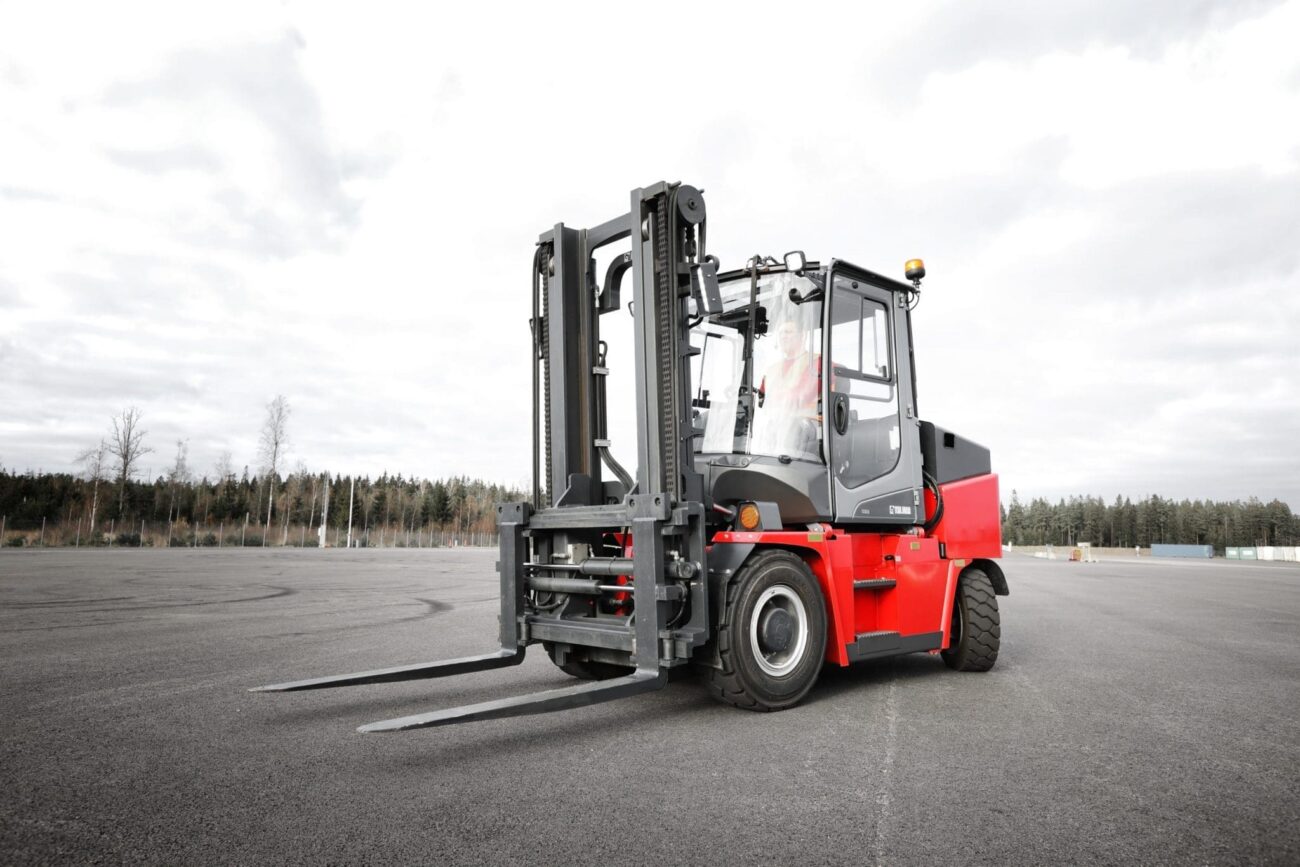
Electric forklifts like the Liftron DL SERIES have a much lower center of gravity than IC models because the lithium-ion battery sits low in the chassis. That’s beneficial for stability, but it also means the battery itself is heavy—often 2,000 to 4,000 lbs. When jacking an electric forklift, you must never jack from underneath the battery compartment. The battery box is not a structural lifting point. Instead, use the designated frame notches near the drive axle. Also, disconnect the battery before jacking to avoid any electrical short if the jack accidentally touches a cable. The Liftron Material Handling team recommends checking your battery type first—lithium-ion units are leak-proof and lighter than lead-acid, making them slightly easier to jack, but the process remains the same.
How to Check if a Jack Is Rated for Your Forklift
Look at the forklift’s data plate (usually on the dash or side column). Find the total weight and the axle load distribution (front/rear). For example, a 5,000-lb capacity electric forklift has a total weight of about 8,000 lbs, with 60% on the front axle (4,800 lbs) and 40% on the rear (3,200 lbs). You need a jack rated to at least 6,000 lbs for the front, but a 12-ton jack gives you a comfortable margin. Never use a bottle jack with a narrow lifting cup; its small contact area can dent the axle housing. Use a floor jack with a wide rubber saddle pad instead.
Final Pro Tips for Equipment Managers
Train every mechanic on your specific forklift models—not on “forklifts in general.” Document the jacking points with photos and stick them on the service cart. Always verify the jack’s hydraulic oil level before use; a low oil level reduces lifting capacity by up to 30%. And please, never leave a jacked forklift unattended, even for a coffee break. If you need to leave the bay, lower the forklift onto stands first. For fleets that require frequent maintenance, consider the Liftron DL SERIES electric models—they’re designed with reinforced side jacking points and a lower battery tray that makes service access faster. Reach out to Liftron Material Handling for service manuals and training videos on jacking procedures; they have model-specific guides that prevent guesswork.
Jacking a forklift is a routine but dangerous task. The moment you feel casual about it, the risk of injury skyrockets. Use the right jack, use the right points, use jack stands, and never rush. Your team’s safety and your equipment’s longevity depend on that discipline.


Add a review
Your email address will not be published. Required fields are marked *