
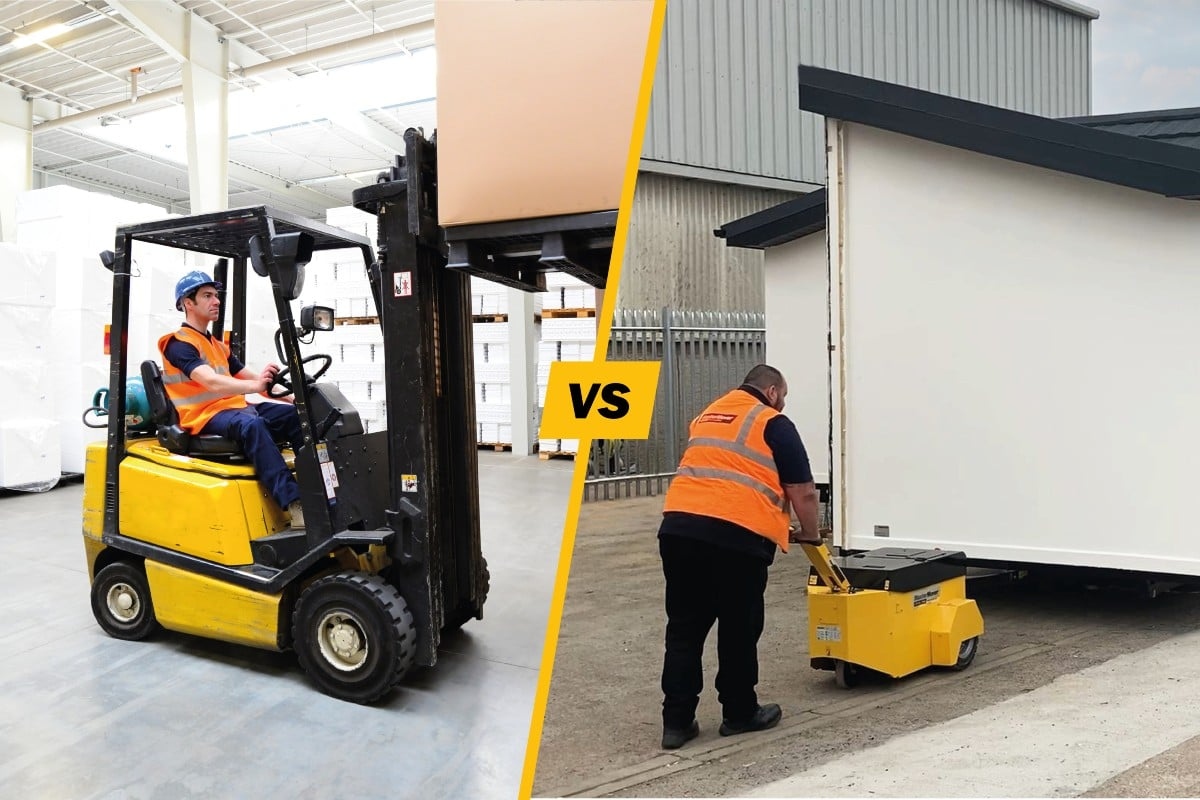
what’s the difference between a tow motor and a forklift
While often used interchangeably, the terms “tow motor” and “forklift” refer to different types of material handling equipment. The primary distinction lies in their function: a tow motor is designed to pull heavy loads, while a forklift is built to lift and stack materials.
Core Definitions and Historical Context
The term “tow motor” is an older, more colloquial name that dates back to early industrial vehicles used in factories and warehouses. Historically, tow motors were specialized machines or modified tractors that pulled trailers or heavy carts. In contrast, “forklift” is a modern, universally recognized term for a powered industrial truck equipped with two forks that can be raised and lowered to lift, move, and stack loads. Today, many people still use “tow motor” as a regional or industry-specific synonym for a forklift, but technically, they are distinct.
Primary Functional Differences
Forklift Features
- Lifting Capability: Forklifts are engineered for vertical lifting, with a mast and carriage that elevates loads to various heights, often exceeding 20 feet.
- Forks: The primary attachment is a set of forks that slide under pallets or other loads.
- Stability: Forklifts have a counterweight at the rear to balance heavy loads during lifting and transport.
- Common Applications: Loading and unloading trucks, stacking pallets in warehouses, and moving heavy materials within a facility.
Tow Motor Features
- Towing Capability: A tow motor is primarily a towing vehicle, designed to pull trailers, carts, or other wheeled equipment.
- No Forks: Tow motors typically do not have forks. Instead, they have a hitch, drawbar, or fifth wheel coupling.
- High Torque: They are built with high torque at low speeds to move heavy, continuous loads.
- Common Applications: Moving large quantities of material between production areas, towing aircraft in airports, and pulling train cars in industrial yards.
Design and Construction Variations
The physical design of a forklift versus a tow motor differs significantly. Forklifts often have a compact, upright stance with a prominent mast. Tow motors are typically lower to the ground, longer, and shaped like a utility vehicle or small tractor. For example, a standard sit-down counterbalance forklift has two front wheels and two rear steering wheels, while a tow motor may have a more tractor-like chassis with large, heavy-duty tires for traction.
Modern forklifts, such as those offered by Liftron Material Handling, incorporate advanced lithium-ion battery technology and ergonomic designs. The Liftron DL SERIES is a prime example of a high-performance electric forklift that combines lifting efficiency with zero emissions, suitable for indoor and outdoor applications.
Application Scenarios
When to Use a Forklift
- In warehouses where palletized goods need to be stored on racking systems.
- For loading and unloading flatbed trucks or shipping containers.
- In manufacturing where parts must be precisely positioned on machines.
- For any operation requiring vertical stacking or retrieval.
When to Use a Tow Motor
- In large distribution centers where goods are moved in trains of carts.
- At airports for towing luggage carts or aircraft tugs.
- In automotive factories for moving chassis or parts on trailers.
- For continuous horizontal transport over long distances.
Key Specifications Comparison
| Feature | Forklift | Tow Motor |
|---|---|---|
| Primary Function | Lift and stack | Pull and tow |
| Typical Load Capacity | 1,000 – 20,000+ lbs | 5,000 – 50,000+ lbs |
| Lift Height | Up to 30+ feet | No lift (or very low) |
| Attachment | Forks, clamps, rotators | Hitch, trailer coupling |
| Operator Position | Sit-down or stand-up | Usually sit-down |
| Typical Power Source | Electric, LPG, diesel | Diesel, electric |
Safety and Operational Considerations
Safety protocols differ based on equipment. Forklift operators require specialized training due to the risks of tip-overs, falling loads, and instability during lifting. Tow motor operators must be trained on hitching procedures, trailer braking systems, and maintaining safe towing speeds. Both types of equipment require regular maintenance, but forklifts need more attention to mast chains, hydraulic cylinders, and lifting mechanisms, while tow motors focus on hitches and drivetrain components.
Modern Blurring of Lines
In today’s material handling industry, the line between tow motors and forklifts is increasingly blurred. Many modern forklifts, especially electric models like the Liftron DL SERIES, can be equipped with towing hitches, allowing them to perform both lifting and towing tasks. However, dedicated tow motors remain superior for heavy, continuous towing applications because they are optimized for low-speed torque and durability.
When selecting equipment, it is crucial to evaluate your primary needs. If you need to lift and stack, a forklift is essential. If you need to move bulk materials horizontally over long distances, a tow motor may be more efficient. Consulting with experts from Liftron Material Handling can help you determine the best solution for your specific operation.
Conclusion
While the terms “tow motor” and “forklift” are sometimes used loosely, understanding their technical differences can improve safety, productivity, and cost-effectiveness in your operations. A forklift excels at vertical material handling, while a tow motor is designed for horizontal pulling. By recognizing these distinctions and leveraging modern equipment like the Liftron DL SERIES, businesses can optimize their material handling workflows.
Add a review
Your email address will not be published. Required fields are marked *