
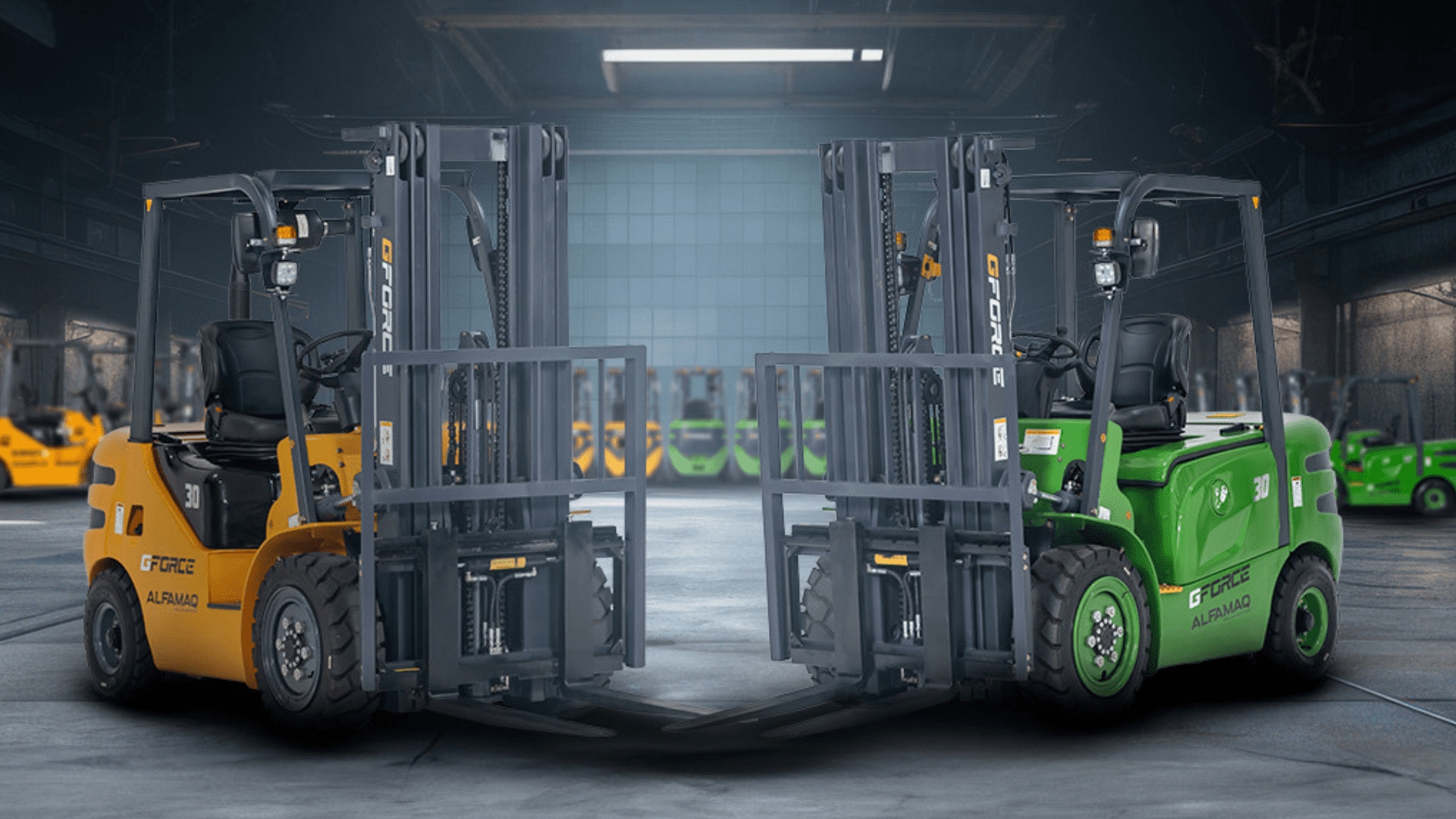
How to Park a Forklift Safely
Why Is Proper Forklift Parking Important?
Forklift parking is more than simply stopping the machine after a shift or task. A poorly parked forklift can create serious hazards, including unexpected movement, blocked walkways, damaged equipment, and injuries to nearby workers.
Because forklifts are heavy industrial machines, even a small mistake during parking can have major consequences. A forklift with raised forks can become a trip hazard. A forklift left on an incline can roll away. A machine parked in a fire lane can prevent emergency access.
Proper parking procedures help protect operators, pedestrians, warehouse equipment, inventory, and the forklift itself. Whether you operate a small electric warehouse truck or a larger industrial model, safe parking should always be part of normal operating practice.
Proper Parking Procedure for a Forklift
Every forklift operator should follow a consistent shutdown sequence. The exact controls may vary depending on the forklift model, but the basic parking steps remain similar.
| Step | Action | Purpose |
|---|---|---|
| 1 | Select a safe parking location | Prevents traffic blockage and hazards |
| 2 | Position the forks | Removes trip and collision risks |
| 3 | Neutralize controls | Prevents unexpected movement |
| 4 | Engage parking brake | Keeps the forklift stationary |
| 5 | Shut down and secure | Protects equipment and workplace |
| 6 | Dismount safely | Prevents operator injuries |
1. Select a Safe Parking Location
The first step in safe forklift parking is choosing the correct location. Always park in designated parking areas whenever possible. These areas are designed to keep forklifts away from pedestrian routes, emergency equipment, and production traffic.
Avoid parking in locations that create hazards, including:
- Fire aisles
- Emergency exits
- Stairways
- Loading paths
- High-traffic walkways
- Blind corners
- Areas near unstable materials
The parking surface should be flat and level. Uneven ground can allow the forklift to roll or place unnecessary stress on tires, brakes, and components.
2. Position the Forks Correctly
Before leaving the forklift, always lower the forks completely to the floor. The forks should be flat and positioned safely so they do not create a tripping hazard.
Raised forks are dangerous because pedestrians may walk into them, and another vehicle could strike the elevated attachment. Lowering the forks also reduces the forklift’s center of gravity and improves stability.
3. Neutralize Controls
After lowering the forks, place the direction control in neutral. This prevents accidental movement if someone touches a control or if the forklift is restarted incorrectly.
For electric forklifts, follow the manufacturer’s shutdown sequence. Some models may include additional controls, emergency stops, or battery-related procedures.
| Control | Correct Parking Position |
|---|---|
| Forks | Fully lowered |
| Mast | Safe travel position |
| Direction selector | Neutral |
| Parking brake | Fully engaged |
| Power | Turned off when unattended |
4. Engage the Parking Brake
Always fully engage the parking brake before leaving a forklift. The parking brake is a critical safety feature that helps prevent unintended movement.
Do not rely only on the transmission, direction selector, or turning the wheels. These actions do not replace the parking brake.
A forklift parked without the brake engaged may roll due to:
- Slight floor slopes
- Vibration
- Impact from another vehicle
- Mechanical movement
- Weather or surface conditions
5. Shut Down and Secure the Forklift
When the forklift is no longer in use, shut down the machine according to manufacturer instructions. For many forklifts, this includes turning off the ignition and removing the key.
OSHA considers a forklift unattended when the operator is more than 25 feet away or when the forklift is outside the operator’s view. In these situations, the machine should be powered off and secured.
| Situation | Required Action |
|---|---|
| Operator remains nearby and keeps the forklift visible | Follow normal safe parking procedures |
| Operator leaves the forklift | Shut down and remove key if required |
| Forklift parked on incline | Avoid if possible; use wheel chocks when necessary |
| Disabled forklift | Secure and prevent movement until repaired |
6. Dismount Safely
The final step is leaving the forklift safely. Operators should use the three-point contact method when climbing down, keeping two hands and one foot or two feet and one hand in contact with the machine.
Do not jump from the forklift. Jumping can cause slips, falls, ankle injuries, or contact with nearby equipment.
Parking a Forklift on an Incline
The safest practice is to avoid parking on slopes. Flat, level surfaces are always preferred.
If a forklift must be parked on an incline because of an emergency or special situation:
- Lower the forks completely.
- Engage the parking brake.
- Turn the wheels according to workplace procedures.
- Use wheel chocks when required.
- Secure the area to prevent movement.
What Are Four Precautions Before Leaving a Forklift?
Before leaving a forklift, operators should follow these four important precautions:
- Park in an authorized location: Keep away from fire exits, stairways, emergency equipment, and traffic routes.
- Lower the forks completely: Prevent trip hazards and accidental contact.
- Engage the parking brake: Ensure the forklift cannot move.
- Shut down and secure the forklift: Turn off power and remove the key when unattended.
Common Forklift Parking Mistakes
- Leaving forks raised
- Parking in emergency lanes
- Leaving the forklift running unattended
- Forgetting the parking brake
- Parking on slopes without protection
- Blocking pedestrian walkways
- Leaving keys inside an unattended forklift
- Ignoring workplace parking rules
Forklift Parking Safety Checklist
| Checklist Item | Completed |
|---|---|
| Authorized parking location selected | ☐ |
| Forks lowered to the ground | ☐ |
| Controls placed in neutral | ☐ |
| Parking brake engaged | ☐ |
| Power turned off | ☐ |
| Key removed when unattended | ☐ |
| Area checked for hazards | ☐ |
Choosing Reliable Forklift Equipment
Safe operation starts with selecting the correct equipment for your application. Modern electric forklifts are designed with improved safety systems, ergonomic controls, and efficient power solutions.
Companies looking for warehouse and industrial equipment can explore electric solutions from forklift manufacturers such as Liftron Material Handling.
Proper equipment selection, operator training, preventive maintenance, and safe parking procedures all work together to reduce workplace risks.
Conclusion
Parking a forklift safely requires a simple but consistent process: choose a safe location, lower the forks, neutralize controls, engage the parking brake, shut down the machine, and exit safely.
Following proper parking procedures prevents unexpected movement, reduces pedestrian hazards, protects warehouse equipment, and helps maintain a safer workplace for everyone operating forklifts.


Add a review
Your email address will not be published. Required fields are marked *