
Is order picker a type of forklift
When exploring material handling equipment, a common question arises: Is an order picker a type of forklift? While both serve to move goods, they differ significantly in design, operator position, and primary function. Understanding these distinctions is crucial for selecting the right equipment and optimizing warehouse efficiency. Let’s first clarify that an order picker is indeed categorized under the broader forklift family, but with specialized features tailored for vertical order fulfillment.
Defining Order Pickers and Forklifts
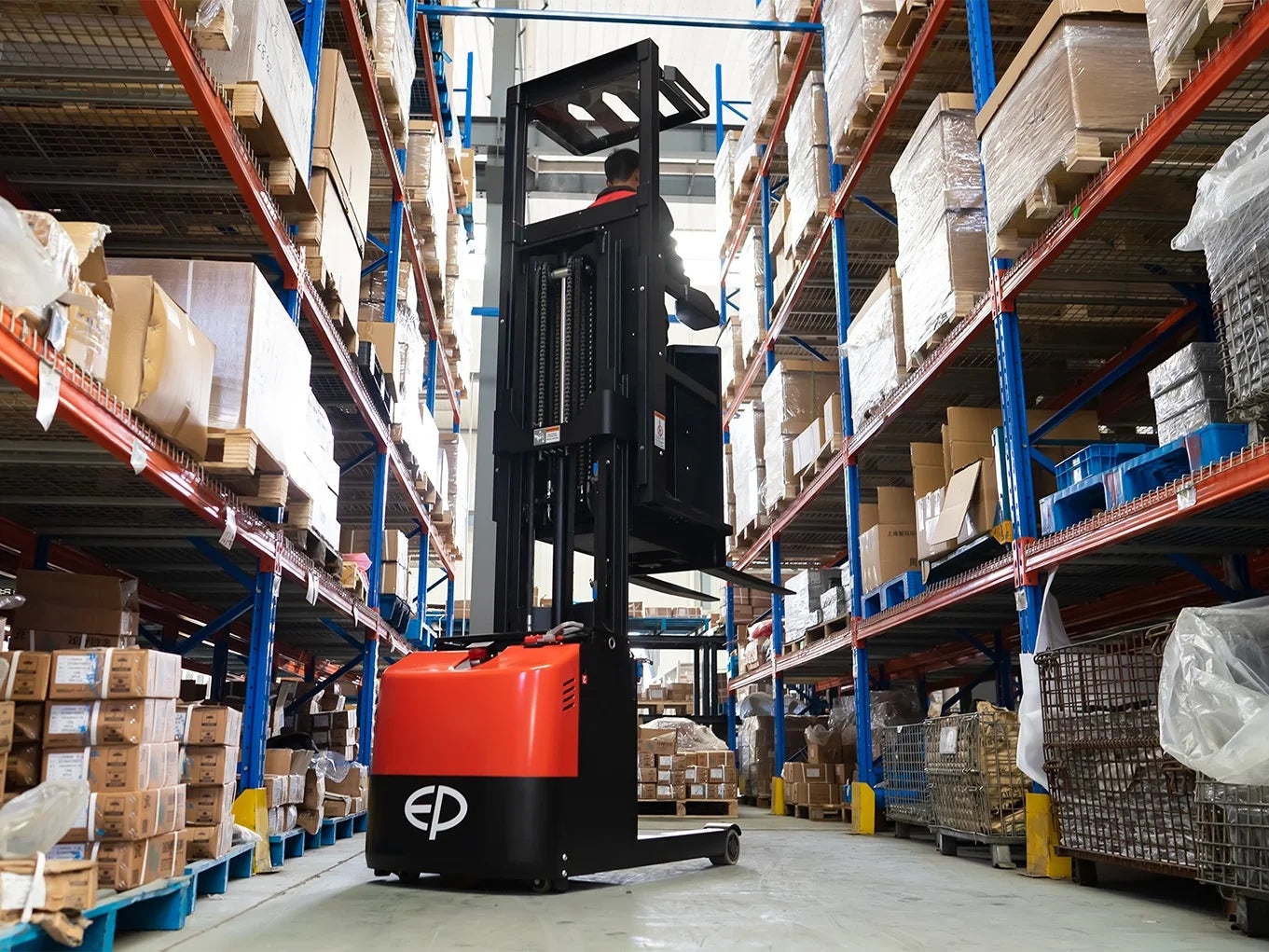
A forklift typically refers to an industrial truck used to lift and transport heavy loads. Order pickers, also known as order picking trucks, are a distinct subclass of forklifts designed for manually picking items from high storage racks. Unlike standard counterbalance forklifts or reach trucks, order pickers elevate the operator along with the load to access specific items at various heights. This makes them indispensable in warehouses with narrow aisles and high-bay shelving systems.
Key Differences Between Order Pickers and Traditional Forklifts
Operator Position and Function
In a standard forklift, the operator sits or stands in a compartment at the base, lifting only the load. An order picker raises both the operator and the load on a platform. This allows the operator to manually pick individual cases, boxes, or items from racking. Traditional forklifts are better suited for transporting pallets or bulk loads, not for piece-picking at height.
Mast and Lift Design
Order pickers feature a mast that lifts the operator platform, often with a built-in picking station. The lift capacity is generally lower than standard forklifts—commonly between 1,500 to 3,000 pounds. For example, the Liftron Material Handling product lineup includes order pickers engineered for high-frequency picking with enhanced stability and visibility.
Applications and Environments
Order pickers shine in e-commerce, retail distribution, and parts warehouses where orders consist of individual items from multiple locations. Traditional forklifts remain dominant in manufacturing, shipping yards, and bulk storage. A warehouse that combines both types often achieves optimal throughput.
Types of Forklifts: Where Order Pickers Fit In
The forklift family includes many variants. Here is a comparative table to highlight where order pickers fit:
| Type | Primary Function | Operator Position | Load Capacity (approx.) |
|---|---|---|---|
| Counterbalance Forklift | Transport and stack pallets | Seated or stand-on | 3,000 – 10,000+ lbs |
| Reach Truck | High-reach pallet handling | Stand-on, scissor lift | 3,000 – 5,000 lbs |
| Order Picker | Manual case/unit picking | Elevated with load | 1,500 – 3,000 lbs |
| Pallet Jack | Floor-level pallet moving | Walk-behind or ride-on | 4,000 – 6,000 lbs |
As shown, order pickers occupy a unique niche focused on piece-picking rather than bulk load transport.
When to Choose an Order Picker Over a Standard Forklift
- High-density picking: If your operation requires lifting an operator to rack levels above 10 feet to manually select items, an order picker is essential.
- Narrow aisles: Order pickers can navigate aisles as narrow as 5-6 feet, maximizing storage space.
- Low-volume, high-variety orders: E-commerce and spare parts facilities benefit from the precise picking ability.
- Operator visibility: Elevated operator platforms offer better line-of-sight to stored goods.
However, if you move pallets weighing over 4,000 pounds or require stacking loads at floor level, a traditional forklift or reach truck is more appropriate.
Order Pickers and Lithium-Ion Technology
Modern order pickers increasingly adopt lithium-ion batteries for longer runtimes and faster charging. Liftron DL SERIES exemplifies this trend, offering robust performance for order picking applications. Lithium-ion power reduces battery changeovers, improves duty cycles, and lowers total cost of ownership—critical for warehouses running multiple shifts.
Common Misconceptions Addressed
Can an Order Picker Replace a Forklift?
Not entirely. While an order picker can handle light pallet loads at height, it lacks the counterbalance and lift capacity for heavy or oversized pallets. Most warehouses require a mix of both equipment types.
Is an Order Picker Safer?
Safety depends on training and environment. Order pickers have enclosed operator cages and require fall arrest systems when working at height. Standard forklifts have lower center of gravity but can tip if overloaded. Both demand proper certification and adherence to load limits.
Are Order Pickers More Expensive?
Initial purchase costs are comparable to mid-range reach trucks. However, order pickers often pay for themselves through increased picking productivity—operators can pick up to 300-400 lines per hour, versus 100-150 with manual carts.
Future Trends in Order Picking Equipment
Advancements in automation and connectivity are shaping the next generation. Some models integrate RFID scanning, voice-directed picking, and semi-autonomous navigation. The Liftron Material Handling portfolio continues to evolve, offering smart systems that reduce operator fatigue and error rates. While fully automated order picking robots exist, the man-up order picker remains vital for complex SKU environments where human judgment is irreplaceable.
Conclusion
In summary, yes, an order picker is a specialized type of forklift—one optimized for vertical, manual order selection. Its unique design elevates both operator and load, setting it apart from general-purpose forklifts. By understanding the distinctions, warehouse managers can deploy the right equipment for each task, balancing safety, efficiency, and cost. Whether using a traditional forklift for bulk pallets or a modern lithium-ion order picker for high-speed picking, the key lies in matching the tool to the operation.
Add a review
Your email address will not be published. Required fields are marked *