
how to prevent forklift damage to racks warehouse equipment
Forklift impacts against pallet racks are a leading cause of warehouse downtime, product damage, and costly structural repairs. In fact, even a slow-speed collision can misalign uprights, compromise load capacity, and create invisible stress fractures that threaten worker safety. Learning how to prevent forklift damage to racks requires a combination of driver training, physical barriers, operational protocols, and modern equipment choices that prioritize precision and visibility.
The Hidden Costs of Rack Damage
Every dented column or bent beam represents more than just a repair bill. When a forklift strikes a rack, the entire storage system loses its engineered integrity. Load capacities drop, insurance premiums rise, and OSHA inspectors may issue citations for unsafe conditions. Furthermore, damaged racks often force operators to reroute traffic, which slows down picking and replenishment cycles. Over time, repeated damage creates a culture of tolerance for unsafe behavior, making it even harder to enforce preventive measures.
Operator Training: The First Line of Defense
No barrier or sensor can replace the judgment of a well-trained operator. Forklift drivers must understand the physics of turning radius, load momentum, and mast height. Training should emphasize spatial awareness around rack uprights, especially when navigating narrow aisles. Practical drills that simulate real-world conditions, such as reverse maneuvers with a bulky load, help drivers internalize safe distances. Refresher courses every six months keep safety protocols top-of-mind, and targeted retraining after any incident prevents repeat mistakes.
Speed Limits and Traffic Flow Design
Excessive speed is a primary cause of rack impacts. Establish clearly marked speed limits—typically 5 mph in aisles and 3 mph near rack ends—and enforce them with speed limiter settings on forklifts. Additionally, design one-way traffic lanes in wide aisles and use floor markings to indicate pedestrian walkways. In very narrow aisles, consider wire guidance or rail systems that keep forklifts on a fixed path, eliminating the risk of drifting into racks.
Physical Protection: Barriers That Absorb Impact
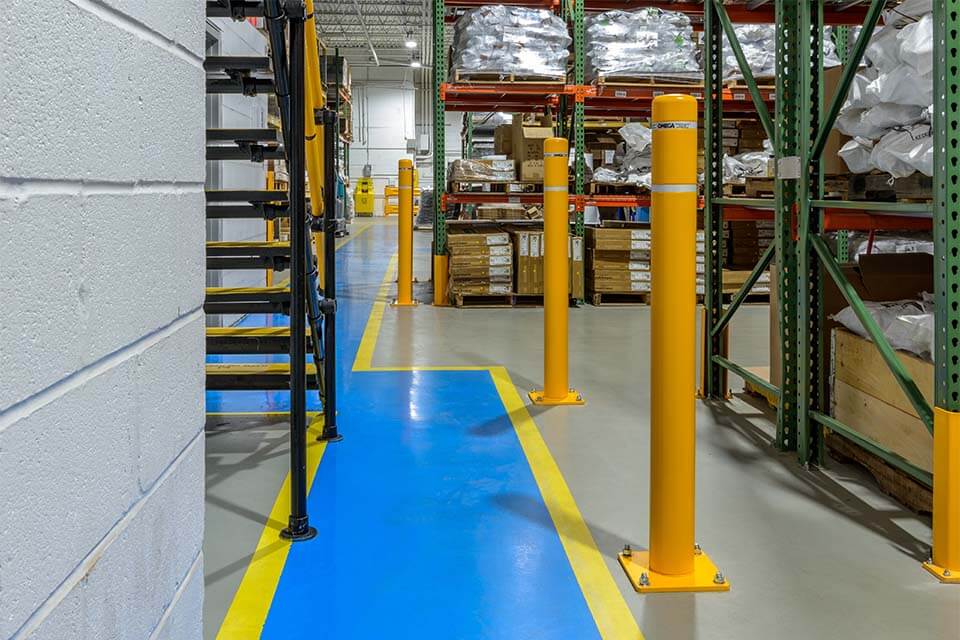
Installing protective guardrails is the most straightforward way to shield rack uprights. Steel bollards filled with concrete or polyurethane are excellent at stopping a moving forklift before it touches the rack. For heavy-duty protection, consider full-height post protectors that wrap around uprights, or spring-mounted buffers that deflect energy on impact. Remember to protect the base plates of rack columns, where corrosion and impact often go unnoticed until failure.
Rack-End Aisle Guards and Corner Guards
Aisle-end frames are particularly vulnerable because they face oncoming traffic. Use massive corner guards made of ½-inch thick steel, anchored to the floor with high-grade expansion bolts. For additional safety, attach yellow-and-black striped vinyl tape to these guards to increase visibility. In high-traffic areas, double-sided tape on floor edges can also alert drivers when they are too close, serving as a tactile warning signal.
Forklift Technology and Visibility Enhancements
Modern forklifts offer features that dramatically reduce collision risk. For example, cameras mounted on the rear of the truck provide a clear view of the fork tips and surrounding obstructions, eliminating blind spots near rack bases. Blue spotlights projected onto the floor warn pedestrians, while red zone lights around the forklift perimeter alert operators when they are nearing a rack column.
Choosing the Right Forklift for Rack Protection
Selecting equipment with a narrow chassis and precise steering mechanism makes maneuvering in tight aisles safer. For operations with high rack density, a three-wheel electric forklift offers superior agility and reduced turning radius. Additionally, models with load-sensing hydraulics prevent the mast from jerking forward unintentionally, which is a common cause of accidental beam strikes.
When upgrading your fleet, consider the Liftron DL SERIES, which combines a compact design with advanced electronic steering and a rear-view camera as standard equipment. Its low-speed torque control ensures smooth starts and stops, minimizing the momentum that leads to rack damage. The DL SERIES also features an automatic speed reduction when the mast is elevated, a safety function that prevents high-speed turns in storage areas.
Operational Workflows and Communication Systems
Warehouse layout plays a critical role in preventing collisions. Keep all rack rows clear of loose pallets, wrapping film, or tools that could force a driver to swerve. Use a “first in, first out” rotation system to reduce the need for deep-reach maneuvers in double-deep racks. Also, implement a two-way radio or headset protocol for spotter-assisted moves in congested zones, so drivers receive verbal guidance before reversing.
Visual Warning Systems and Lighting
Enhance rack visibility with reflective tape at the base of each upright and at the end of every beam level. Install motion-activated LED lights at aisle entries, which illuminate the rack opening as a forklift approaches. In areas with dim lighting, use high-contrast color coding—such as yellow uprights on gray floors—to improve depth perception. Overhead mirror systems at blind corners allow drivers to see around racks without advancing into the danger zone.
Maintenance and Inspection Protocols
A well-maintained forklift is less likely to collide with racks. Check tire pressure daily, as underinflated tires can cause the truck to veer off course. Inspect steering linkages and brakes weekly, and replace worn mast rollers that may cause the load to shift sideways. Additionally, schedule routine rack inspections after any reported impact, using a simple checklist for bent columns, loose bolts, and cracked welds. Document all findings and repair damaged racks immediately—even a minor bend can weaken the system’s overall stability.
Damage Reporting Culture
Encourage operators to report every minor scrape, no matter how insignificant it seems. Create a digital log where drivers photograph and describe any contact with a rack, and reward proactive reporting with positive feedback. This transparency allows maintenance teams to address small issues before they escalate into catastrophic failures. Remember, hiding damage leads to unplanned downtime and higher repair costs later.
Leveraging Ergonomic Load Handling
Many rack strikes happen during pallet placement or retrieval. Teach operators to approach the rack squarely and lower the load to the correct height before entering the bay. Use load stabilizers or push-pull attachments that reduce the need for tilt adjustments, which can cause the mast to swing into adjacent beams. For high-level storage, invest in a reach truck with a fork-positioning system that automatically centers the load, minimizing lateral drift.
Investing in Long-Term Prevention
While these strategies require upfront investment, they pay off through reduced repair costs, fewer product losses, and improved worker morale. Start by auditing your current rack conditions and identifying the top three collision hotspots. Then, prioritize implementing the physical barriers and training sessions that address those specific areas. Over time, you can expand to include advanced equipment like the Liftron Material Handling fleet, which integrates smart sensors that alert operators to nearby obstacles in real time.
By combining human vigilance with engineered safeguards and precision machinery, your warehouse can achieve near-zero rack damage incidents. Regular reviews of incident data and near-miss reports will help you refine your approach, ensuring that prevention remains an ongoing process rather than a one-time fix. Ultimately, the goal is not just to avoid costly repairs—it is to create a workspace where safety and efficiency coexist seamlessly.
Add a review
Your email address will not be published. Required fields are marked *