
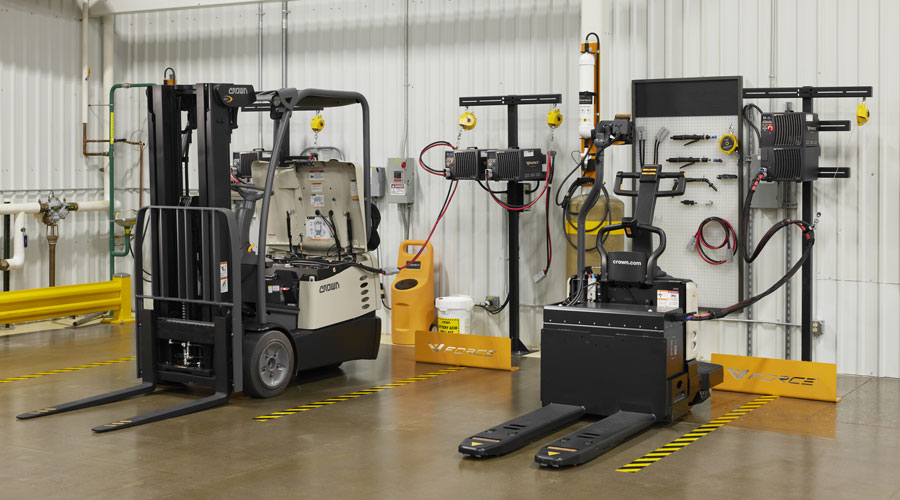
how long does it take to equalize a forklift battery
Equalizing a forklift battery typically takes 2 to 4 hours per cycle, but the full process including charging and cooling can stretch to 6–8 hours. This preventive maintenance step helps balance cell voltages, dissolve sulfate crystals, and extend battery life—yet many operators skip it due to timing confusion.
What Is Forklift Battery Equalization?
Equalization is a controlled overcharge applied to a lead-acid battery after a normal charge cycle. It deliberately raises the voltage higher than the standard charging threshold to equalize the specific gravity and voltage across all cells. Over time, individual cells drift apart—some underperform, others overwork—which reduces capacity and leads to premature sulfation. An equalizing charge forces weaker cells to catch up while preventing stronger cells from overcharging.
Why Equalization Matters for Battery Longevity
Without regular equalization, your battery may lose up to 30% of its rated capacity within a year. The process also mixes the electrolyte, reducing stratification (acid settling at the bottom). For operations running multiple shifts, skipping equalization accelerates internal plate corrosion and grid growth. The result is costly premature replacement—often thousands of dollars per battery.
Standard Equalization Duration: The Precise Breakdown
The total time depends on battery condition, charger type, and ambient temperature. Here is a realistic timeline for a typical 24-volt or 36-volt lead-acid forklift battery:
| Stage | Typical Time | Notes |
|---|---|---|
| Initial charge to 100% SOC | 6–8 hours (if depleted) | Standard CC/CV charge |
| Equalization phase | 2–4 hours | Constant current at 110–120% of normal voltage |
| Cooldown and settling | 1–2 hours | Electrolyte temperature must drop below 110°F |
| Total estimated span | 9–14 hours | From fully discharged to ready |
Voltage and Current Settings
For a standard 36V battery, equalization voltage runs between 44.4V and 46.8V (2.6–2.7V per cell). For 48V systems, that’s 59.2V to 62.4V. The charger runs in constant current mode at roughly 5% of the battery’s amp-hour rating. For example, a 600Ah battery receives about 30A during equalization. Endpoint criteria are typically a specific gravity reading of 1.280–1.300 (corrected to 80°F) and no rise in specific gravity for three consecutive hourly readings.
Factors That Extend or Shorten Equalization Time
Battery Age and Condition
A relatively new battery with balanced cells may only need 2 hours of actual equalization. An older, abused battery with severe sulfation can require 4–5 hours, and sometimes a second round after a 12-hour rest. If the specific gravity difference between cells exceeds 0.030, expect longer cycles. Conversely, proactive monthly equalization keeps individual cells within 0.010 points, shortening every subsequent session.
Charger Quality and Intelligence
Modern microprocessor chargers (like those used with Liftron Material Handling equipment) automatically terminate equalization based on dV/dt (change in voltage over time) or temperature. Older ferroresonant chargers run on a fixed timer, which often over-equalizes newer batteries and under-equalizes tired ones. Smart chargers reduce time by 30–40% because they do not waste energy gassing excessively.
Electrolyte Temperature
Hot batteries (above 110°F) cannot absorb equalization efficiently—the charge converts to heat rather than chemical energy. If the ambient warehouse temperature is 95°F, the battery may need forced cooling before equalization starts. This adds 1–2 hours. In colder environments (below 60°F), the chemical reaction slows, extending equalization by 20–30 minutes per 10°F drop. Always check manufacturer recommendations for temperature-compensated voltage.
How Often Should You Equalize?
The industry standard is every 5 to 10 charge cycles, or once per week for single-shift operations. If your forklifts run 24/7, you may need equalization twice per week. However, avoid over-equalizing—excessive voltage causes grid corrosion and reduced plate life. The key is to measure specific gravity after every fifth charge. If the readings differ by more than 0.010 points between cells, schedule an equalization cycle. If they are within 0.005, you can wait another few cycles.
Signs That Equalization is Incomplete
- Specific gravity continues to rise after 4 hours at high voltage
- Cell voltage difference remains above 0.05V after cooling
- Excessive gassing with bubbles that do not subside
- Battery case feels hot (above 120°F) during the final hour
Practical Scheduling Tips for Fleet Managers
Most operations schedule equalization on weekends or during low-demand shifts. If you have dual batteries per forklift, you can rotate: battery A is equalized while battery B is in use. Always allow the full completion of the equalization cycle—interrupting it mid-cycle invites stratification and crystal growth. Never equalize a fully charged battery “for a quicker top-off”—that defeats the purpose.
Using Automatic Equalization Features
Many modern chargers feature a “dedicated equalization mode” that can run while the battery is disconnected from the truck. Pair this with a battery watering system to keep electrolyte levels correct (equalization consumes water due to gassing). For lithium alternatives like the Liftron DL SERIES, equalization is not required at all—lithium batteries maintain balanced cells via internal BMS, reducing downtime to zero. However, for legacy lead-acid fleets, the 2–4 hour equalization process is non-negotiable to protect your capital investment.
Step-by-Step Equalization Procedure
- Fully charge the battery using a normal charge cycle until the charger shuts off.
- Let the battery rest for 1–2 hours (never equalize a hot battery).
- Top up all cells with distilled water to the correct level (do not overfill).
- Set the charger to equalization mode (or manually set voltage to 110% of nominal).
- Run for 2 hours, then check specific gravity and temperature every 30 minutes.
- Stop when specific gravity stabilizes and cell differences are below 0.010.
- Let the battery cool for at least 2 hours before returning to service.
- Record readings for trend analysis—this helps predict battery replacement needs.
Measuring Success: Post-Equalization Metrics
After a proper cycle, the specific gravity reading should be within 0.005 points across all cells. The open-circuit voltage after a 2-hour rest should match the manufacturer’s specification—typically 2.13–2.16V per cell. A well-equalized battery also shows a lower temperature rise during subsequent normal charging. If you notice that equalization times are increasing every month, that signals permanent sulfation or plate shedding—time to budget for a new battery.
Ultimately, the 2–4 hour equalization window is a sweet spot—long enough to ensure chemical balance but short enough to fit into your planned downtime. Monitor your specific gravity data consistently, adjust frequency based on usage, and never rush the process. A disciplined equalization schedule can extend battery life from 1,500 to 2,000 charge cycles, saving your operation $2,000–$4,000 per battery. In contrast, ignoring equalization guarantees capacity loss and premature failure. For modern lithium options like the Liftron DL SERIES, you eliminate this entire maintenance chore, but if you are still running lead-acid, treat equalization as an investment, not an interruption.


Add a review
Your email address will not be published. Required fields are marked *