
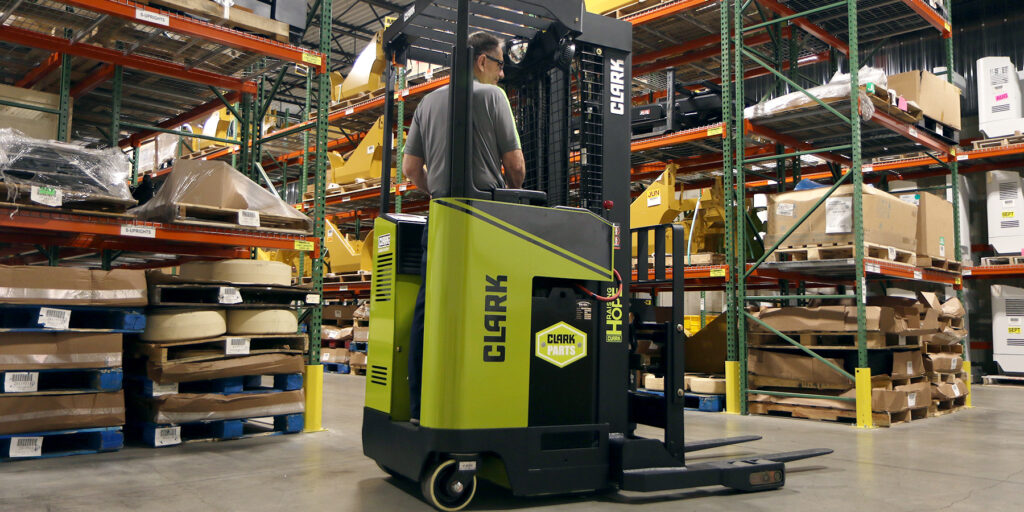
How to operate a stand up reach forklift
Operating a stand up reach forklift requires mastering precise controls, safety protocols, and spatial awareness to navigate narrow warehouse aisles and elevate loads efficiently. This guide covers fundamental techniques, pre-operation checks, and best practices to ensure productivity and accident prevention.
Understanding the Stand Up Reach Forklift
Unlike counterbalance forklifts, stand up reach forklifts are designed for tight spaces, allowing operators to stand while maneuvering and reaching up to high racking systems. The key distinction is the pantograph mechanism that extends the forks forward, enabling pallet retrieval without moving the entire truck.
Key Components and Controls
- Control handle: Multi-function tiller arm controlling direction, speed, horn, and auxiliary functions.
- Reach mechanism: Hydraulic or electric pantograph that extends forks outward.
- Mast assembly: Two-stage or three-stage mast for vertical lifting up to 30+ feet.
- Side shift: Allows lateral fork movement for precise pallet placement.
- Operator compartment: Standing platform with safety sensors and overhead guard.
Pre-Operation Inspection
Before every shift, perform a thorough walk-around check. Verify tire condition, fluid levels (hydraulic oil, battery electrolyte for lead-acid models), and structural integrity. Test the horn, lights, brakes, and steering responsiveness. For modern lithium-ion models like the Liftron Material Handling stand up reach forklift, ensure the battery charge indicator shows adequate power and check for error codes on the display panel.
Daily Checklist Essentials
- Battery: Charge level, connections, and no visible damage.
- Forks: No cracks, excessive wear, or bending.
- Mast and reach chains: Lubrication and tension.
- Safety systems: Overhead guard, seat belt (if present), and operator presence interlock.
- Hydraulic lines: No leaks or abrasions.
Basic Operating Procedures
Mounting and Positioning
Step onto the platform facing the mast. Keep your body upright with feet shoulder-width apart for stability. Do not lean out of the compartment. Engage the parking brake before starting. Position the truck so the load is centered—never approach a pallet from an angle.
Driving and Steering
Stand up reach trucks use rear-wheel steering. Pull the control handle to move forward; push to reverse. Turn the handle left or right to pivot the rear wheels. Always travel with the forks at a safe height—typically 4 to 6 inches off the ground—and tilted slightly back for stability. Reduce speed on wet or uneven surfaces.
Lifting and Reaching
To lift, press the lift button while gently pulling the control handle backward. For reach extension, push the reach lever forward slowly. Never exceed the rated capacity. When placing a load, use side shift and reach-in to align pallet edges with rack beams. The Liftron DL SERIES is a lithium-ion powered stand up reach truck with regenerative braking and intuitive controls designed for high cycle operations.
Safety Best Practices
| Hazard | Precaution |
|---|---|
| Load instability | Check load weight and center of gravity; use proper pallet condition. |
| Pedestrian collisions | Use horn at blind corners and intersections; yield to pedestrians. |
| Tip-overs | Avoid sharp turns at speed; keep load low while traveling. |
| Pinch points | Keep hands away from mast and reach assembly during operation. |
| Overhead obstructions | Know rack heights and warehouse clearance; lower mast before entering trailers. |
Operator Presence Interlock
Modern stand up reach forklifts include a pressure-sensitive floor mat that cuts power if the operator steps away. Never bypass this safety feature. If the truck stops unexpectedly, check that you are fully on the platform before restarting.
Maneuvering in Narrow Aisles
Stand up reach forklifts excel in aisles as narrow as 8 to 10 feet wide. Approach racks with the truck centered and forks level. Use the reach function to extend into the rack rather than driving the entire truck forward. This reduces aisle width requirements and improves throughput. Always verify that the flipper bars or rack guides are correctly aligned before lowering the load.
Charging and Maintenance
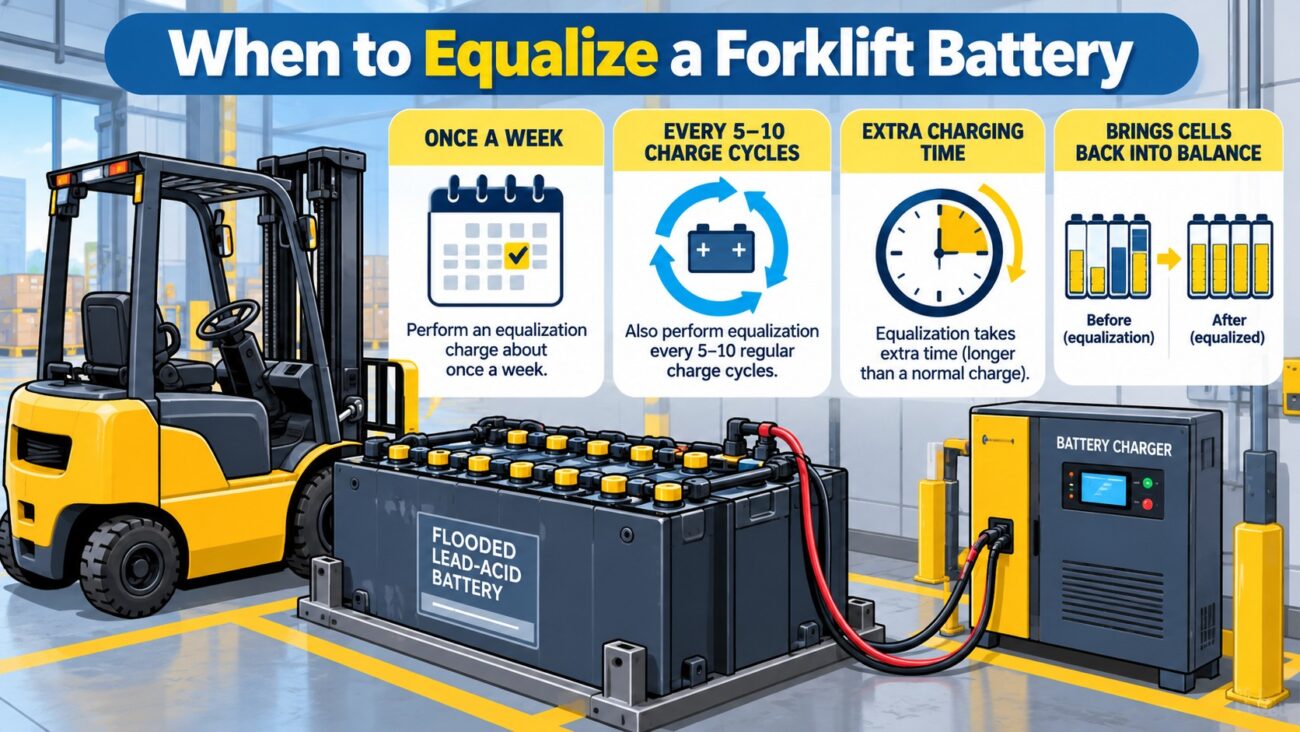
For lithium-ion models, charging can occur during breaks without memory effect. Lead-acid batteries require full charges and watering checks. Store the forklift with forks lowered to floor level. Weekly maintenance includes greasing mast bearings, checking hydraulic oil levels, and inspecting tires for wear. Always follow manufacturer guidelines for specific models, such as those from Liftron Material Handling.
Battery Handling
- Use only approved chargers matching battery voltage.
- Ensure adequate ventilation during charging to prevent gas buildup.
- Wear personal protective equipment when handling electrolyte.
Common Mistakes and How to Avoid Them
- Overloading: Always check the data plate; never exceed certified capacity at the specified load center.
- Poor load positioning: Center the pallet on forks to prevent tipping.
- Traveling with raised forks: Keep forks at travel height to improve stability and visibility.
- Ignoring warning lights: Investigate any dashboard alerts before continuing operation.
- Rushing turns: Sharp turns at speed cause rear-end swing and potential collisions.
Advanced Techniques for Experienced Operators
Once comfortable with basic controls, practice “double deep” racking, where pallets are stored two deep. This requires precise reach extension and load positioning. Additionally, learn to use the side shift incrementally to square loads without reversing. High-frequency operations benefit from the Liftron DL SERIES lithium-ion solutions, which offer fast charging and consistent power output throughout the shift.
Final Tips for Efficiency
Plan your route to minimize reversing in aisles. Keep a clear line of sight by adjusting the mast angle when necessary. Use a spotter when handling oversized loads. Always perform a post-shift inspection to report any damage or unusual sounds. Consistent training and adherence to best practices will extend both operator skill and equipment life.


Add a review
Your email address will not be published. Required fields are marked *