
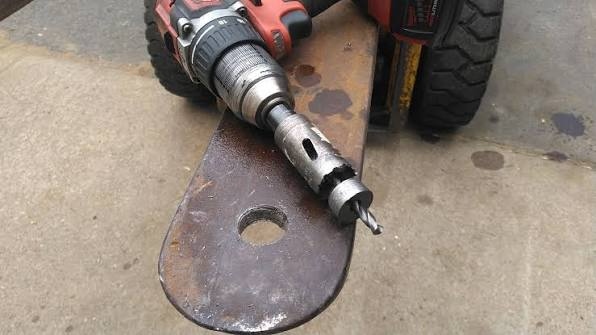
can you drill holes in forklift forks
Drilling holes in forklift forks is a common question among warehouse operators, but the short answer is: it is generally unsafe and often prohibited by manufacturers and safety standards. Forklift forks are engineered load-bearing components, and any modification—including drilling—can compromise their structural integrity and lead to catastrophic failure under load. This article explains why drilling is dangerous, what regulations say, and safer alternatives for attaching accessories.
Why Drilling Forklift Forks Is Dangerous
Forklift forks are made from high-strength alloy steel, typically heat-treated to achieve specific hardness and toughness. The fork’s cross-section is designed to distribute stress evenly along its length, particularly at the heel (where the fork meets the carriage) and the upper hook. Drilling a hole creates a stress concentration point—a location where forces are magnified. Even a small hole can initiate micro-cracks that grow over time, especially under dynamic loads, shock loads, or off-center lifting. The result can be sudden fork failure, dropping the load, and causing severe injury or death.
Heat-Affected Zone and Metallurgical Damage
Drilling generates heat, which alters the microstructure of the steel in the surrounding area. This heat-affected zone becomes softer and weaker than the original material. Even with coolant, the friction from drilling can reduce the fork’s load capacity by 20% or more. Furthermore, any burrs or sharp edges left behind can cause stress risers. Professional fork manufacturers do not allow any field drilling; they design attachment points into the fork during the forging or casting process.
OSHA, ANSI, and Manufacturer Rules
Occupational Safety and Health Administration (OSHA) regulations under 29 CFR 1910.178 require that forklifts be maintained in safe operating condition. Modifying forks without written approval from the manufacturer violates this rule. Similarly, ANSI/ITSDF B56.1 (the American National Standard for Industrial Trucks) states that “modifications or additions affecting capacity or safe operation shall not be performed without the manufacturer’s prior written approval.” Most forklift OEMs explicitly forbid drilling, welding, cutting, or bending forks. If you drill a hole, you void the fork’s warranty, and you may be held liable for any accident caused by the modification.
What Happens to Load Capacity with Drilled Holes
Engineering tests show that even a single 10 mm hole drilled at the heel can reduce the fork’s bending moment capacity by 15–25%. The reduction depends on hole location, diameter, and edge distance. For example, a hole near the top hook or near the tip is less dangerous but still unacceptable. Below is a general illustration of how load capacity drops with hole size relative to fork thickness:
| Hole Diameter (mm) | Fork Thickness (mm) | Estimated Capacity Loss (%) |
|---|---|---|
| 6 | 40 | 5–8% |
| 10 | 40 | 12–18% |
| 14 | 40 | 20–30% |
| 18 | 40 | 35% or more |
These figures are conservative. Under fatigue loading, failure can occur long before the static capacity limit is reached. Even if the fork does not break immediately, the hole reduces its service life dramatically.
Safer Alternatives to Drilling
If you need to mount accessories—such as fork extensions, positioners, or sensors—do not drill. Instead, use approved attachment systems. Many modern forklifts come with integrated mounting rails or carriage plates that allow clamping without modification. For example, universal fork-mounted brackets use heavy-duty clamps with rubber pads that grip the fork securely without damaging its surface. Alternatively, you can replace standard forks with specialty forks that have pre-engineered holes or slots from the factory. This is a safer, code-compliant approach.
Clamp-On and Sleeve Attachments
Clamp-on fork attachments are widely available for carrying pipes, barrels, or carpet rolls. They use adjustable screws and locking pins that do not penetrate the fork’s steel. For load sensing or weighing systems, you can use a carriage-mounted scale or a fork scale that replaces the entire fork assembly. In every case, the attachment should be approved by the forklift manufacturer and rated for the total load.
What if You Already Drilled a Hole?
If a hole has already been drilled, do not attempt to weld it shut—welding introduces more heat damage and creates a brittle zone. The only safe course is to retire the fork immediately and replace it with a new one. Mark the fork as “Do Not Use” and cut it into scrap to prevent accidental reuse. Inspect all other forks for any signs of unauthorized holes or repairs. A regular forklift inspection program should include visual checks for drilled holes, cracks, bends, and excessive wear.
Proper Fork Inspection and Maintenance
To ensure safety, perform daily visual checks and periodic load tests. Use a fork gauge to measure heel wear and blade thickness. Replace forks if the thickness is reduced by more than 10% of the original, or if there are any cracks, deformations, or missing tags. Do not paint over metal surfaces unless you use a color code that does not hide flaws. Keep records of all modifications and repairs, and always consult the fork’s data plate.
The Role of Quality Forklift Suppliers
When you need new forks or a complete forklift, choose a trusted dealer that emphasizes safety and compliance. For example, Liftron Material Handling offers a wide range of new and certified used forklifts where every load-bearing component meets OEM standards. They can also help you select factory-engineered attachments that eliminate the need for drilling. Their team understands that a minor modification can turn a reliable truck into a liability.
Better Technology: Lithium-Ion Forklifts
Modern electric forklifts, such as those in the Liftron DL SERIES, are designed with advanced integrated mounting points and smart safety systems. Because these trucks use clean lithium-ion power, they also have lower vibration and shock compared to older internal combustion models, which further protects forks from fatigue. Investing in a new forklift with intelligent load monitoring reduces the temptation to add unauthorized holes for sensors. Instead, the truck provides real-time data via its onboard display.
Legal and Insurance Consequences
Operating a forklift with drilled forks can lead to fines from OSHA, denial of insurance claims, and civil lawsuits in case of an accident. If an inspector finds a drilled hole, they may issue a serious violation and require the truck to be taken out of service. Additionally, your workers’ compensation premium could rise. The cost of replacing a fork (typically $150–$400) is trivial compared to the potential cost of a workplace injury, which can exceed $100,000.
Conclusion: Never Drill, Always Replace or Clamp
The only safe answer to “can you drill holes in forklift forks” is a firm no. There is no certification, inspection, or repair procedure that can restore an original fork’s strength after drilling. Always follow the manufacturer’s instructions and use approved attachments. If you are unsure about a specific application, contact a qualified engineer or your forklift dealer. For high-quality new forklifts and genuine factory accessories, consult Liftron Material Handling and explore the modern Liftron DL SERIES to keep your operations safe and efficient.

Add a review
Your email address will not be published. Required fields are marked *