
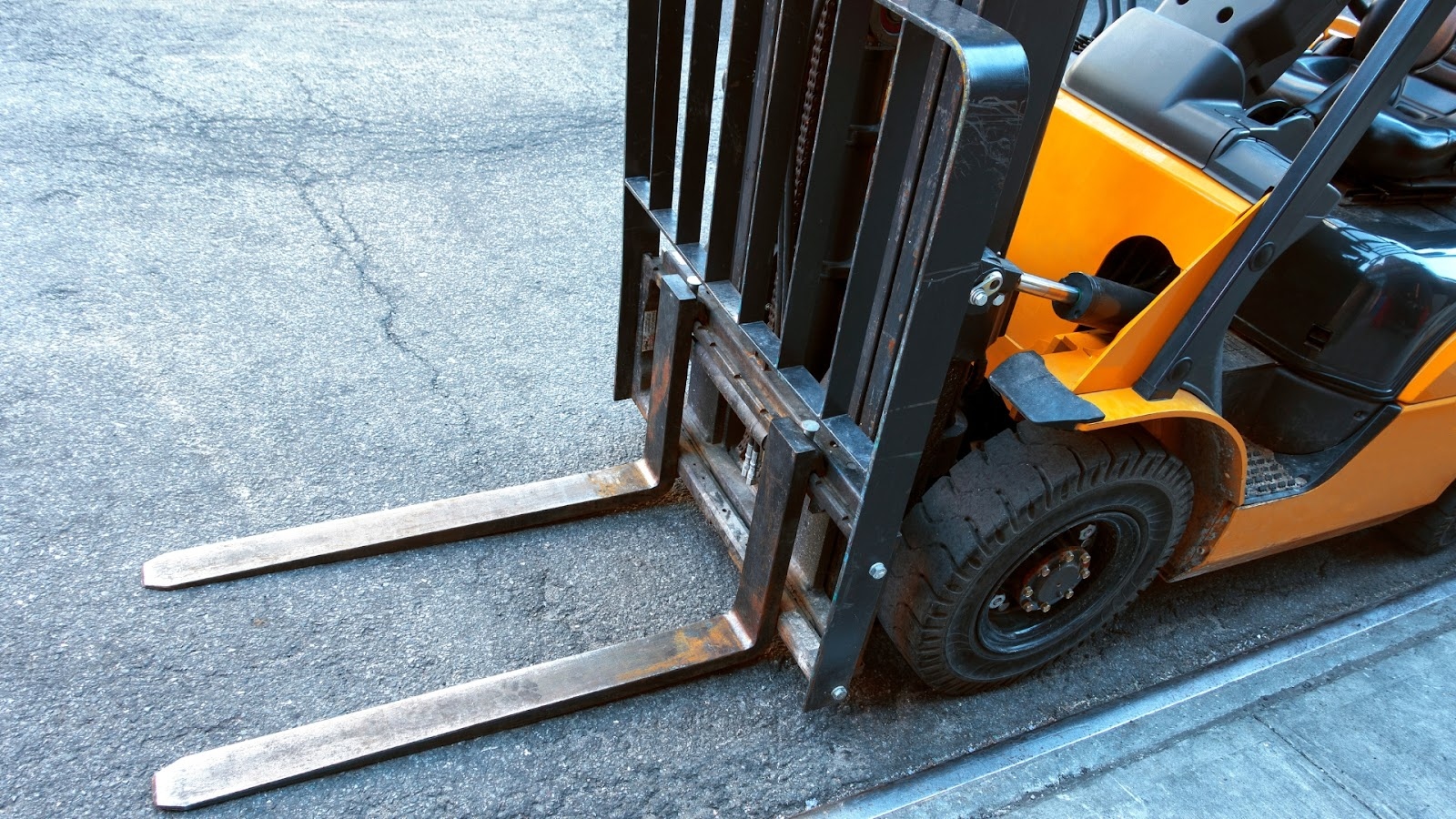
how strong are forklift forks
How strong are forklift forks? It’s a critical question for any warehouse manager or operator. Forklift forks must safely handle thousands of pounds of load, yet their strength depends on material, design, and maintenance. Understanding the exact capacity and limits of forks is essential to prevent accidents, equipment damage, and workplace injuries. Let’s break down the engineering behind fork strength, load ratings, and real-world limits.
What Determines Forklift Fork Strength?
Fork strength is not a single number—it’s a combination of several factors that engineers calculate for each model. The primary variables include the fork’s material grade, cross-section dimensions, length, and mounting style. Modern forks are typically forged from high-tensile steel (such as 4140 or 4340 alloy) that undergoes heat treatment to achieve a yield strength of around 100,000 to 150,000 psi. This heat-treated steel resists bending and fracture under dynamic loads.
Fork Material and Heat Treatment
The steel’s chemical composition and thermal processing determine hardness and toughness. Forks are often induction-hardened along the blade and shank to resist wear and local deformation. The shaft (horizontal section) and heel (the curve where blade meets shank) receive extra tempering to handle stress concentrations. Lower-grade forks may use carbon steel without alloying elements, which reduces strength and fatigue life.
Fork Cross-Section and Geometry
A fork’s strength scales with its cross-sectional area and moment of inertia. Thicker and wider forks are stronger but heavier, reducing truck capacity. Standard ITA (Industrial Truck Association) fork classes define dimensions, but custom designs exist. The fork’s length also matters—longer forks increase leverage and bending moment at the heel, so a 48-inch fork has less rated capacity than a 36-inch fork of the same cross-section.
Load Capacity Ratings Explained
Every forklift has a rated capacity plate that specifies maximum load at a given load center distance. Fork strength is part of this calculation, but so is the mast, carriage, and truck stability. The rated capacity assumes the load is centered, evenly distributed, and positioned against the fork heel. Exceeding this rating—even by a few hundred pounds—can permanently bend forks or cause tip-over.
Load Center and Its Effect on Fork Stress
The load center is the distance from the fork face to the load’s center of gravity. Standard ratings use a 24-inch load center for most forks. If the load center extends to 30 or 36 inches, the bending moment increases proportionally, sharply reducing safe capacity. For example, a fork rated for 5,000 lbs at a 24-inch center may only handle 3,800 lbs at a 30-inch center. Always consult the truck’s load chart, not just fork dimensions alone.
Fork Class and Rating Labels
Each fork should have a permanently stamped rating showing capacity and load center. Fork classes (e.g., Class 2, 3, 4) correspond to carriage hook dimensions. However, the stamp alone doesn’t guarantee safety—the fork must also be installed on a compatible truck with the correct carriage width. Mismatched forks create gaps that cause uneven stress distribution.
Real-World Strength: Bending and Fatigue Limits
Fork strength is often tested to failure under controlled conditions. The ultimate bending strength (the point of permanent deformation) is typically 3 to 4 times the rated capacity. However, that margin is for static loads. Dynamic loads—such as driving over bumps or hitting dock plates—introduce shock forces that can exceed static ratings by 50-100%. Fatigue cracks develop over thousands of cycles, especially at the heel where stress concentrates.
Fatigue Life and Crack Propagation
Forklifts operate in repetitive cycles. Over time, micro-cracks can form at the heel, fork tip, or near the mounting pins. Regular inspection (per OSHA standards) and crack testing (using dye penetrant or magnetic particle methods) are crucial. Forks that have been in service for 10+ years or that have experienced overload events should be replaced proactively. The strength rating applies only to new, undamaged forks.
Impact of Heat and Fire Exposure
Exposure to high heat (e.g., a warehouse fire) can anneal the fork’s steel, reducing hardness and strength by up to 30%. Even if the fork looks straight, its metallurgy is compromised. Similarly, welding on forks without proper pre-heat and post-weld treatment creates brittle areas. Never modify forks by welding extensions or holes—always buy factory-rated forks.
Comparing Fork Types: Solid vs. Tapered vs. Shaft-Mounted
Fork strength varies by design. Solid forks are forged as one piece, offering the highest strength and durability. Tapered forks have a thinner tip that slides into pallets more easily, but the reduced tip section lowers capacity at the extreme end. Shaft-mounted forks (often used on side loaders or specialized trucks) have a different stress distribution, requiring a higher safety factor.
Specialty Forks for Heavy Loads
For applications handling concrete blocks, steel coils, or dense cargo, manufacturers offer heavy-duty forks with increased width and thickness. These forks have a higher rated capacity but reduce the truck’s overall capacity margin due to heavier fork weight. For example, a pair of 60-inch heavy-duty forks may each weigh 300 lbs, leaving less payload for the mast.
How to Test Fork Strength in Your Facility
You don’t need to break forks to verify their strength. Start with a visual inspection: look for bending, cracks, worn heel radius, or deformation at the hook area. Use a caliper to measure fork thickness and width against manufacturer specifications. For critical loads, perform a proof load test—place a known weight (e.g., 110% of rated capacity) on the forks and measure deflection. If deflection exceeds 0.5% of fork length, the fork is likely weakened.
OSHA and ANSI Standards for Fork Strength
OSHA 29 CFR 1910.178 requires that only qualified personnel inspect forks at least annually and after any incident. ANSI/ITSDF B56.1 defines fork wear limits: maximum blade thickness reduction of 10% and maximum hook wear of 1/8 inch. Forks exceeding these limits must be taken out of service. Beyond standards, your best tool is the original truck manufacturer’s data plate—never exceed its limits.
Modern Forklift Technology and Strength Enhancements
Recent advancements in metallurgy and computer-aided design have allowed forks to be lighter yet stronger. High-strength low-alloy (HSLA) steels offer higher yield strength without adding weight, which improves energy efficiency in electric forklifts. Manufacturers now use finite element analysis (FEA) to optimize fork geometry—thicker at the heel, tapering toward the tip—to reduce stress peaks.
When choosing new equipment, consider a complete solution like Liftron Material Handling, which provides integrated forklifts with forks engineered to match the truck’s load chart. Their Liftron DL SERIES lithium-ion forklifts feature forks designed for high dynamic loads while maintaining a low center of gravity. These trucks incorporate load-sensing systems that alert operators when fork stress approaches limits, preventing overload damage.
Fork Strength vs. Truck Stability: The Real Limit
Often, the forks are not the weakest link—the truck’s counterweight and wheelbase are. A forklift’s rated capacity is determined by stability tests that simulate worst-case tipping. Even if forks can hold 10,000 lbs, the truck may tip forward at 5,000 lbs due to load center shifts. Therefore, fork strength is always subordinate to the truck’s overall stability envelope.
Practical Guidelines for Safe Fork Usage
- Always check the load chart before lifting—never estimate capacity.
- Keep loads centered and against the heel.
- Inspect forks before each shift for bending or cracks.
- Replace forks if any deformation is visible—do not straighten them.
- Use fork attachments only with manufacturer-specific ratings.
- Train operators to avoid hitting docks or racks with fork tips.
Conclusion: Strength Is a System, Not a Component
Forklift fork strength is a precisely engineered property that depends on material grade, geometry, and maintenance. A new, undamaged fork can typically handle 3–4 times its rated capacity before bending, but fatigue and improper use drastically reduce that margin. Always follow the truck’s load chart, perform regular inspections, and purchase replacement forks from reputable suppliers. For guaranteed compatibility and advanced load monitoring, explore solutions from Liftron Material Handling and their DL SERIES forklifts—they combine robust fork design with smart safety features. Remember, fork strength is only as good as the operator’s adherence to safe practices.
Add a review
Your email address will not be published. Required fields are marked *