
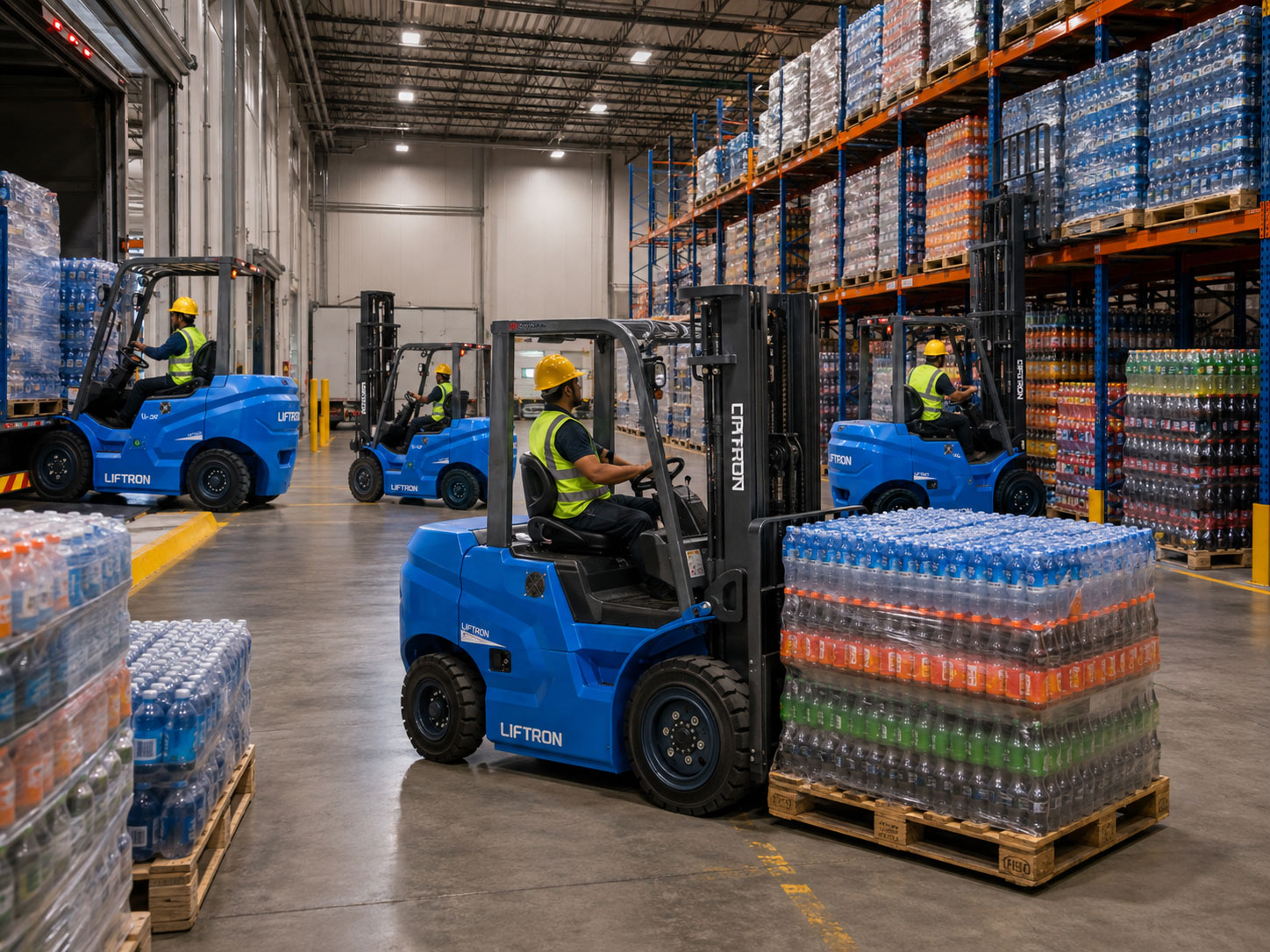
how should a forklift operator travel with a full pallet
Operating a forklift with a full pallet requires precision, awareness, and strict adherence to safety protocols. Whether you are moving raw materials on a busy dock or stacking finished goods in a tight warehouse, the correct travel technique prevents accidents, product damage, and equipment strain. Mastering these procedures reduces risk and boosts operational efficiency for any material handling fleet.
Pre-Trip Inspection Before Traveling With a Full Pallet
Never begin movement without a complete pre-shift inspection. This is not optional—it is a fundamental safety step that directly impacts load stability. Check tire pressure, hydraulic hoses, forks, mast chains, and the overhead guard. Verify that the load backrest extension is installed and undamaged. For a full pallet, the load center distance and fork positioning must match the pallet’s width. A quick inspection of the brakes and steering also prevents mid-travel failures that could destabilize the entire load.
Load Stabilization: Check the Pallet and the Load
Before lifting, confirm the pallet is in good condition—no broken boards, protruding nails, or cracked stringers. Ensure the load is evenly stacked and wrapped or banded if necessary. A full pallet with irregular boxes or loose shrink wrap can shift during acceleration, braking, or cornering. Always center the pallet on the forks, with the load against the backrest. For loads taller than the backrest, reduce travel speed and take extra care on ramps.
Correct Forklift Travel Position With a Full Pallet
The most critical rule: travel with the mast tilted backward and the forks raised only 4 to 6 inches (10–15 cm) above the ground. This low lift keeps the center of gravity low and minimizes overhead obstruction. The load must be fully tilted back against the mast to prevent sliding forward. Never travel with the forks elevated higher than necessary—even on smooth surfaces, a raised load increases tip-over risk, especially when turning.
- Mast tilt: Always tilt the mast back fully before moving. This locks the pallet against the backrest.
- Fork height: Keep the forks 4–6 inches off the floor. Clear speed bumps and dock plates at a 45-degree angle.
- Load position: Forks should be fully inserted into the pallet, with the pallet centered on the forks.
- Visibility: If the pallet blocks forward view, travel in reverse. Look in the direction of travel at all times.
Forward vs. Reverse Travel
When a full pallet obstructs your view—common with boxed goods or stacked drums—you must travel in reverse. Do not gamble with a partially blocked view. Use the rearview mirror, look over your shoulder, and sound the horn at intersections and blind corners. On inclines, travel forward when going up a ramp and reverse when going down. This keeps the load on the uphill side, preventing the pallet from sliding off the forks.
Travel Speed and Steering Control
Speed is the enemy of load stability. A full pallet dramatically increases stopping distance and reduces steering response. Keep travel speed under 5 mph (8 km/h) in warehouse aisles and below 3 mph in congested areas. On wet or slippery surfaces, reduce speed further. When turning, slow down well before the corner. Accelerate gently after the turn. Abrupt steering input—especially with a loaded mast—can cause lateral tip-over. Use smooth, measured movements.
| Travel Condition | Maximum Safe Speed | Additional Notes |
|---|---|---|
| Open dock or yard | 5 mph (8 km/h) | Watch for pedestrians and other vehicles |
| Narrow aisle (< 12 ft wide) | 3 mph (5 km/h) | Use horn at blind intersections |
| Ramp or incline | 3 mph (5 km/h) | Load must face uphill; no turns on incline |
| Wet or oily floor | 2 mph (3 km/h) | Avoid sudden braking |
Turning and Cornering With a Full Pallet
Never turn while the forklift is moving fast or while the load is raised. Complete the turn slowly, keeping the rear of the forklift as a pivot point. Remember that forklifts steer from the rear axle—this makes the tail swing wide. When turning in a narrow aisle, use the entire width of the aisle. If the pallet overhangs the fork edges, give extra clearance to racking and walls. Always slow down to a crawl before initiating any turn, and never use the brakes in the middle of a turn.
Ramps, Docks, and Uneven Surfaces
Full pallets require special caution on any incline or transition point. Before crossing a dock leveler, check the capacity rating and ensure it is locked in place. Approach at a perpendicular angle and cross slowly. On a ramp, follow the uphill-load rule: loaded forklifts travel forward when going up and reverse when going down. This keeps the load from sliding forward and maintains traction on the drive wheels. Never turn sideways on a ramp—this is a primary cause of tip-over. If the ramp is wet, chain it off and use a spotter.
Pedestrian Safety and Communication
Pedestrians are the greatest risk in any facility. With a full pallet, your reaction time is increased. Sound the horn at every intersection, blind corner, and exit. Use a spotter when backing into a rack or through a doorway. Establish eye contact with pedestrians before proceeding. Never assume a pedestrian sees you or will yield. In high-traffic areas, use a travel path that separates forklifts from foot traffic. Many facilities use painted floor markings and mirrored corners to enhance visibility.
Proper Braking and Stopping
Brake with the mast tilted back and the load low. Apply brakes gradually—smooth, controlled stops prevent the pallet from shifting forward. If you must stop quickly, press the brake firmly but do not lock the wheels. Locked wheels cause the load to slide forward off the forks or cause the rear wheels to lift. After braking, check the load position before resuming travel. It only takes a second to verify that the pallet has not shifted.
Docking and Placing the Full Pallet
When you arrive at the destination, stop the forklift completely. Raise the forks to the required height, then tilt the mast forward slightly. Approach the racking or stacking area slowly. Insert the forks straight into the pallet or rack opening. Once the pallet is resting on the rack, tilt the mast back slightly to disengage the forks. Lower the forks out of the pallet and back into travel position before moving away. Never use the load to push other pallets or move objects.
Common Mistakes to Avoid
Many operators develop bad habits that compromise safety. Traveling with the forks raised too high is the most common error. In a full-pallet scenario, this is even more dangerous. Another mistake is turning the forklift while the mast is tilted forward—this can cause the load to fall. Also, don’t use the brake as a footrest or rest your foot on the accelerator while idling. And never leave a loaded forklift unattended with the engine running. Always lower the forks, set the parking brake, and turn off the engine.
Why Equipment Choice Matters
Even the most careful operator cannot compensate for inadequate equipment. A forklift with poor stability, worn tires, or a weak mast is a hazard when carrying full pallets. Modern electric forklifts offer better load control and smoother acceleration than older models. For operations that require frequent full-pallet movement, consider high-performance equipment from Liftron Material Handling. Their range includes ergonomic controls, advanced stability systems, and regenerative braking, which helps maintain consistent travel speed without jerky stops. The Liftron DL SERIES is specifically designed for demanding warehouse environments—lithium-ion batteries provide instant torque, but the electronic speed controls allow precise, gentle acceleration even with a heavy pallet on the forks. This combination makes travel safer and reduces operator fatigue during long shifts.
Training and Certification
No article replaces formal operator training. OSHA requires every forklift operator to be trained and certified before operating equipment. This training must include practical exercises with loaded pallets. Regular refresher courses keep operators updated on new equipment and changing facility layouts. A well-trained operator who understands load dynamics will naturally travel more safely. Combine that with reliable equipment, and your facility can move full pallets with confidence and efficiency.
Add a review
Your email address will not be published. Required fields are marked *