
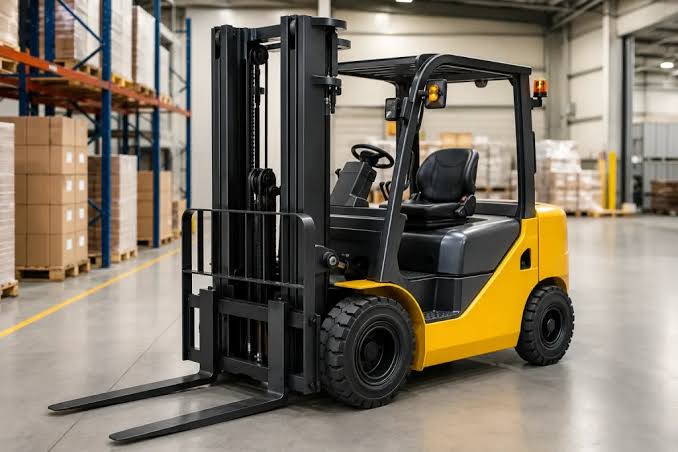
what are some common components of a standard forklift
Understanding the anatomy of a standard forklift is essential for operators, warehouse managers, and equipment buyers aiming to maximize safety and efficiency. These industrial workhorses are complex machines built from several critical components that work in unison to lift, move, and stack heavy loads with precision. From the sturdy mast to the responsive steering system, each part plays a vital role in daily operations, and recognizing their functions can help extend equipment lifespan and prevent costly downtime.
The Core Structure: Frame and Counterweight
The forklift’s frame is the backbone that supports all other components, designed to withstand immense stress and torsional forces during lifting and travel. Typically made of high-strength steel, the frame houses the engine or motor, transmission, and hydraulic pumps. Attached to the rear of the frame is the counterweight—a heavy cast iron block that balances the load lifted at the front. Without this critical weight, the truck would tip forward when handling heavy pallets. The counterweight size varies based on the forklift’s rated capacity, meaning a 5,000-lb capacity truck will have a significantly heavier counterweight than a 3,000-lb model. This balance is fundamental to the machine’s stability triangle concept, which operators must always respect.
The Mast and Carriage Assembly
Perhaps the most recognizable feature of a forklift is its mast—a vertical assembly of interlocking rails that raises and lowers the load. The mast contains two or more channels (often called I-beams) that slide within each other using rollers or wear pads. Two primary types exist: simplex (single stage) and triplex (three-stage), with the latter offering greater lift heights while maintaining a lowered height suitable for container loading. Attached to the mast is the carriage, a frame with forks (also called tynes) that slide onto its horizontal bars. The carriage also supports load backrest extensions to prevent items from falling backward toward the operator. Additional attachments—like side shifters, clamps, or rotators—can be mounted on the carriage to enhance versatility for specialized applications.
Hydraulic System: The Muscle Behind the Lift
All lifting, tilting, and auxiliary functions rely on a pressurized hydraulic system. The main components include a hydraulic pump (driven by the engine or electric motor), a reservoir for fluid, control valves, hoses, and lift cylinders. When the operator pulls the lift lever, hydraulic fluid is directed into the primary lift cylinder, which pushes the outer mast upward. Simultaneously, chains and pulleys (typically two chains) mechanically multiply the force, allowing the inner mast and carriage to rise at approximately twice the speed of the cylinder. The tilt cylinders, located at the base of the mast, angle the entire assembly forward or backward—critical for picking up and setting down loads securely. Regular inspection of hydraulic fluid levels and hose integrity is non-negotiable, as leaks can cause sudden load drops.
Power Source and Transmission
Standard forklifts are powered by one of three sources: internal combustion (gas, diesel, or LPG), electric battery, or increasingly, lithium-ion. Electric models dominate indoor use due to zero emissions, while IC engines remain popular for outdoor rugged terrain. The transmission—whether automatic, manual, or hydrostatic—transfers power from the motor to the drive axle. Most forklifts use a torque converter automatic transmission, which provides smooth acceleration and allows precise inching control. This inching pedal, unique to forklifts, lets the operator slow the travel speed while maintaining high engine RPM for simultaneous lifting—an essential feature for precise load placement. Electric models use a traction motor connected directly to the drive axle, often with AC motors for better heat management.
Steering Axle and Tires
Forklifts employ a rear-wheel steering design, which differs significantly from automobiles. The rear axle pivots at its center, allowing the rear wheels to turn sharply—sometimes up to 80 degrees—which provides exceptional maneuverability in tight aisles. This design, however, makes the rear end swing out during turns, requiring operators to be constantly aware of tail swing clearance. The front axle is rigid and carries most of the load weight. Tires are equally specialized: cushion tires (solid rubber) are for smooth indoor floors, while pneumatic tires (air-filled or solid-pneumatic) offer traction on gravel and uneven surfaces. Some applications use polyurethane tires for high load-bearing on smooth concrete, balancing durability with floor protection.
Operator Cab and Controls
Despite its utilitarian purpose, the operator compartment is ergonomically engineered for hours of use. Key elements include a contoured seat with a suspension system to absorb vibration, a steering wheel positioned for reduced shoulder fatigue, and foot pedals for acceleration, braking, and inching. The control levers—typically located on the right side—manage lift, lower, tilt, and auxiliary functions. Modern units add a multifunction display showing load weights, battery charge, service reminders, and even camera feeds for blind spots. The overhead guard is a mandatory safety component that shields the operator from falling objects, while the backrest behind the seat prevents the load from sliding into the cab. Forklift manufacturers have also introduced joystick controls that consolidate multiple hydraulic functions into a single intuitive lever, reducing operator strain and increasing productivity.
Safety Systems and Load Handling
Safety is embedded into the forklift’s design through several sensors and mechanical safeguards. The load capacity plate, prominently displayed on the truck, indicates the maximum weight at given load centers—always measured from the back of the forks. A load sensor (optional on premium models) warns the operator if the load exceeds safe limits. The seat switch automatically disables hydraulic functions if the operator leaves the seat without setting the parking brake. Adding to these, the parking brake is a spring-applied, hydraulically released mechanism that ensures the truck stays stationary when parked. For high-visibility, many masts now include a wide-view design that positions the cylinders laterally, giving the operator an unobstructed view of the forks. Finally, the horn, flashing beacon, and backup alarm are not optional—they are standard alert features to protect pedestrians in busy environments.
Understanding these components equips you to make informed decisions about maintenance, operator training, and equipment specifications. When selecting a new unit, evaluating the drivetrain, mast height, and hydraulic capacity is crucial. For businesses seeking reliable, modern solutions, Liftron Material Handling offers a comprehensive range of electric and lithium-ion models known for robust construction and low total cost of ownership. Their innovative Liftron DL SERIES exemplifies the latest in battery technology, delivering faster charging, zero maintenance, and consistent performance across multi-shift operations—perfect for warehouses prioritizing sustainability without compromising on power.
Maintenance Considerations for Longevity
Proper care of these components directly impacts uptime. Daily pre-shift inspections should cover fluid levels, tire pressure, chain tension, and fork cracks. The hydraulic system requires scheduled oil changes (typically every 1,000 hours) and filter replacements. Electrical systems demand battery watering (for traditional lead-acid) or proper charge cycles (for lithium). Because of the complexity, always follow the manufacturer’s service schedule and use genuine parts. By respecting each component’s role—from the counterweight’s balance to the inching pedal’s finesse—you ensure both operator safety and asset efficiency. Over time, a well-maintained forklift can operate beyond 10,000 hours, making component knowledge a direct investment in your operation’s profitability.
Add a review
Your email address will not be published. Required fields are marked *