
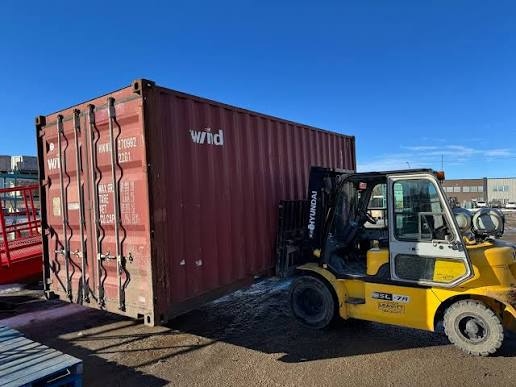
can you move a shipping container with a forklift
Can a Forklift Move a Shipping Container? The Short Answer Is Yes, but It’s Not That Simple
Yes, a forklift can move an empty or light shipping container, but standard models lack the capacity for loaded 20- or 40-foot containers. Most standard forklifts max out at 5,000–15,000 lbs, while a loaded container averages 30,000–67,000 lbs. Moving containers requires specialized heavy-lift forklifts, such as reach stackers or container handlers, with capacities of 25,000–100,000+ lbs. However, with the right attachment, a high-capacity forklift in the 25,000–35,000 lb range can safely relocate empty or partially loaded containers within a yard. Let’s break down the real-world scenarios, weight math, attachments, and safety rules you need to know before attempting this task.
Understanding Container Weights and Forklift Capacity
Before you even consider lifting a shipping container, you must calculate its gross weight. A standard 20-foot empty container weighs about 4,500 lbs, while a 40-foot empty weighs around 8,000 lbs. Once loaded, a 20-footer can reach 52,000 lbs gross, and a 40-footer can hit 67,200 lbs. Your forklift’s rated capacity—typically measured at a 24-inch load center—drops significantly when you attach a container spreader or twist-lock frame, which adds weight and shifts the load center forward. For example, a 30,000 lb capacity forklift with a 2,000 lb attachment might only handle 26,000 lbs safely.
Which Forklift Types Can Handle Containers?
Not every forklift is built for this job. Here’s a practical breakdown of machine types and their container-moving abilities:
- Standard counterbalance forklift (5,000–15,000 lbs): Only for moving empty containers on smooth concrete, and often requires a designated container attachment. In most cases, you’ll need to reinforce the container’s bottom rail and use a top-lift frame.
- Heavy-duty forklift (25,000–35,000 lbs): The most common solution for yards. With a telescopic spreader or top-lift attachment, these can handle empty or lightly loaded containers (up to 15,000–20,000 lbs) without issue.
- Reach stacker (45,000–100,000 lbs): The industry standard for stacking containers two to five high. Not technically a “forklift” but similar functionality; it includes a boom and telescopic spreader.
- Container handler / top lifter (60,000–90,000 lbs): Designed specifically for ISO containers, with an integrated twist-lock spreader that engages all four corners. Safer and faster than a standard forklift.
Critical Attachments: It’s All About the Twist Locks
Lifting a container with a forklift without a proper attachment is dangerous and destructive. Standard forks cannot slide under a container’s floor—the bottom is flat. You have two main attachment options:
1. Top-Lift Spreader (Crucial for Loaded Containers)
A top-lift attachment connects to the forklift’s carriage and engages the container’s four top-corner castings using twist locks. This gives you a stable, connection-point lift. However, a top-lift spreader for a 20-foot container weighs roughly 3,000–5,000 lbs, so you’ll need a truck that still retains sufficient capacity after that deduction. Many yard operators use top lifts with 30,000+ lb forklifts to move empty containers and handle light consolidation work.
2. Bottom-Lift / Container Slipper (Limited Use)
For empty containers only, you can use a bottom-lift attachment with forks that slide into the container’s fork pockets (if present) or under the bottom rail. This approach is less stable and can bend the corner castings. It’s rarely recommended by OSHA because it lacks positive locking. If you use this method, the container must be completely empty, and the truck must have a side-shift feature to align with the pockets.
Real-World Scenarios: When a Forklift Is the Practical Choice
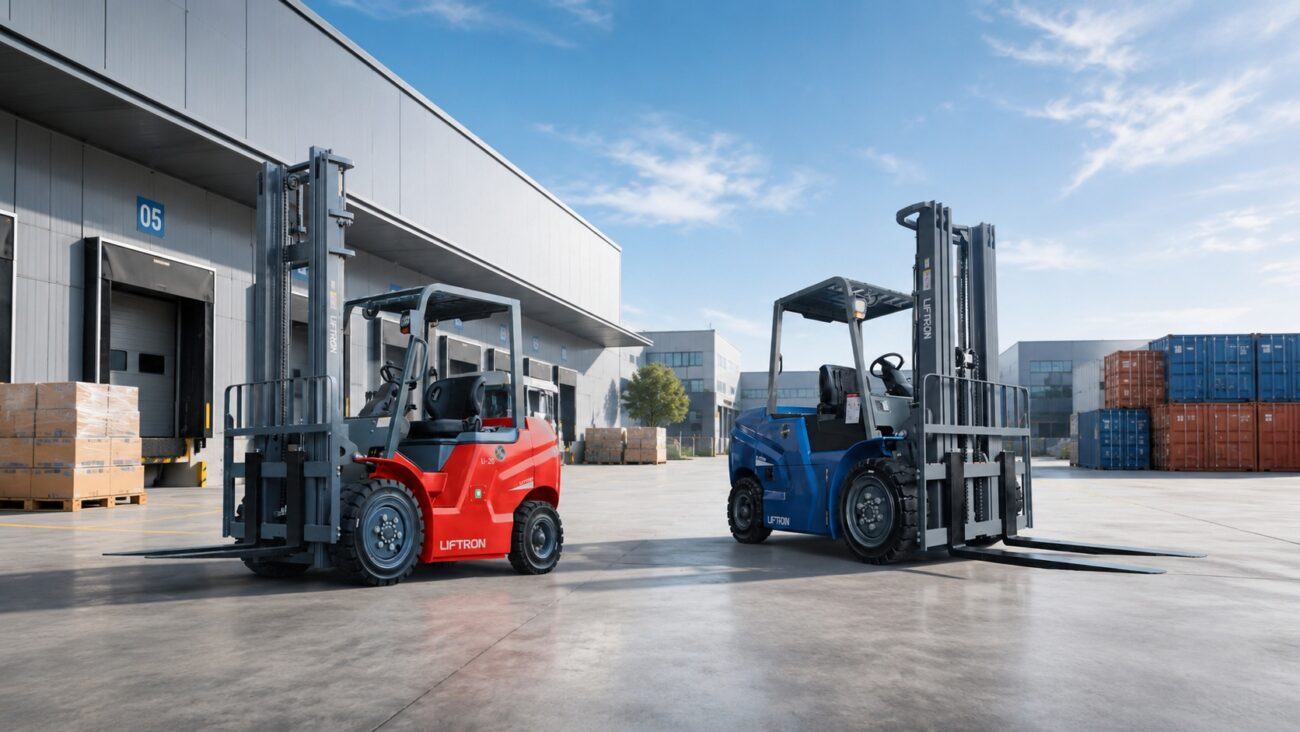
Now let’s focus on practical conditions. If you are moving a single empty 20-foot container a short distance (under 50 feet) on a hard, level surface, a 25,000 lb capacity Liftron Material Handling forklift with a top-lift attachment can do the job. Here are the cases where you’d legitimately use a forklift instead of a reach stacker:
- Repositioning one empty container to a different bay for loading or storage.
- Lifting a container onto a flatbed trailer (only if the container is empty or under 10,000 lbs total).
- Moving a partially loaded 10-foot or 20-foot container within a warehouse or yard.
- Loading/unloading containers from a railcar (only with proper side clearance and using a spreader).
In contrast, never attempt to move a loaded 40-foot container (gross 67,000 lbs) with a forklift. You’d need a 70,000–100,000 lb capacity unit, which is essentially a reach stacker. Standard forklift masts and chassis are not designed for dynamic lifting at that weight, and the load center distance becomes excessive.
Weight Calculations with a Practical Example
Let’s run a quick load chart calculation for a typical heavy-duty forklift:
| Forklift Rated Capacity (at 24″ LC) | Spreader Weight | Effective Capacity | Max Container Gross Weight You Can Lift |
|---|---|---|---|
| 30,000 lbs | 4,000 lbs | 26,000 lbs | Empty 20 ft (~4,500 lbs) or lightly loaded (up to 21,500 lbs cargo + container) |
| 35,000 lbs | 4,500 lbs | 30,500 lbs | Empty 40 ft (~8,000 lbs) or partially loaded (up to 22,500 lbs total) |
| 50,000 lbs | 6,000 lbs | 44,000 lbs | Loaded 20 ft (up to ~44,000 lbs gross) |
As shown, even a 50,000 lb forklift with a spreader cannot safely handle a loaded 40-foot container. That’s why reach stackers dominate in ports. For small yards and depots, a 30,000–50,000 lb forklift is the sweet spot for occasional use.
Safety Rules You Must Follow
Container forklift operations are governed by OSHA 1910.178 and ANSI ITSDF B56.1. Here are non-negotiable safety rules:
- Check the load chart: Always verify that the combined weight of the container plus attachment plus any cargo is within 75% of the truck’s rated capacity (common maritime practice). Do not exceed the nameplate capacity.
- Inspect the container: Look for bent corner castings, rusted bottom rails, or structural damage. Never lift a damaged container.
- Use twist locks properly: Ensure all four top castings are engaged and visually confirm the locks are closed before lifting. Never lift from only two corners.
- Keep the load low: When traveling, tilt the mast back and keep the container just 6–12 inches above the ground. Never travel with the container raised at mast height.
- Clear the path: Ensure no workers are within 20 feet of the lift path. Use a spotter for blind corners.
- Check ground conditions: Asphalt can soften in heat; concrete is preferred. Avoid soft soil, mud, or gravel.
Why Choose a Lithium-Ion Powered Heavy Forklift for Container Work?
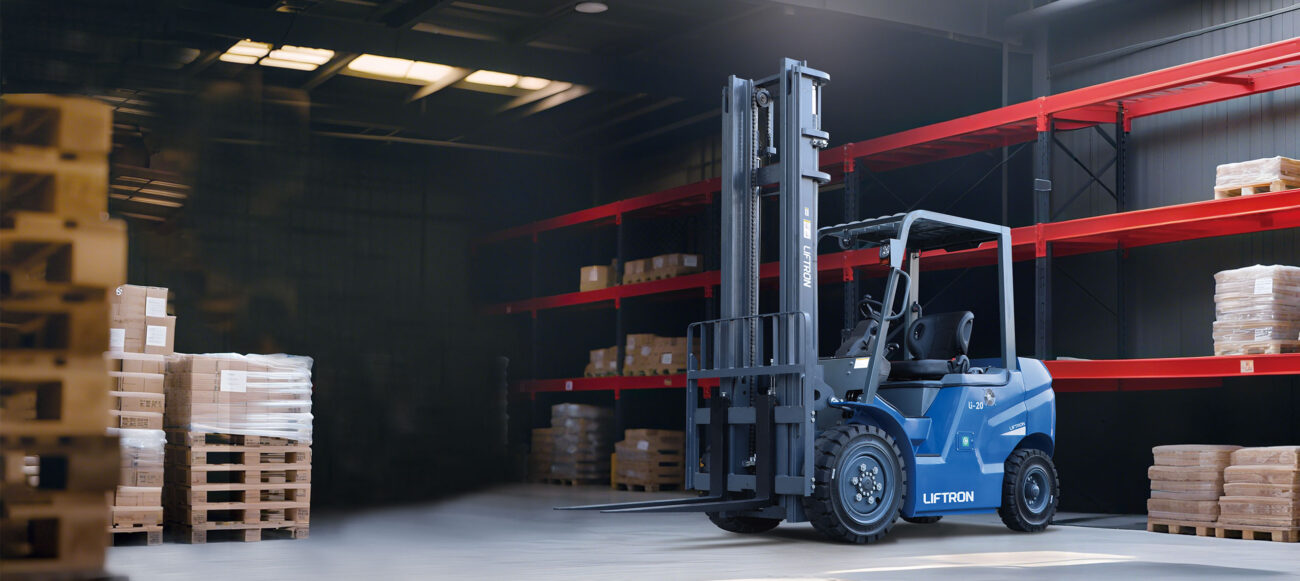
For container yards that need routine moving of empty or light containers, electric lithium-ion forklifts are gaining ground over diesel or LP models. They provide instant torque, zero emissions (important for indoor or partially enclosed storage areas), and lower maintenance costs. When looking for a machine with the necessary capacity and compact design, the Liftron DL SERIES offers robust lift capacities up to 35,000 lbs with an integrated side-shift and optional top-lift attachment. This series is engineered for high-duty cycles, with regenerative braking and rapid charging, making it a practical choice for facilities that handle a few container moves daily without investing in a full reach stacker. The DL SERIES also features a reinforced mast and heavy-duty carriage to handle the dynamic load of container lifting.
The Verdict: Match the Machine to the Task
So, can you move a shipping container with a forklift? Yes—if you follow these conditions: the container is empty or lightly loaded, you use a proper top-lift spreader with twist locks, the forklift has at least 25,000 lbs rated capacity (30,000 is safer), and you stay within your load chart’s safe working range. For anything beyond occasional empty-container relocation, you should invest in a specialized container handler or reach stacker. Always consult your forklift manufacturer’s load chart and your equipment dealer for specific attachment ratings. Remember, one wrong lift can cause the container to topple, resulting in severe injury or death—so never improvise with standard forks and chains.
Add a review
Your email address will not be published. Required fields are marked *