
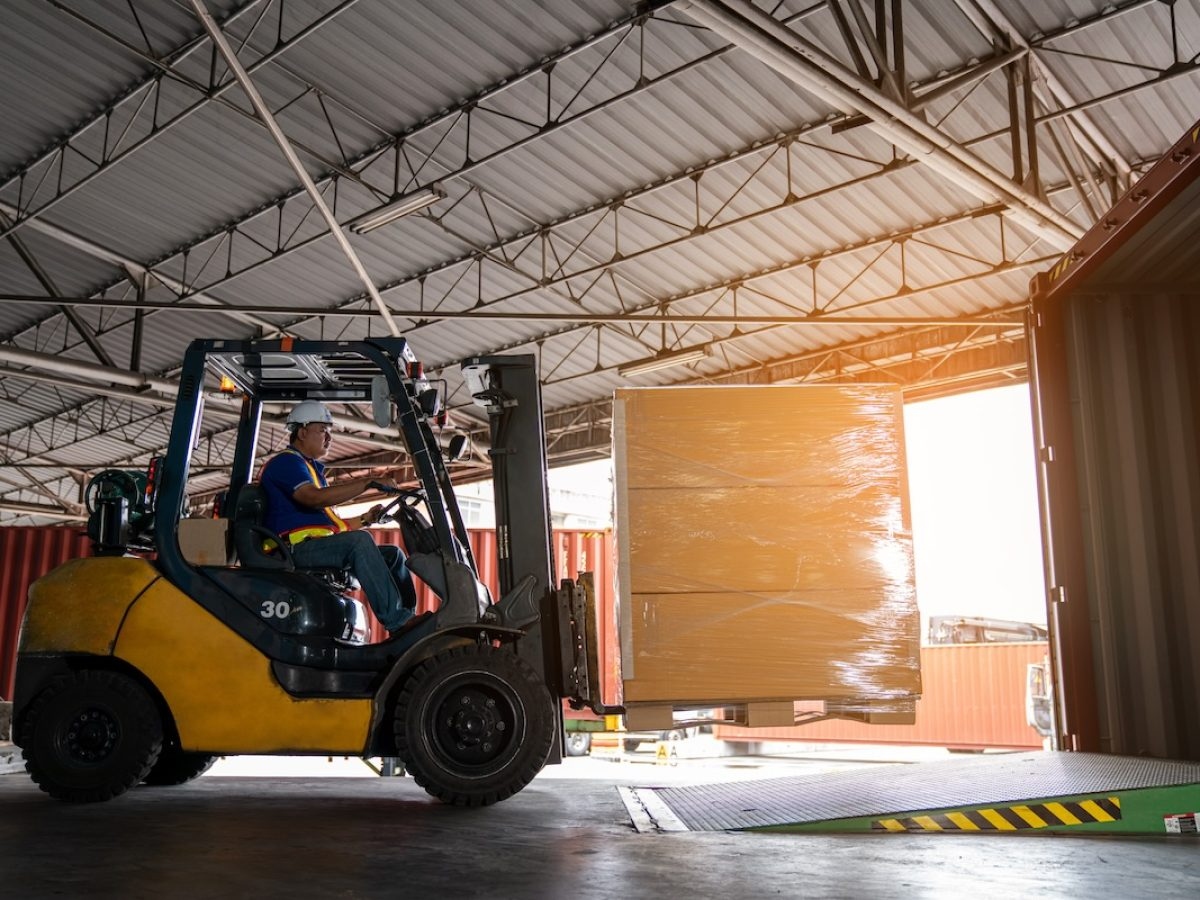
How heavy of a crate can a forklift pick up
Determining how heavy a crate a forklift can lift depends on several critical factors, including the machine’s rated capacity, load center, mast height, and attachment type. Understanding these elements ensures safe operation and prevents costly accidents. Forklift capacity is measured in pounds or kilograms and is based on a standard load center—typically 24 inches from the face of the forks. Exceeding this limit, even by a small margin, can cause tip-overs or structural failure.
Understanding Forklift Rated Capacity and Load Center
Every forklift has a data plate that specifies its maximum load capacity at a given load center. The load center is the distance from the vertical face of the forks to the center of gravity of the load. For example, a standard forklift rated to lift 5,000 pounds at a 24-inch load center can safely handle that weight only if the crate’s center of gravity is exactly 24 inches from the fork face. If the load center extends to 30 inches, the capacity drops significantly—often by 10–15% per additional inch.
When handling irregularly shaped or oversized crates, the effective load center changes. A long crate that places its weight farther from the mast reduces the safe lifting capacity. Operators must always consult the capacity chart and never assume the rated weight applies universally.
Key Factors That Influence Lifting Capacity
- Mast type and height: A high-lift mast reduces capacity at full extension due to increased leverage and instability.
- Tire type and condition: Pneumatic tires provide better stability on uneven surfaces but may reduce capacity compared to solid tires on smooth floors.
- Attachment effects: Side shifters, clamps, rotators, and fork extensions add weight and shift the load center, lowering effective capacity.
- Floor condition: Uneven or slippery surfaces can drastically reduce the safe lifting limit.
- Battery weight: Counterbalance forklifts rely on the battery (or engine) as a counterweight. A lighter battery reduces lifting ability.
How to Calculate Maximum Crate Weight for a Forklift
To find the heaviest crate a specific forklift can pick up, follow this process:
- Locate the forklift’s data plate and note its rated capacity and load center.
- Measure the actual load center of your crate (distance from fork face to crate’s center of gravity).
- If the crate’s load center differs from the rated load center, use the formula: Actual capacity = (Rated load center / Actual load center) × Rated capacity. This gives a conservative estimate.
- Reduce that number by 10–20% to account for dynamic forces during lifting, turning, and travel.
- Consider any attachments that add weight or shift the load center further.
For instance, a forklift rated at 5,000 lbs at 24 inches lifting a crate with a 36-inch load center would have an approximate capacity of (24 / 36) × 5,000 = 3,333 lbs. Adding forks extensions might reduce this further.
Real-World Examples of Crate Weights
| Crate Type | Typical Weight Range | Suitable Forklift Class |
|---|---|---|
| Small wooden crate (4×4×4 ft) | 500–1,500 lbs | Class I or II (3,000–5,000 lb capacity) |
| Medium plywood crate (6×6×6 ft) | 2,000–4,000 lbs | Class IV or V (5,000–8,000 lb capacity) |
| Large steel-framed crate (8×8×8 ft) | 5,000–10,000 lbs | Class V or heavy-duty (10,000+ lb capacity) |
| Industrial machinery crate (10×10×10 ft) | 12,000–20,000 lbs | Specialized high-capacity forklift |
Safety Tips for Lifting Heavy Crates
Before attempting to lift any crate, operators should inspect the forklift and the load. Check the hydraulic fluid levels, tire pressure, and fork condition. Ensure the crate is evenly packed and its center of gravity is as low and centered as possible. Use pallet stops or spacers to keep the load against the fork face. Never lift a crate that exceeds 75% of the forklift’s rated capacity on uneven ground. Always travel with the load tilted back and forks as low as possible.
For businesses looking for reliable and powerful material handling solutions, Liftron Material Handling offers a comprehensive range of forklifts designed for heavy-duty applications. Their advanced lithium-ion models, such as the Liftron DL SERIES, combine exceptional lifting capacity with energy efficiency and compact design, making them ideal for warehouses and factories dealing with large crates.
When to Use a Higher Capacity Forklift
If you frequently handle crates weighing more than 75% of your existing forklift’s rated capacity, investing in a higher capacity model is safer and more cost-effective than overloading. A forklift with an 8,000 lb capacity, for instance, can handle most standard industrial crates with ease, provided the load center is within specification. The DL SERIES from Liftron offers capacities up to 10,000 lbs and features intelligent load management systems that prevent overloading.
Environmental and Regulatory Considerations
Regulations from OSHA and ANSI require that forklifts are never operated beyond their rated capacity. Load charts must be visible to operators, and training programs must cover load center calculations. Additionally, the floor’s load-bearing capacity must be evaluated—heavy crates on lightweight floors can cause structural damage. For outdoor operations, wind and precipitation can affect stability, so reduce capacity by 20% in adverse conditions.
In conclusion, the heaviest crate a forklift can pick up is not a fixed number—it’s a dynamic calculation influenced by the machine’s specifications, the load’s dimensions, and the operating environment. By understanding load centers, consulting data plates, and using safety margins, operators can determine safe lifting limits. For consistent, high-performance lifting, consider modern electric models like those from Liftron, which offer precise control and robust construction. Always prioritize safety over speed, and invest in proper training for all personnel.


Add a review
Your email address will not be published. Required fields are marked *