
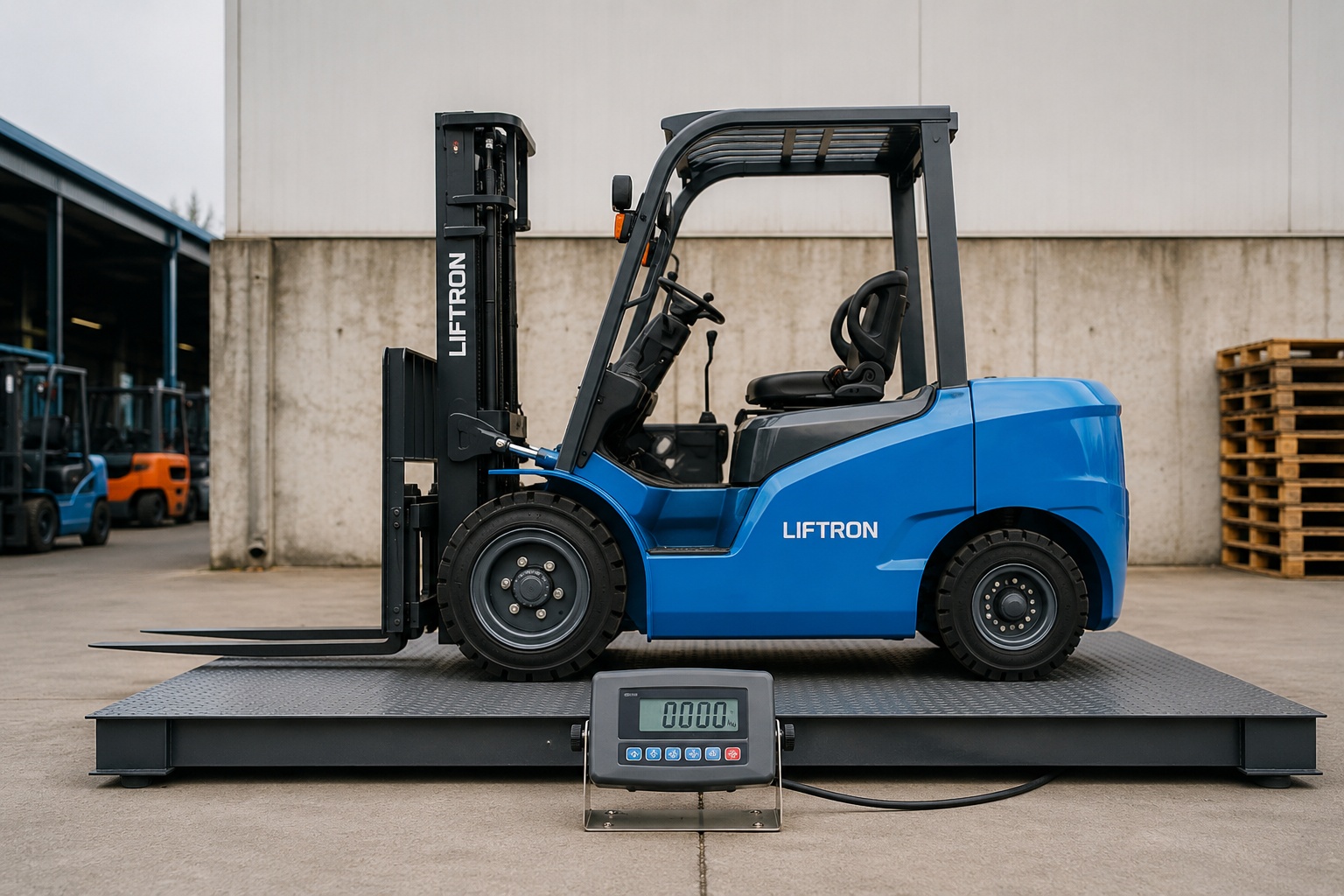
How Much Does a Liftron Forklift Weigh?
The weight of a forklift plays a critical role in transportation, workplace safety, floor loading, and operational efficiency. If you are considering a Liftron forklift, understanding its service weight can help you choose the right equipment for your business needs.
Understanding Liftron Forklift Weight
A Liftron forklift’s weight depends heavily on the specific model, battery configuration, mast size, and lifting capacity. Generally, forklifts with higher load capacities require larger frames, stronger components, and heavier counterweights, which naturally increase the overall service weight.
Liftron Material Handling offers a wide range of electric material handling equipment designed for warehouses, distribution centers, manufacturing facilities, retail operations, and logistics applications. Depending on the equipment category, Liftron forklift weights typically range from approximately 4,400 lbs (2,000 kg) to 11,700 lbs (5,350 kg).
Liftron Electric Pallet Jacks and Walkies
Electric pallet jacks are among the lightest products in the Liftron lineup. These machines are designed for horizontal transportation of palletized goods and are commonly used in warehouses, supermarkets, and loading docks.
Typical models in the CBD series weigh approximately:
- 4,400 lbs (2,000 kg) on the lower end
- Up to 9,300 lbs (4,260 kg) depending on configuration
Because of their compact size and maneuverability, electric pallet jacks are ideal for facilities with narrow aisles and limited storage space. Their lighter weight also makes transportation and deployment easier compared to larger forklifts.
Liftron Electric Reach Trucks
Reach trucks are designed to maximize vertical storage capacity. They allow operators to reach higher rack levels while maintaining excellent maneuverability in narrow warehouse aisles.
Liftron DE series electric reach trucks typically weigh:
- Approximately 7,300 lbs (3,300 kg)
- Up to 10,300 lbs (4,700 kg)
These units incorporate advanced battery systems, reinforced masts, and sophisticated control systems that contribute to their overall weight. Reach trucks are especially popular in high-density warehouse environments where maximizing storage space is a priority.
Liftron Electric Stand-On and Rider Forklifts
For heavier lifting applications, Liftron offers electric stand-on and rider forklifts such as the DD series. These machines are built for demanding material handling operations and can transport heavier loads over longer distances.
Typical service weight for these forklifts is around:
- 11,700 lbs (5,350 kg)
The additional weight comes from larger battery packs, reinforced chassis construction, stronger drive systems, and increased counterbalance requirements. These forklifts are commonly used in manufacturing facilities, large distribution centers, and industrial environments.
Why Forklift Weight Matters
Many buyers focus primarily on lifting capacity, but forklift weight is equally important for several reasons:
1. Transportation Requirements
When moving a forklift between job sites, you need trailers and transportation equipment capable of handling its weight safely.
2. Floor Load Capacity
Warehouse floors have specific load-bearing limits. A heavier forklift may require verification that the facility floor can safely support both the forklift and its maximum load.
3. Stability and Safety
Forklift weight contributes to counterbalancing the load being lifted. Properly designed weight distribution improves operational stability and reduces the risk of tip-overs.
4. Storage and Logistics Planning
Knowing the forklift’s weight helps facility managers plan loading docks, elevators, storage areas, and transportation schedules more effectively.
How to Choose the Right Forklift
Selecting the right forklift involves much more than comparing specifications. Businesses should evaluate their operating environment, budget, and long-term material handling needs.
Choose Based on Your Working Environment
The first step is to evaluate where the forklift will operate.
- Warehouses with narrow aisles may benefit from reach trucks.
- Loading docks and retail backrooms often utilize electric pallet jacks.
- Manufacturing facilities may require rider forklifts with higher capacities.
- Outdoor applications may need specialized equipment depending on terrain and operating conditions.
Understanding your daily workflow helps narrow down the most suitable forklift category.
Compare Different Brands and Pricing
Forklift prices can vary significantly between manufacturers. While established global brands may command premium pricing, emerging manufacturers often provide competitive alternatives with attractive value propositions.
For example, Liftron Material Handling offers modern electric forklifts and material handling solutions designed to balance performance, reliability, and affordability. Many rental companies and dealers also provide promotional programs that help reduce initial acquisition costs.
Among the available options, the Liftron DL SERIES is designed to support a wide range of applications. Featuring lithium-ion battery technology, these forklifts deliver efficient operation, reduced maintenance requirements, fast charging capabilities, and consistent performance throughout the workday.
Rent for Short-Term Use, Buy for Long-Term Operations
Another important consideration is whether to rent or purchase a forklift.
Renting is often the best solution when:
- The project duration is temporary.
- Seasonal demand fluctuates.
- The business wants to avoid large upfront investments.
- Equipment requirements may change in the near future.
Purchasing is generally more cost-effective when:
- The forklift will be used daily.
- Long-term operational costs are a priority.
- The company wants full control over equipment availability.
- Consistent material handling requirements exist year-round.
For businesses with continuous warehouse or manufacturing operations, investing in a forklift often provides better long-term value compared to repeated rental expenses.
Final Thoughts
Liftron forklift weights vary significantly depending on the model and application. Electric pallet jacks typically weigh between 4,400 and 9,300 lbs, electric reach trucks range from approximately 7,300 to 10,300 lbs, and heavy-duty rider forklifts can weigh around 11,700 lbs. Understanding these weight ranges helps businesses make informed decisions regarding transportation, facility planning, and equipment selection.
When choosing a forklift, evaluate your operating environment, compare available brands, and determine whether renting or purchasing makes the most financial sense. With versatile solutions such as the Liftron DL SERIES and other electric material handling products, businesses can find equipment that meets both operational and budget requirements.
Add a review
Your email address will not be published. Required fields are marked *