
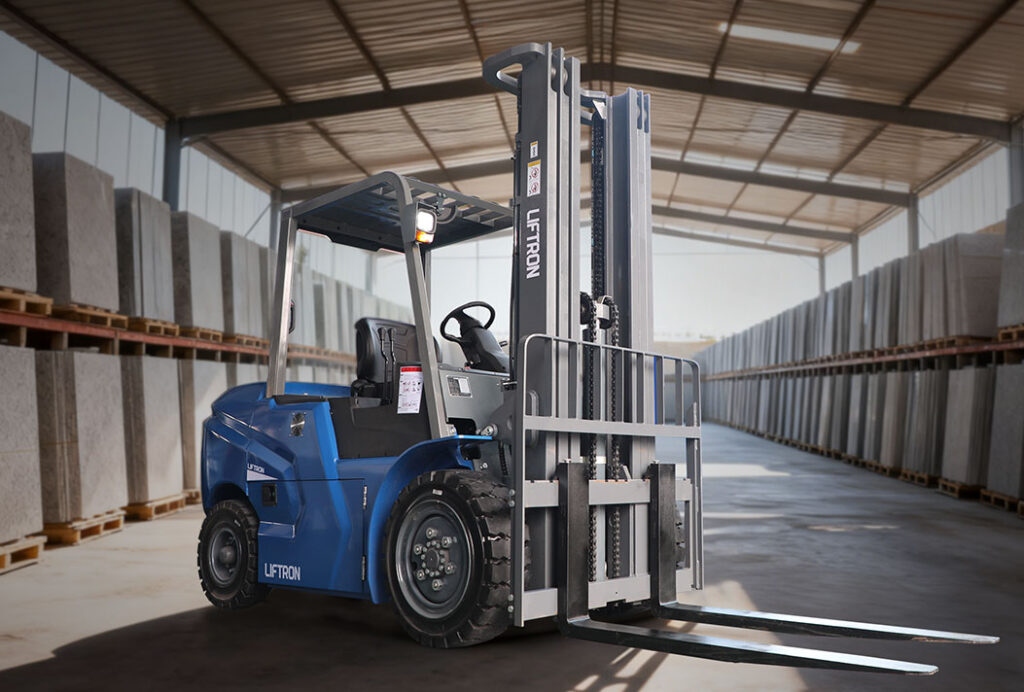
where are liftron forklifts manufactured
If you’re sourcing a reliable electric forklift, knowing exactly where Liftron forklifts are manufactured is crucial for quality assurance, spare parts availability, and long-term service support. Liftron’s production strategy combines advanced Chinese manufacturing expertise with global engineering standards, ensuring each unit meets rigorous performance and safety benchmarks before it reaches your warehouse floor.
The Manufacturing Footprint of Liftron Forklifts
Liftron forklifts are primarily manufactured in state-of-the-art facilities located in Anhui Province, China—a region globally recognized as a powerhouse for industrial vehicle production. This strategic location gives Liftron direct access to a mature supply chain ecosystem, skilled labor, and cutting-edge lithium-ion battery technology, all of which contribute to the brand’s reliability and cost-effectiveness. The parent company operates ISO-certified plants that enforce strict quality control at every stage, from steel fabrication to final assembly and load testing. While the core chassis and mechanical components are produced in China, Liftron integrates key electronic and battery systems sourced from international Tier-1 suppliers, ensuring compatibility with global standards such as CE and UL certifications.
Why China-Based Manufacturing Works for Your Business
Many procurement managers question whether Chinese-manufactured forklifts can match European or Japanese alternatives. The answer lies in the evolution of the industry. Today’s Chinese factories, particularly those producing Liftron Material Handling equipment, use robotic welding, laser-guided assembly lines, and automated battery management testing. This allows for consistent production tolerances that older manual assembly methods could never achieve. Moreover, the proximity to lithium-ion cell suppliers means that Liftron can offer competitive pricing on electric models without sacrificing cycle life or charge speed. For businesses in North America, Europe, and the Middle East, this manufacturing base also translates into shorter lead times for custom configurations, as the production lines are flexible enough to handle both standard and bespoke orders without delays.
In-House vs. Outsourced Production
Unlike many brands that rely heavily on third-party contractors, Liftron maintains dedicated in-house production for critical safety components such as mast assemblies, hydraulic systems, and drive motors. This vertical integration reduces the risk of quality variance and ensures that every forklift leaving the factory floor has undergone identical testing protocols. The company also keeps a separate facility for painting and surface treatment, which prevents corrosion and extends the machine’s operational lifespan—a common pain point in cheaper imported units. By controlling these core processes, Liftron can offer a consistent five-year structural warranty, something that outsourced brands frequently struggle to match.
Understanding the Global Supply Chain for Liftron Parts
Even though manufacturing occurs in China, the aftermarket support network is global. Liftron maintains regional distribution hubs in Texas, Rotterdam, and Dubai, which stock high-turnover parts like wheels, contactors, and battery connectors. This means that if you operate a fleet of Liftron electric lift trucks, you are not reliant on waiting weeks for a shipment from the factory. Most service parts are available within 48 hours from these regional centers. Furthermore, the company has invested in a digital parts catalog that uses VIN-based lookup, allowing dealers to identify the exact component version needed for your model year, eliminating guesswork and reducing downtime significantly.
Quality Control Measures at the Factory
Every unit undergoes a 2-hour full-load test, a 300-point inspection, and a water spray test for seal integrity before it is approved for export. The factory also samples units randomly for a 24-hour continuous shift simulation to catch premature failures. Interestingly, the lithium-ion battery packs used in models like the Liftron DL SERIES are aged and capacity-tested individually before assembly, ensuring that the rated Ah capacity remains above 95% after 1,500 cycles. This level of internal scrutiny is rare in the industry and is a direct result of the manufacturing team’s commitment to long-term durability over short-term cost cutting.
Comparing Liftron’s Manufacturing Standards to Industry Benchmarks
To give you a clearer perspective, consider the following table comparing key production attributes across typical import origins:
| Production Aspect | Liftron (China-based) | Typical Low-Cost Import | European/Japanese Built |
|---|---|---|---|
| Welding method | Robotic MIG with X-ray inspection | Manual arc welding | Robotic MIG |
| Battery cell source | Top-tier Chinese or Korean cells | Unknown/refurbished cells | Domestic premium cells |
| Load test duration | 2 hours per unit | 15-minute spot check | 1-2 hours per unit |
| Paint thickness | 85 microns average | 40-50 microns | 70-80 microns |
| Component traceability | Full digital QR code | Minimal batch records | Full digital trace |
| Warranty structure | 5-year structural / 3-year electrical | 1-year blanket | 3-5 years depending on part |
Geopolitical and Logistics Considerations
Manufacturing in China does raise legitimate questions about shipping costs and tariff exposure. However, Liftron mitigates this by using containerized knock-down (CKD) kits for certain regions, where the forklift is partially disassembled and reassembled at the destination warehouse. This reduces shipping volume by roughly 30% and lowers import duties in many countries. For example, units sent to the United States are usually shipped as CKD to Dallas, where a certified partner performs final assembly and commissioning. This approach allows Liftron to remain price-competitive while still offering local customization, such as adding side shifters or cold-storage packages without waiting for factory re-runs. The brand’s logistics team also provides real-time shipping updates via a customer portal, so you always know where your equipment is between the factory gate and your docking station.
What This Means for Your Total Cost of Ownership
Because the manufacturing base is optimized for lithium-ion technology, Liftron has been able to reduce the purchase price of electric models by as much as 20% compared to equivalent European brands, while delivering a comparable energy efficiency ratio. The localized assembly in your region also means that any warranty claims do not require shipping the forklift back to China—your local service center handles the repair, and the damaged part is returned under a prepaid label. This hybrid manufacturing and assembly model is becoming the industry standard for smart importers who want premium performance without the premium markup. For that reason, if you are evaluating a new fleet purchase, looking directly at the production origin and the associated support infrastructure is just as important as comparing lift heights and load capacities.
Final Verification Before You Buy
Before finalizing any order, always request the factory audit certificate and the plant’s ISO 9001:2015 and ISO 14001 certifications. Ask your dealer for the specific serial number range currently in production, and confirm which assembly location will handle your region’s final pre-delivery inspection. Reputable dealers will share photos or video tours of the manufacturing floor without hesitation. If a seller is vague about the factory location or resists providing documentation, that is a red flag. In contrast, Liftron’s openness about its Anhui production base, combined with regional assembly nodes, demonstrates a transparency that aligns with modern procurement best practices. Understanding these details ensures you are not just buying a lift truck—you are buying a support ecosystem that will keep your operations moving for years to come.
Add a review
Your email address will not be published. Required fields are marked *