
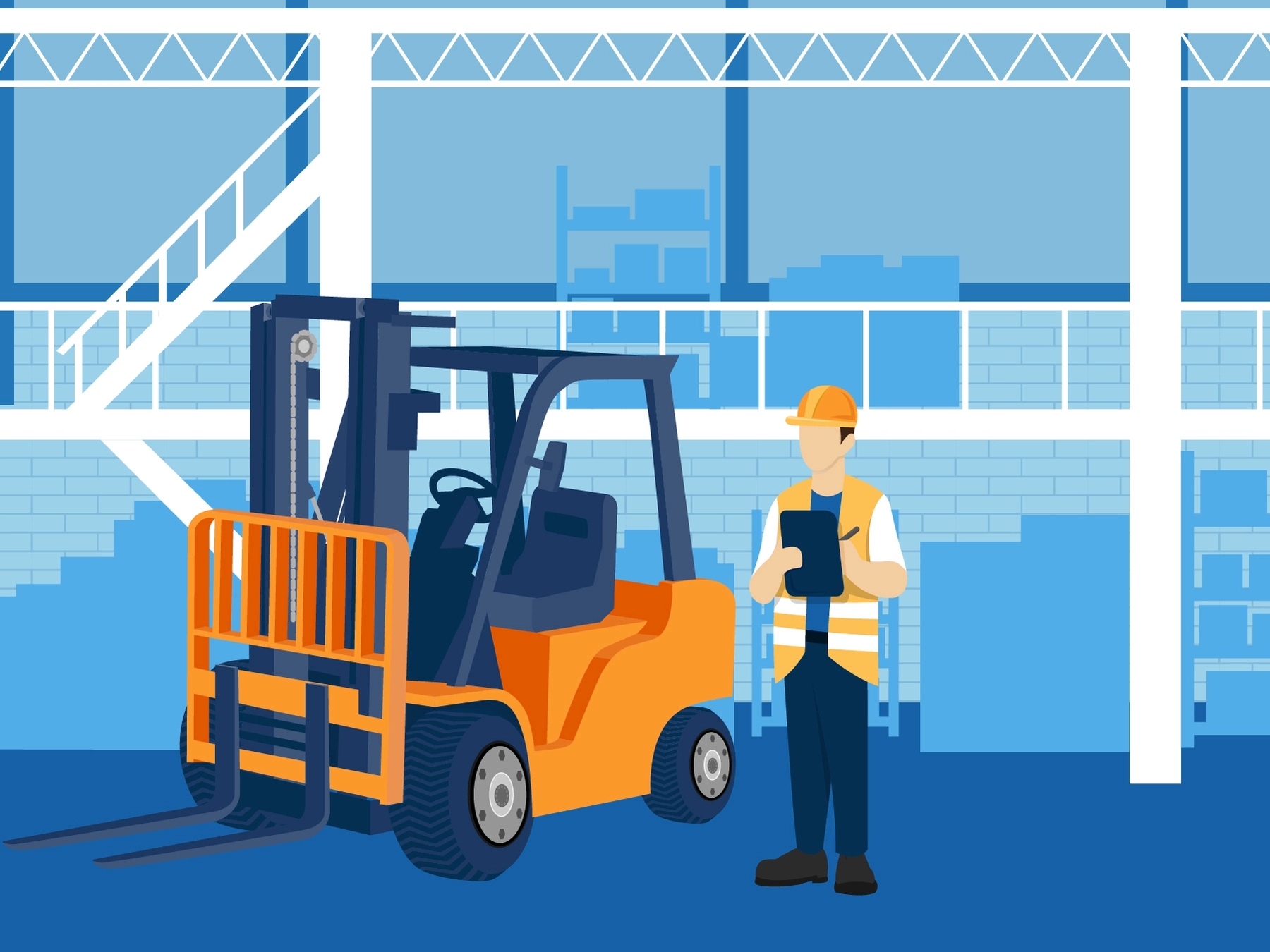
When Should a Forklift Be Checked for Damage?
Does OSHA Require Forklifts to Be Inspected?
Yes. OSHA requires powered industrial trucks to be examined before they are placed into service. A truck used during one normal shift should be inspected at least daily, while equipment used around the clock should be examined after each shift.
The inspection normally includes two stages:
- Pre-start visual inspection: Completed with the truck switched off.
- Operational inspection: Completed after startup to test steering, brakes, hydraulics, warning devices, and other functions.
If an inspection shows that a forklift may be unsafe, the operator should not use it. The defect should be reported, documented, and repaired by qualified personnel.
When Should a Forklift Be Checked?
| Inspection Time | Why It Is Needed |
|---|---|
| Before the first shift of the day | Confirms that the truck is safe before operation begins |
| After every shift in continuous operations | Identifies damage or wear created during the previous shift |
| After hitting a rack, wall, pallet, or vehicle | Checks for hidden structural, steering, fork, or hydraulic damage |
| After dropping or shifting a load | Identifies damage to forks, carriage, mast, chains, or attachments |
| After unusual noise or vibration | Helps identify mechanical wear before complete failure |
| After a warning light appears | Determines whether an electrical, battery, engine, or hydraulic fault exists |
| After maintenance or repair | Confirms that components were reassembled and tested correctly |
| After long-term storage | Checks tires, fluids, battery condition, corrosion, and safety systems |
Daily Visual Walk-Around Inspection
The operator should begin outside the truck before entering the operator compartment. Walk around the entire forklift and look beneath it for leaks, loose parts, damage, or objects that could interfere with movement.
1. Tires and Wheels
Inspect tires for excessive wear, flat spots, cuts, chunking, tearing, embedded metal, or missing rubber. Pneumatic tires should have the correct pressure, while solid and cushion tires should not have severe separation or damage.
Check wheel nuts, rims, and axle areas for looseness or visible damage. A damaged tire can affect stability, stopping distance, steering, and load control.
2. Forks and Carriage
Check the forks for cracks, bends, twists, excessive heel wear, uneven tip height, and damaged mounting hooks. Confirm that both fork-positioning locks are fully engaged.
The carriage should be straight and securely connected to the mast. Inspect the load backrest for bending, broken welds, or loose fasteners.
3. Mast, Chains, and Rollers
Examine the mast channels for cracks, deformation, damaged welds, or unusual wear. Look at the lift chains for corrosion, broken links, loose anchor points, and uneven tension.
Never place fingers inside the mast to check chain tension. Mast components can move unexpectedly and create a crushing hazard.
4. Hydraulic System
Inspect hydraulic hoses, cylinders, fittings, and the floor beneath the truck for leaks. Look for cracked hoses, wet connections, damaged protective coverings, and oil around cylinder seals.
Hydraulic leaks can cause slow lifting, uncontrolled lowering, overheating, or loss of steering assistance on certain trucks.
5. Safety Equipment
Confirm that the overhead guard, seat belt, operator restraint, mirrors, warning lights, labels, and data plate are present and undamaged.
The capacity plate must remain readable because it tells the operator how much the truck can safely lift with its specific mast and attachment configuration.
Fluid and Power-System Checks
The required fluid checks depend on whether the forklift is electric, diesel, gasoline, or LPG powered.
| System | What to Check |
|---|---|
| Hydraulic oil | Correct level, leaks, discoloration, foam, or burned odor |
| Engine oil | Correct level and signs of contamination or leakage |
| Coolant | Correct reservoir level and leaks around hoses or radiator |
| Brake fluid | Level and evidence of leakage, when applicable |
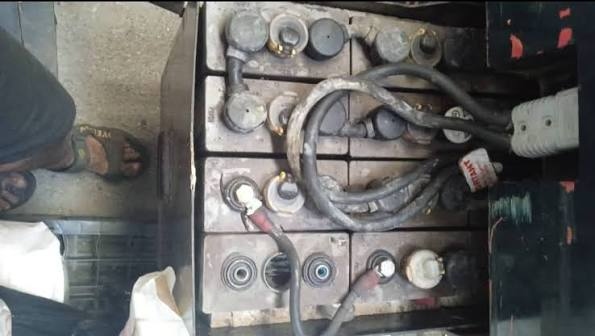
| Lead-acid battery | Electrolyte level, cable condition, corrosion, and connector damage |
| Lithium battery | BMS warnings, connector condition, temperature, and physical damage |
| LPG system | Cylinder security, hose condition, valve damage, and gas odor |
| Diesel or gasoline system | Fuel leaks, damaged caps, loose hoses, or strong fuel odor |
Do not remove a hot radiator cap or open a pressurized hydraulic system. Follow the manufacturer’s instructions for checking fluid levels safely.
Operational Check After Startup
After the visual inspection is complete, start the forklift in a safe area and test its operating functions before beginning normal work.
- Test the service brakes. Confirm that the truck stops smoothly and does not pull to one side.
- Check the parking brake. Make sure it holds the truck securely.
- Test steering. Look for excessive free play, stiffness, vibration, or unusual noise.
- Operate the mast. Raise, lower, and tilt the carriage without a load while checking for jerking or drift.
- Test attachments. Operate side shifters, clamps, rotators, or fork positioners where installed.
- Check the horn. Confirm that the audible warning works clearly.
- Test lights and alarms. Check headlights, brake lights, reverse lights, beacons, and backup alarms.
- Observe instruments. Look for warning lights, error codes, abnormal temperature, or low pressure.
- Listen for unusual sounds. Whining, grinding, knocking, or rattling may indicate a developing fault.
When Should Additional Damage Checks Be Performed?
After a Collision
A rack, bollard, wall, door, trailer, or another vehicle can damage more than the visible contact point. After a collision, check the forks, carriage, mast, wheels, steering, body panels, battery compartment, and counterweight.
Even a low-speed impact can loosen fasteners, bend brackets, damage hydraulic lines, or affect steering alignment.
After a Dropped Load
A dropped or shifting load may bend fork blades, damage the heel, move the carriage, stretch chains, or affect an attachment. Stop using the truck until the affected components have been evaluated.
After Operating on Rough Ground
Potholes, debris, dock plates, uneven surfaces, and sudden impacts can damage tires, wheels, steering components, forks, and mast rollers. Perform another inspection if the truck experiences a severe jolt.
After Overloading
If the operator suspects that the forklift lifted a load beyond its rated capacity, the truck should be inspected. Overloading may bend forks, stretch chains, overheat hydraulics, or damage the mast and carriage.
After Battery or Charger Problems
Inspect an electric forklift after arcing, melted connectors, charger faults, overheating, reverse polarity, or battery-management-system warnings.
Electrical damage may not be visible externally, so qualified technicians may need to check fuses, contactors, wiring, controllers, and battery condition.
What Damage Requires the Forklift to Be Removed From Service?
A forklift should be removed from service whenever a defect could affect safe operation. Examples include:
- Cracked, bent, twisted, or excessively worn forks
- Missing or defective fork-positioning locks
- Hydraulic leaks or uncontrolled mast drift
- Damaged lift chains or chain anchors
- Weak or unreliable brakes
- Steering failure or excessive steering play
- Severely damaged tires or loose wheels
- Defective seat belt or operator restraint
- Unreadable or missing capacity plate
- Fuel, LPG, or battery electrolyte leaks
- Burned cables or melted electrical connectors
- Warning lights indicating a serious fault
- Damaged overhead guard or load backrest
Operators should not attempt temporary repairs with wire, tape, unauthorized welding, or improvised parts. Repairs must restore the truck to a safe condition and should be completed by qualified personnel.
Is a Written Inspection Checklist Required?
A checklist is one of the easiest ways to make inspections consistent, although the exact form should match the forklift type and workplace.
An effective checklist should include:
- Forklift identification number
- Date, shift, and hour-meter reading
- Operator’s name
- Visual inspection items
- Operational test items
- Defects discovered
- Action taken
- Supervisor or maintenance notification
- Return-to-service authorization when required
Electric, LPG, diesel, reach, order-picker, rough-terrain, and counterbalance forklifts may require different inspection items. Follow the truck manufacturer’s maintenance instructions when developing the form.
How Long Should a Forklift Inspection Take?
A routine pre-shift check commonly takes only several minutes when the operator follows a consistent route. The inspection should not be rushed simply because production is busy.
Taking a few minutes to identify a damaged fork, loose wheel, leaking hose, or defective brake can prevent an accident, dropped load, expensive repair, and prolonged downtime.
Who Is Responsible for Inspecting the Forklift?
The operator normally performs the pre-shift inspection because that person will use the truck and can identify changes in its condition.
Employers are responsible for establishing the inspection program, training operators, providing suitable forms, and ensuring defective trucks are not used.
Qualified maintenance technicians should perform detailed mechanical inspections, scheduled servicing, and repairs. Operators should not dismantle safety-critical systems unless they are trained and authorized to do so.
How Often Should Professional Maintenance Be Performed?
Daily operator checks do not replace scheduled preventive maintenance. Professional service intervals depend on operating hours, forklift model, environment, and manufacturer recommendations.
Heavy-duty applications may require more frequent inspection, including:
- Cold-storage operations
- Outdoor yards
- Dusty manufacturing plants
- Recycling facilities
- Multi-shift distribution centers
- High-lift rack operations
- Facilities using hydraulic attachments continuously
Maintenance records should document inspections, repairs, component replacements, and recurring defects.
Seven Steps for an Effective Forklift Damage Inspection
- Park safely. Use a firm, level area away from active traffic.
- Complete a walk-around. Look for leaks, cracks, loose parts, and impact damage.
- Inspect load-handling components. Check forks, carriage, chains, mast, and attachments.
- Check tires and safety equipment. Inspect wheels, restraints, lights, alarms, and labels.
- Verify fluids or battery condition. Follow the procedure for the truck’s power system.
- Perform the operational test. Check brakes, steering, hydraulics, horn, and controls.
- Document and report defects. Remove the truck from service if safe operation is uncertain.
Conclusion
A forklift should be inspected before it is placed into service every day and after every shift when it is used continuously. Operators should complete both a visual walk-around and an operational check.
Additional inspections are necessary after collisions, overloaded lifts, dropped loads, severe bumps, warning lights, hydraulic problems, or unusual noises.
Pay particular attention to tires, forks, carriage, mast chains, hydraulic systems, brakes, steering, safety restraints, fluids, and battery connections.
If an inspection shows that a forklift may be unsafe, stop using it immediately, report the problem, and arrange proper repairs before returning it to service.
Add a review
Your email address will not be published. Required fields are marked *