
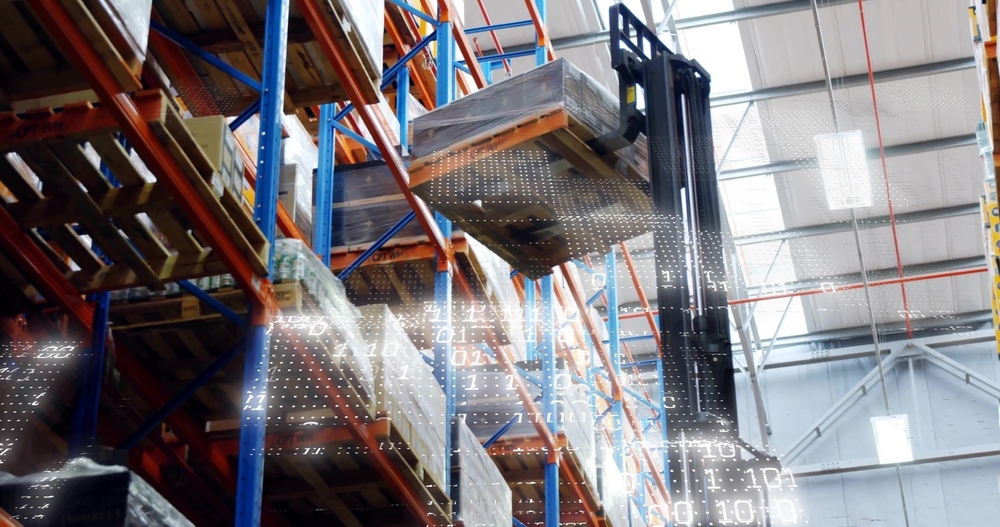
How Forklift Mast Height Affects Rack Damage
Why Mast Height Matters in a Warehouse
The mast is the vertical assembly that raises, lowers and tilts the carriage and forks. It allows a forklift to place pallets at different rack levels, but the truck’s behavior changes as the load rises.
When a pallet is close to the floor, the combined center of gravity of the truck and load remains relatively low. As the forks rise, that center of gravity also rises. The truck becomes more sensitive to side movement, uneven flooring, steering corrections and off-center loads.
Rack damage does not always result from a high-speed collision. At elevated positions, even a slow contact can bend a beam connector, dent an upright, damage a pallet or dislodge stored goods.
1. Reduced Load Capacity at Height
The Mechanism
A forklift’s rated capacity is not simply one fixed number for every operating condition. Capacity is based on a particular load center, mast configuration, attachment and sometimes a specified lift height.
As the load center moves farther forward, the load creates more leverage against the front axle. High-capacity stacking can also be affected by mast design, attachment weight and the amount of mast extension.
The operator must use the truck’s actual data plate rather than relying on a general model rating. If a side shifter, clamp or other attachment is installed, the approved capacity may be lower.
The Damage Risk
An overloaded or incorrectly rated truck may have difficulty positioning the pallet smoothly at height. The mast can flex, the truck can feel unstable and the operator may make repeated corrections near the rack.
This increases the possibility of:
- Striking an upper rack beam with the forks
- Pushing a pallet too far into the rack
- Contacting an upright with the load
- Dropping or tilting merchandise
- Deflecting a beam through excessive loading
- Losing lateral stability during placement
2. Decreased Lateral Stability
The Mechanism
A counterbalanced forklift remains stable while the combined center of gravity stays within its stability area. Raising the load moves the center of gravity upward, making the truck more vulnerable to sideways forces.
Turning, braking, uneven floors and sudden control movements create forces that can shift the combined center of gravity. These forces become more critical when the load is raised.
Mast channels may also flex slightly under load. This normal movement can become more noticeable with a tall, fully extended mast and a heavy or off-center pallet.
The Damage Risk
At upper rack levels, small side movements can make the pallet or carriage contact the rack structure. A slight sway at ground level may become several inches of movement near the top of an extended mast.
Operators may damage racks by attempting to steer, turn or reposition the truck while the load remains high. The safer method is to stop squarely in front of the storage location before raising the pallet.
| Operating Condition | Effect at High Mast Position | Possible Rack Damage |
|---|---|---|
| Sharp steering correction | Creates lateral movement and mast sway | Load contacts uprights or adjacent pallets |
| Uneven warehouse floor | Tilts the truck and elevated load | Fork or pallet strikes a beam |
| Off-center load | Shifts weight toward one side | Uneven placement or upright impact |
| Sudden braking | Moves the load and center of gravity forward | Load shifts into the rack |
| Excessive travel speed | Reduces control and stopping time | Rack-end or aisle collision |
3. Mast Tilt and Load Backrest Impact
The Mechanism
Mast tilt helps stabilize a load during transport and position it during stacking. However, the movement at the top of a tall mast is greater than the movement close to the carriage base.
If the mast is tilted too far forward near a rack, the pallet and fork tips move toward the beam structure. If it is tilted too far backward, the load or load backrest may contact the rack level above.
The Damage Risk
Excessive tilt can cause the forks to scrape a beam, lift a beam accidentally or push stored products backward. A tall load backrest may also strike sprinkler pipes, overhead braces or products stored above the intended opening.
The operator should make small, controlled tilt adjustments and confirm overhead clearance before entering the rack position.
4. Limited Operator Visibility
The Mechanism
Mast rails, lift chains, hydraulic cylinders and the load itself can restrict the operator’s view. Visibility becomes more difficult when stacking at high levels because the operator must judge fork height, pallet position and beam clearance from below.
Triple-stage masts include additional channels and components that may reduce the direct line of sight through the mast. Large loads and tall load backrests can further block visibility.
The Damage Risk
Poor visibility can cause the operator to misjudge the position of:
- The fork tips relative to the pallet
- The pallet relative to the rack beam
- The load backrest relative to the upper level
- The sides of the load relative to the uprights
- Nearby products already stored in the rack
Where visibility is limited, cameras, fork-height indicators, warehouse lighting and spotters may improve positioning. A spotter must remain in a designated safe location and use agreed signals.
5. Incorrect Mast Selection
A mast should be selected according to both stacking height and facility clearance. Important measurements include maximum fork height, lowered mast height, extended mast height and free lift.
Free lift is the distance the forks can rise before the inner mast stages extend above the lowered mast profile. It is useful inside trailers, containers and areas with low ceilings.
A mast that is taller than necessary may reduce visibility, increase truck weight and create clearance problems. A mast that is too short may encourage unsafe attempts to reach the highest rack level.
| Mast Measurement | What It Means | Why It Matters |
|---|---|---|
| Maximum fork height | Highest position reached by the top of the forks | Must reach the highest pallet position safely |
| Lowered mast height | Overall mast height when fully retracted | Must clear doors, trailers and overhead structures |
| Extended mast height | Overall height with the mast fully raised | Must remain below ceilings, lights and sprinklers |
| Free lift | Fork movement before mast stages extend | Helps in low-overhead applications |
| Load backrest height | Height of the guard attached to the carriage | May affect overhead and rack clearance |
What Is the Safe Height for a Forklift Mast?
There is no universal safe mast height for every forklift. The correct height depends on the specific truck, its data plate, the weight and dimensions of the load, the load center, the installed attachment and the rack opening.
During travel, the forks and load should remain low, normally only high enough to clear the floor and surface hazards. The mast should be raised to rack height only after the truck is stopped and correctly aligned for placement or retrieval.
The maximum fork height must be sufficient to clear the rack beam and place the pallet safely, but the extended mast and load backrest must remain below overhead obstructions.
The following clearances should be verified:
- Top of load to the next rack level
- Fork tips to front and rear beams
- Load sides to rack uprights
- Extended mast to ceilings and roof structures
- Load backrest to sprinklers and lighting
- Lowered mast to doors and trailer openings
How to Reduce Rack Damage at High Lift Heights
- Confirm the data-plate capacity. Check the approved capacity at the stated load center and with the installed attachment.
- Inspect the load. Make sure the pallet is stable, centered and suitable for rack storage.
- Approach the rack squarely. Align the truck before raising the load.
- Stop completely. Do not turn or travel while the load is elevated.
- Raise the load slowly. Avoid sudden hydraulic movement that can increase sway.
- Watch all clearances. Monitor beams, uprights, products and overhead equipment.
- Use minimal tilt. Make small adjustments only when required for placement.
- Lower the pallet onto the beams. Confirm that it is fully supported before withdrawing the forks.
- Withdraw the forks carefully. Keep them level to avoid lifting or scraping the pallet.
- Lower the carriage before traveling. Return the forks to a safe travel position.
What Are Common Problems With Forklift Masts?
| Mast Problem | Common Symptoms | Potential Effect |
|---|---|---|
| Worn or damaged lift chains | Uneven carriage height, noise or visible corrosion | Uncontrolled or uneven lifting |
| Misadjusted chains | One fork sits higher than the other | Pallet enters the rack unevenly |
| Worn mast rollers | Excessive movement, vibration or binding | Inaccurate load positioning |
| Hydraulic cylinder leaks | Oil around seals or mast channels | Slow lift or unintended lowering |
| Bent mast channels | Binding, scraping or uneven extension | Jerky movement and poor alignment |
| Damaged load backrest | Bent frame or loose mounting | Reduced load retention and clearance problems |
| Poor lubrication | Noisy rollers or irregular movement | Accelerated component wear |
| Contaminated hydraulic fluid | Jerky operation, heat or pump noise | Reduced control during stacking |
Daily Mast Inspection
Operators should inspect mast components before each shift. A damaged mast can make accurate rack placement difficult even when the truck remains capable of lifting.
Check the following items:
- Lift chains and chain anchors
- Mast rails and rollers
- Hydraulic cylinders and hoses
- Fork carriage and locking devices
- Load backrest condition
- Fork alignment and tip height
- Signs of hydraulic leakage
- Unusual noise, binding or vibration
If the mast lifts unevenly, drifts downward, produces abnormal noise or binds during movement, remove the forklift from service and arrange an inspection.
Protecting the Rack Structure
Correct mast operation should be supported by physical rack protection. Upright protectors, end-of-aisle guards and safety bollards can reduce the consequences of low-level impacts.
High-level rack damage requires additional controls because floor-mounted guards cannot prevent contact with upper beams. Helpful measures include:
- Fork-height indicators
- Mast or carriage cameras
- Improved aisle lighting
- Beam-level markings
- Load-position sensors
- Operator refresher training
- Rack inspection and impact reporting
Any rack struck by a forklift or elevated load should be reported and evaluated. A beam or upright may be structurally weakened even when the damage appears minor.
Choosing the Right Forklift for Rack Height
The truck should have enough capacity and lift height for the highest planned storage position without routinely operating at its mechanical limit.
When selecting a forklift, compare the rack layout with maximum fork height, residual capacity, mast visibility, free lift and extended height.
Also consider aisle width, turning radius, attachment type and the dimensions of the actual pallets. A truck that reaches the rack but cannot maneuver accurately is not a suitable solution.
Conclusion
Forklift mast height affects rack damage by changing stability, visibility, capacity and load-control requirements. As a mast extends, small positioning errors and side movements become more significant.
Operators should never assume that the truck’s maximum rated load can be lifted safely to every height. The data plate, load center, mast configuration and attachment must all be considered.
Approach racks squarely, stop before raising the pallet, use small tilt adjustments and lower the carriage before traveling. Regular mast inspections, suitable rack protection and the correct forklift configuration can substantially reduce warehouse rack damage.
Add a review
Your email address will not be published. Required fields are marked *