
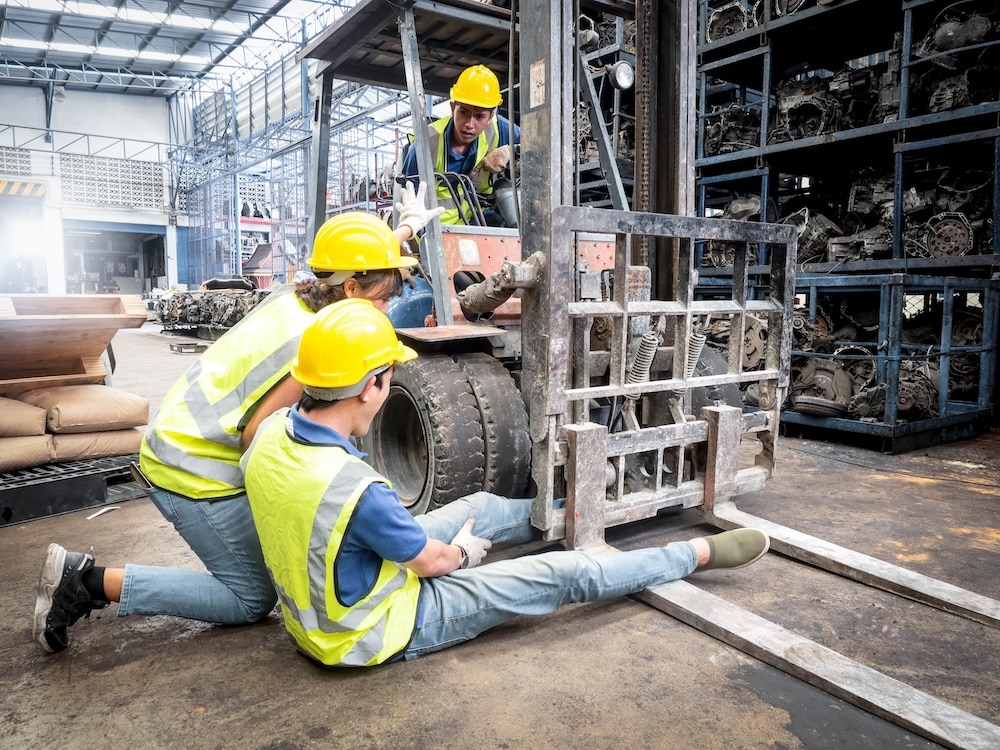
What Is the Number One Cause of Forklift Related Injuries?
In warehouse and industrial environments, forklifts are essential for moving heavy loads efficiently. However, they also present serious safety risks when operated incorrectly. Among all types of incidents, tip-overs remain the most dangerous and frequent cause of severe injury.
A forklift tip-over occurs when the machine’s center of gravity moves outside its stability triangle. This can happen during sharp turns, sudden braking, overloading, or traveling with elevated loads. Once stability is lost, recovery is extremely difficult and often impossible in real time.
Common Causes & Types of Forklift Accidents
Forklift-related injuries do not happen randomly. They usually result from predictable hazards that can be controlled with proper training and safety procedures.
- Tip-overs and rollovers: Loss of stability during operation or turning
- Collisions with pedestrians: Poor visibility or unsafe traffic separation
- Falling loads: Unstable or improperly secured cargo
- Loading dock accidents: Trailer movement or edge falls
Each of these risks can be significantly reduced through proper operation of modern forklifts, correct load handling, and workplace safety design.
Why Tip-Overs Are the Leading Cause
Forklifts are counterbalanced machines. This means they rely on a rear counterweight to balance the load being lifted in front. When the balance is disrupted, even slightly, the entire machine can become unstable.
Common contributing factors include excessive speed, uneven surfaces, turning with a raised load, and exceeding rated capacity. These actions shift the center of gravity beyond safe limits.
Prevention Strategies for Forklift Safety
OSHA forklift safety guidelines emphasize several key practices that significantly reduce the risk of injuries and fatalities.
- Enforcing speed limits: Slow operation reduces instability during turns and stops
- Managing loads properly: Always follow rated capacity and load center guidelines
- Separating traffic: Keep pedestrians and equipment in clearly marked zones
- Staying inside the cab: Operators should never jump during a tip-over
Forklift Accident Types and Outcomes
| Accident Type | Main Cause | Possible Injury Outcome |
|---|---|---|
| Tip-over / Rollover | Instability, overloading, sharp turns | Crush injuries, fatalities |
| Pedestrian collision | Poor visibility, lack of traffic control | Broken bones, severe trauma |
| Falling loads | Improper stacking or load handling | Head injuries, impact trauma |
| Dock accidents | Trailer shift or edge falls | Falls, crushing injuries |
What Injuries Are Caused by Forklifts?
Forklift-related accidents can cause a wide range of injuries, from minor cuts to life-threatening trauma. The severity depends on the type of incident and the surrounding environment.
Common injuries include fractures, crushed limbs, spinal injuries, head trauma, and internal injuries. In severe cases, tip-overs or collisions can result in fatalities, especially when operators or pedestrians are trapped or struck by heavy machinery.
Safe Operating Practices for Forklifts
Operators must be trained to understand stability principles, load limits, and safe driving behavior. Safe operation is not optional—it is a legal requirement in most workplaces.
- Always inspect equipment before use
- Keep loads low while traveling
- Slow down before turning or stopping
- Never exceed rated capacity
- Maintain clear visibility at all times
Modern forklifts are designed with safety features, but operator behavior remains the most important factor in preventing accidents.
Step-by-Step Prevention Checklist
- Inspect the forklift: Check tires, brakes, forks, and controls
- Verify load weight: Ensure it is within rated capacity
- Secure the load: Make sure it is stable and centered
- Plan the route: Avoid slopes, obstacles, and pedestrian zones
- Drive carefully: Maintain low speed and smooth operation
Conclusion
The number one cause of forklift-related injuries is tip-overs and rollovers. These incidents are often preventable with proper training, safe driving habits, and adherence to load capacity limits.
By following OSHA guidelines and operating forklifts responsibly, workplaces can significantly reduce injury risks and improve overall safety performance.


Add a review
Your email address will not be published. Required fields are marked *