
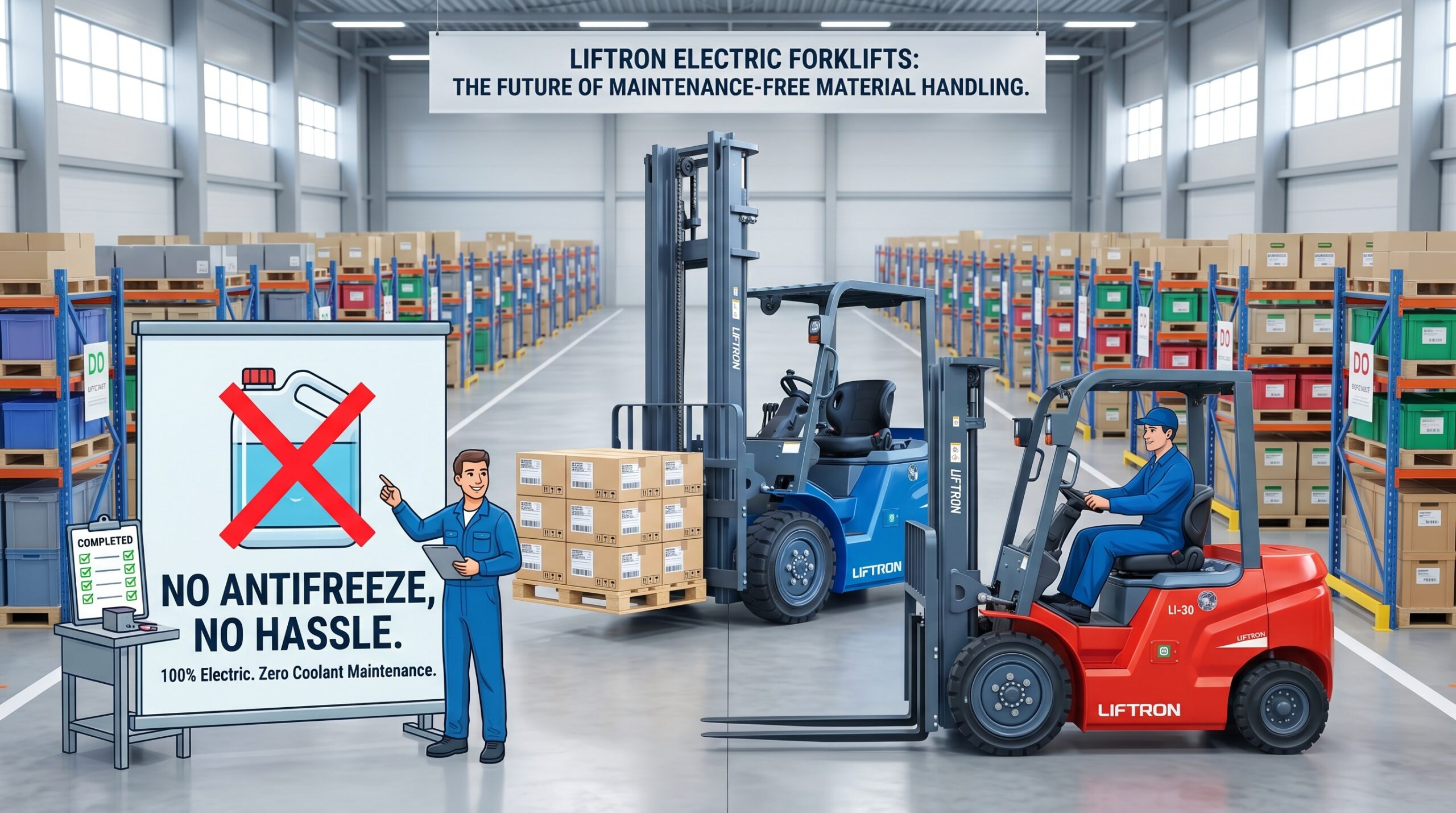
Do Liftron Electric Forklifts Use Antifreeze?
Wondering which antifreeze your Liftron forklift needs? Most electric models skip coolant entirely, but liquid‑cooled versions require a specific approved mixture. Let’s break it down.
Do Electric Forklifts Need Antifreeze Coolant?
Unlike diesel or LP forklifts, standard electric forklifts do not have an internal combustion engine. That means they don’t use traditional engine coolant to prevent overheating or freezing. However, advanced electric models — especially those designed for high throughput, extreme ambient temperatures, or heavy duty cycles — sometimes integrate liquid cooling/heating systems for the battery pack, power electronics, or drive motors. In these cases, a specific antifreeze or water‑glycol mixture becomes essential.
When you ask “What antifreeze does a Liftron forklift use?” the answer depends entirely on your specific model. Standard Liftron DL SERIES lithium‑ion forklifts are often air‑cooled and maintenance‑free regarding coolant. But selected high‑capacity versions or specialized units equipped with liquid thermal management do require a factory‑recommended coolant formula.
Why Fluid Requirements Vary by Forklift Type
To fully grasp whether your Liftron needs antifreeze, it helps to understand three major forklift categories:
🔹 1. Standard Electric Forklifts
These are powered solely by a battery (lead‑acid or lithium) and an AC/DC traction motor. No engine coolant, no oil changes, no exhaust. They rely on passive or forced air cooling. For these units, the simple truth is: zero antifreeze required.
🔹 2. Liquid‑Cooled Electric Forklifts (High‑Capacity or Specialized)
Some heavy duty electric forklifts — including certain high-performance models from Liftron — incorporate a liquid thermal management system (LTMS). This closed-loop system circulates coolant through cooling plates inside the lithium battery pack or around the motor housing. It keeps internal temperatures stable during fast charging or intense operation. If your specific Liftron uses a radiator or chiller for the battery, it will need a low‑conductivity antifreeze that meets manufacturer specs.
🔹 3. Internal Combustion (IC) Forklifts
Diesel, gasoline, or LPG forklifts absolutely require antifreeze coolant. Without it, the engine block can overheat in summer or crack in freezing winter conditions. This guide focuses on Liftron’s electric lineup, but if you operate IC forklifts, always check the OEM coolant recommendations.
What Antifreeze Does a Liftron Forklift Use? (If Liquid Cooling is Equipped)
For those rare but critical cases where a Liftron electric forklift comes with liquid battery/motor thermal regulation, the manufacturer typically recommends a premium ethylene‑glycol based antifreeze that is specifically formulated for electric vehicles (low electrical conductivity) and includes non‑silicate, non‑amine corrosion inhibitors. In many cases, the coolant must be mixed 50/50 with deionized water.
General specification to look for: ASTM D3306 or D6210 compliant heavy‑duty coolant that is aluminum‑safe (since battery cooling plates often contain aluminum). Some Liftron models might require G48 or G64 type coolants. Never use universal “all‑makes” green automotive antifreeze unless officially approved, because improper conductivity can damage sensitive electronic components inside the battery management system (BMS).
The golden rule: always consult your Liftron owner’s manual or contact Liftron Material Handling support. The wrong coolant can degrade seals, cause electrochemical corrosion, or even void your warranty.
Fluids That Electric Forklifts Actually Use (Beyond Coolant)
Even without a traditional engine, a Liftron electric forklift relies on several critical fluids to operate safely and efficiently:
| Fluid Type | Purpose & Maintenance |
|---|---|
| Hydraulic Oil | Powers mast lifting, tilting, and steering. Use ISO VG 32 or 46 (depending on ambient temp). |
| Gearbox / Axle Oil | Lubricates the drive axle differential. Usually SAE 90 or synthetic equivalent. |
| Brake Fluid | DOT 3 or DOT 4 for hydraulic braking systems. Check moisture content yearly. |
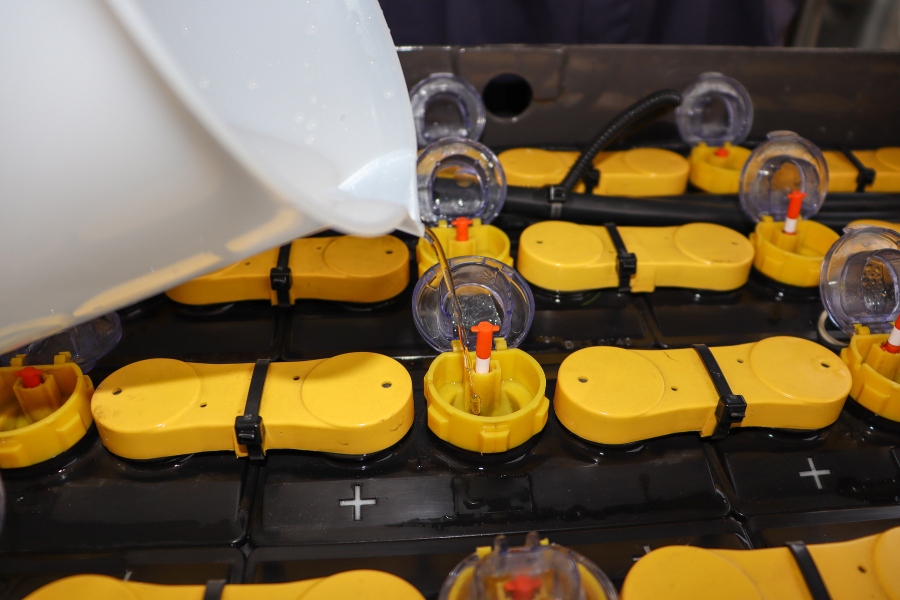
| Distilled Water | Only for flooded lead‑acid batteries (not needed for Lithium‑ion models like Liftron DL SERIES). |
| Coolant (Antifreeze) | Required only if your specific forklift is equipped with liquid battery/motor cooling. |
If you operate the highly efficient Liftron DL SERIES lithium‑ion forklift, you most likely won’t need to think about antifreeze at all. The DL Series leverages intelligent air cooling and natural convection, drastically reducing fluid maintenance.
How to Confirm if Your Liftron Requires Antifreeze
Follow these four steps to know for sure whether you should add coolant to your electric Liftron forklift:
- Check the serial number & model plate – Look for “LC” (Liquid Cooled) or any mention of “thermal management system.”
- Inspect under the hood or battery compartment – Do you see a small radiator, coolant reservoir, or electric water pump? If yes, you need antifreeze.
- Read the operator’s manual – Look for “approved coolant specification” or “battery cooling system.”
- Contact Liftron Material Handling directly using their official website liftronmh.com – they can provide the exact coolant type and mixture ratio.
Consequences of Using the Wrong Coolant in a Liquid‑Cooled Electric Forklift
If your Liftron model does have a liquid cooling loop and you ignore the coolant requirement, several problems can occur:
- Battery overheating: The lithium battery may exceed safe operating temperatures, triggering derating or shutdowns.
- Galvanic corrosion: Incompatible antifreeze can corrode aluminum cooling plates, leading to leaks and expensive repairs.
- Reduced motor lifespan: Liquid‑cooled traction motors rely on proper coolant flow; wrong fluid can damage seals and bearings.
- Voided warranty: Using unauthorized fluids is a leading cause of warranty denial on electric industrial trucks.
Liftron DL SERIES: No Antifreeze Hassle
The advanced Liftron DL SERIES lithium‑ion forklifts are engineered to minimize maintenance. With an efficient thermal management architecture that doesn’t require liquid coolant, DL Series models eliminate the risk of antifreeze leaks, freeze damage, or coolant degradation. That means you can focus on productivity: simply charge the lithium battery, check hydraulic oil periodically, and enjoy worry‑free operation. But if you operate a high‑duty specialty Liftron with a liquid cooling option, always refer to the original documentation.
Final Verdict: Know Your Liftron’s Cooling System
To sum up: most electric Liftron forklifts do not require antifreeze. However, if your specific unit comes with a liquid battery cooling/heating system or a motor chiller, then it absolutely needs a manufacturer‑approved antifreeze (usually low‑conductivity ethylene glycol mixture). The best way to protect your investment is to check your model’s documentation and consult the experts at Liftron Material Handling. And if you want worry‑free operation with zero coolant maintenance, the Liftron DL SERIES offers state‑of‑the‑art lithium performance without the antifreeze headache.
Before adding any fluid to your forklift — whether hydraulic oil, gear oil, or coolant — always cross‑reference the OEM specifications. Proper fluid management maximizes safety, uptime, and the lifespan of your Liftron equipment.
Add a review
Your email address will not be published. Required fields are marked *