
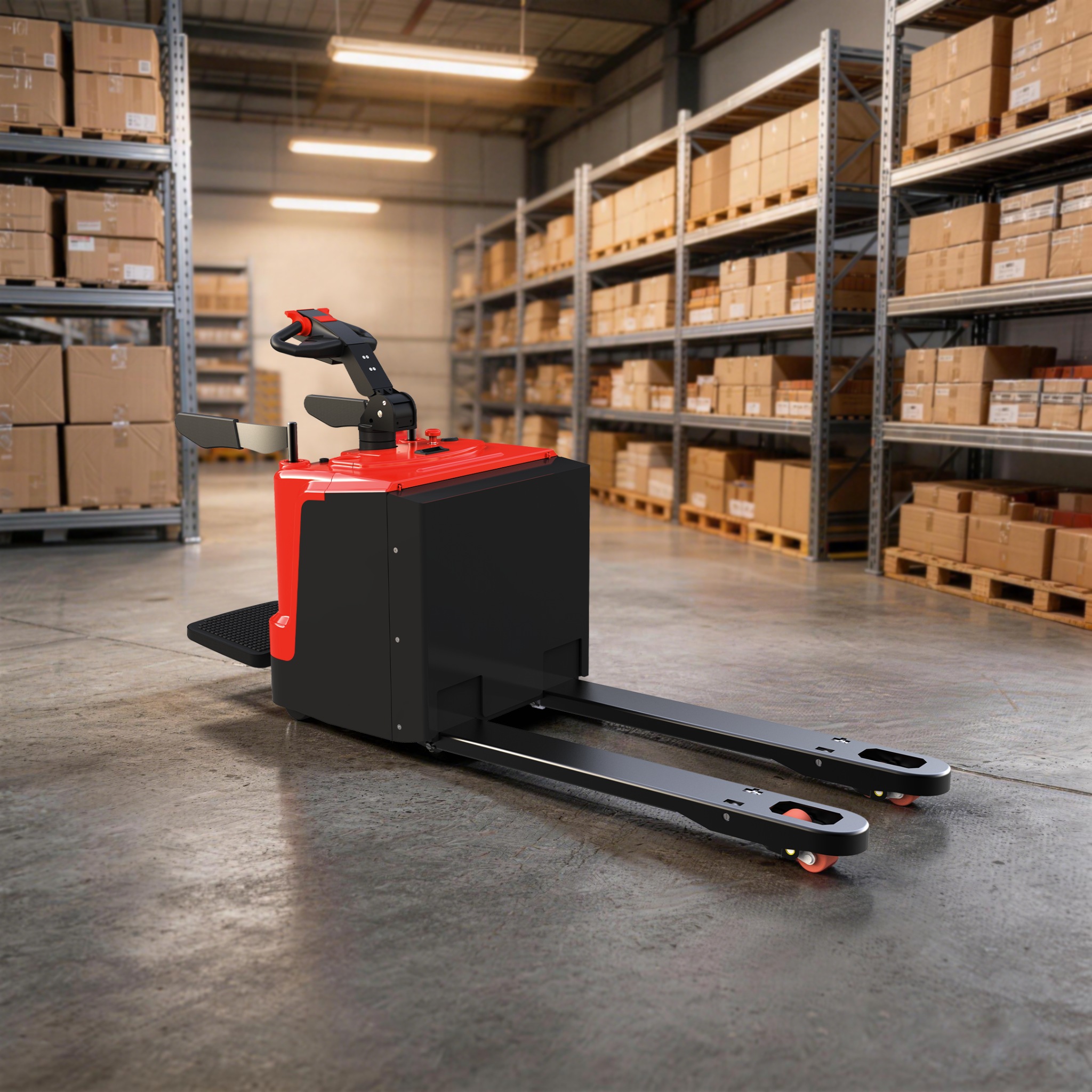
Pallet Jack Battery Care: Charging and Maintenance Tips
Quick Answer: To maximize your pallet jack’s lifespan and uptime, prioritize strict charging schedules, routine inspections, and proper battery storage. Lead-acid batteries need correct water levels and complete charging cycles, while lithium-ion models require far less maintenance but should still be protected from extreme temperatures, deep discharge, and physical damage.
A pallet jack battery is one of the most important parts of the machine. Whether your warehouse uses walkie pallet jacks, stand-up pallet trucks, rider pallet jacks, or compact electric pallet movers, the battery directly affects runtime, lifting performance, charging speed, and daily productivity. Poor battery habits can shorten service life, reduce power, increase downtime, and create unnecessary repair costs.
Good battery care is especially important in busy warehouses, distribution centers, retail stockrooms, logistics facilities, and manufacturing plants where pallet jacks operate throughout the day. A well-maintained battery helps keep equipment available, operators productive, and material flow smooth. Brands such as Liftron offer lithium-ion pallet jack options that simplify daily maintenance compared with traditional lead-acid battery systems.
Charging Best Practices
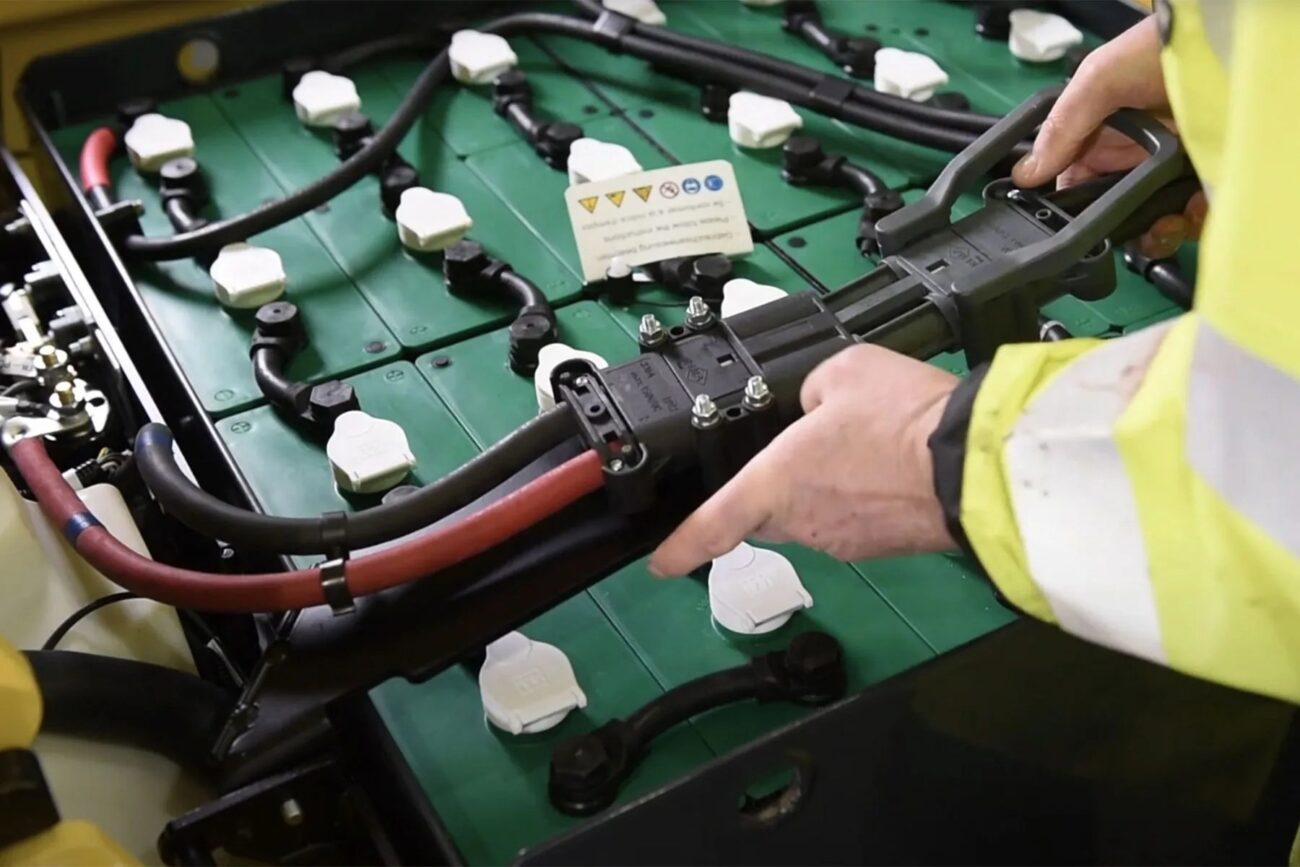
Charging is the foundation of pallet jack battery care. The wrong charging habits can reduce battery capacity, shorten lifespan, and cause unexpected downtime during a shift. Operators should always follow the charger and battery manufacturer’s instructions, because charging requirements differ between lead-acid and lithium-ion batteries.
Avoid Deep Discharges
Avoid running the battery completely empty whenever possible. Deep discharges place extra stress on the battery and may reduce long-term capacity. If operators regularly wait until the pallet jack is nearly dead before charging, the battery may lose performance faster over time. A better approach is to charge before the battery reaches a critically low level.
Complete the Cycle
For lead-acid batteries, completing the charging cycle is especially important. Interrupting the charge too often can contribute to sulfation and uneven battery performance. Lead-acid batteries generally perform best when they are charged fully after use and allowed to complete the normal cycle.
Avoid Overcharging
Overcharging can create heat, stress the battery, and reduce service life. Modern chargers may include automatic shutoff or smart charging features, but operators should still avoid leaving equipment connected incorrectly or using chargers not designed for the battery type.
Opportunity Charging
Opportunity charging means charging during breaks, lunch periods, or downtime. This practice is generally more suitable for lithium-ion batteries than traditional lead-acid batteries. Lithium-ion pallet jacks can often be topped off during short breaks, helping support multi-shift or high-use applications.
Key Takeaway: Match the charging method to the battery type. Lead-acid batteries usually need full charge cycles, while lithium-ion batteries are better suited for short, convenient opportunity charging.
Battery Watering for Lead-Acid Batteries Only
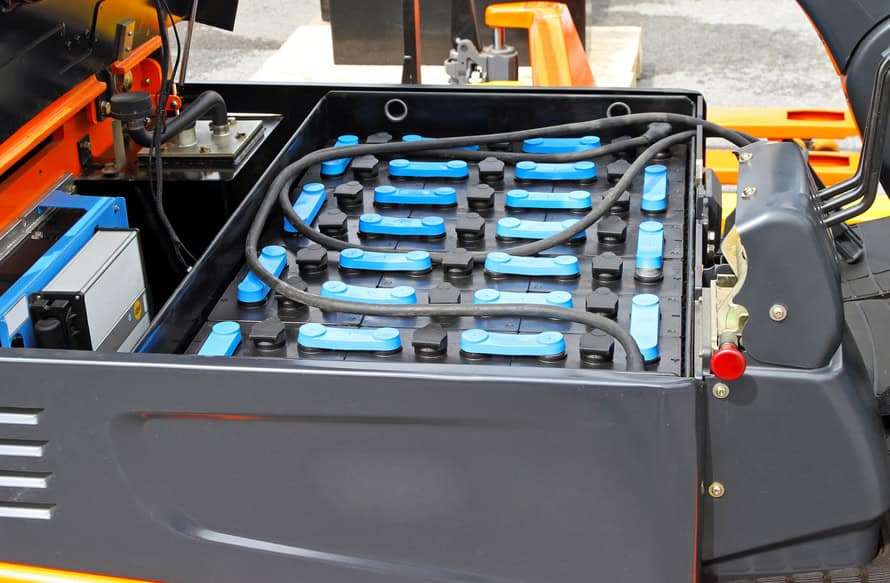
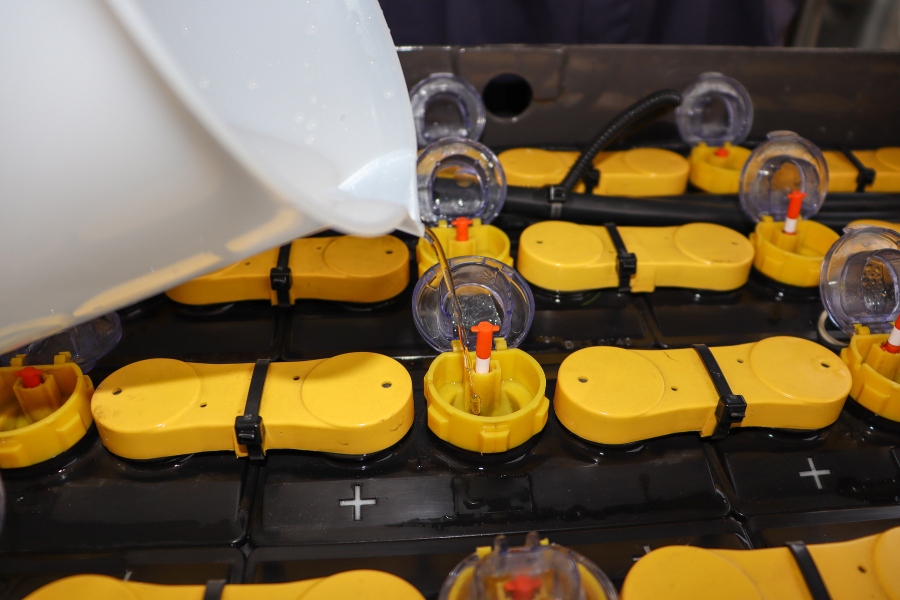
Flooded lead-acid batteries require water maintenance. This does not apply to sealed lithium-ion pallet jack batteries. If your pallet jack uses a lead-acid battery, water levels must be checked and maintained carefully to prevent plate damage and reduced capacity.
Check Levels Weekly
In heavy-use operations, lead-acid battery water levels should be checked regularly, often weekly. If water levels fall too low, the battery plates may become exposed, which can cause permanent damage. Always use distilled water, not tap water, because minerals in tap water can affect battery performance.
Water After Charging
Water should generally be added after charging, not before, unless the plates are exposed. During charging, electrolyte levels can rise. Filling before charging may cause overflow, acid spills, corrosion, and cleanup problems.
Fill to the Indicator
Do not overfill the battery. Fill only to the recommended level or indicator. Overfilling can cause electrolyte to spill during operation or charging, which can damage the battery case, connectors, and surrounding equipment.
Maintenance and Safety
Battery maintenance is not only about charging. Cleanliness, inspections, temperature control, and safe handling all contribute to longer battery life and safer operation.
Keep It Clean
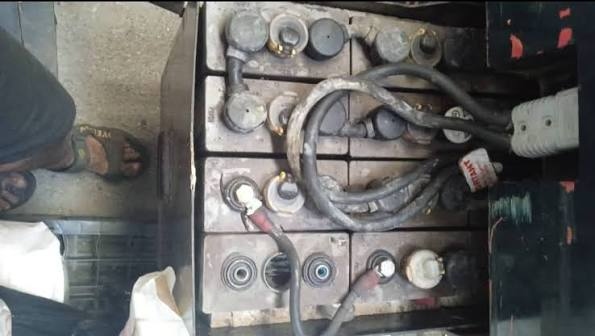
Battery cases, terminals, cables, and connectors should be kept clean and dry. Dirt, corrosion, moisture, and chemical residue can interfere with electrical connections and create resistance. Loose or damaged cables should be repaired before the pallet jack is used.
Equalization
Some lead-acid batteries require periodic equalization charging to balance cells and improve performance. This should only be done according to the battery manufacturer’s instructions. Lithium-ion batteries do not require equalization in the same way because they use different chemistry and are typically managed by a battery management system.
Environmental Control
Temperature affects battery performance. Extreme heat can accelerate battery aging, while extreme cold can reduce available power and charging efficiency. Store and charge pallet jacks in a clean, dry, temperature-controlled area whenever possible.
Safety First
Operators should never use damaged batteries, swollen cases, cracked chargers, burned connectors, or frayed cables. If a battery smells unusual, overheats, leaks, sparks, or fails to charge normally, remove the pallet jack from service and have it inspected by qualified personnel.
Pro Tip: A clean battery area and correct charging routine can reduce downtime as much as mechanical maintenance. Treat battery care as part of every pallet jack inspection program.
Step-by-Step Pallet Jack Battery Care Checklist
- Inspect before use: Check the battery, charger plug, cables, connectors, and display for visible damage or warning signs.
- Charge correctly: Use only the recommended charger and follow the proper charging schedule for the battery type.
- Avoid deep discharge: Do not wait until the pallet jack completely loses power before charging.
- Keep connections clean: Remove dirt, moisture, and corrosion from the battery area and charging connection.
- Control the environment: Charge and store the pallet jack away from extreme heat, freezing temperatures, moisture, and heavy dust.
- Report problems early: Stop using the equipment if the battery overheats, leaks, swells, sparks, or fails to charge normally.
How to Maintain a Liftron Pallet Jack Battery
A Liftron pallet jack uses lithium-ion battery technology, which makes maintenance simpler than traditional lead-acid battery systems. Lithium-ion batteries do not require watering, acid cleanup, or equalization charging. This helps reduce daily maintenance tasks and supports cleaner warehouse operation.
Main Liftron pallet jack models include the CBD20 Standing Pallet Jack, CBD20D Stand Up Pallet Jack, and CBD30D Rider Pallet Jack. These models are designed for efficient pallet movement in warehouses, logistics centers, loading areas, and industrial facilities.
To maintain a Liftron lithium-ion pallet jack battery, operators should keep the battery clean, avoid severe impact, use the correct charger, charge within the recommended temperature range, and avoid long-term storage at a fully drained state. Since lithium-ion batteries are low-maintenance, the most important habits are proper charging, safe storage, and routine inspection.
Maintenance Reminder: Liftron lithium-ion pallet jack batteries are easier to maintain than lead-acid batteries, but they still need correct charging, clean connectors, temperature control, and careful handling.
Conclusion
Pallet jack battery care is essential for equipment uptime, battery lifespan, and warehouse productivity. Lead-acid batteries require full charging cycles, correct water levels, clean terminals, and careful maintenance. Lithium-ion batteries require far less routine maintenance but still need proper charging habits, safe storage, and protection from extreme temperatures.
For businesses using Liftron pallet jacks such as the CBD20 Standing Pallet Jack, CBD20D Stand Up Pallet Jack, and CBD30D Rider Pallet Jack, lithium-ion battery care is simple: use the correct charger, keep the battery clean, avoid deep discharge, and inspect the battery system regularly. These habits help extend battery life, reduce downtime, and keep pallet handling operations running smoothly.
Add a review
Your email address will not be published. Required fields are marked *