what is the combined center of gravity on a forklift

The combined center of gravity on a forklift is a dynamic point that determines stability, tipping risk, and safe load capacity, shifting with every movement, lift, and turn. This balance point, formed by the truck, load, and counterweight, must remain within the stability triangle defined by the wheels to prevent forward or lateral tip-overs. Factors like load weight, mast tilt, fork height, and counterweight mass directly influence this equilibrium. Understanding how the combined CG differs from static CG is crucial for operators, as raising loads or extending load centers reduces capacity and increases risk. Practical calculations, dynamic effects from acceleration or turning, and design considerations like low-mounted batteries enhance safety. Adhering to standards, regular training, and respecting load center ratings are essential to prevent accidents. Modern solutions, such as load moment indicators, offer real-time stability monitoring for safer operations.

what is the blue light on a forklift for​

Blue lights on forklifts project a bright, highly visible pattern onto the floor, serving as a critical safety feature that alerts pedestrians to approaching vehicles in warehouses, distribution centers, and manufacturing facilities. These lights enhance pedestrian safety by providing a clear visual cue around blind corners, busy aisles, and reversing paths, significantly reducing accident risks. The science behind blue light shows it stands out against industrial flooring and is less likely to be confused with standard markings. Blue lights are durable, energy-efficient, and easy to install on existing or new equipment. They complement other safety systems and offer operational benefits like improved traffic flow and worker confidence. For fleets prioritizing safety, modern forklifts like the Liftron DL SERIES support these advanced lighting options seamlessly. Investing in blue lights is a cost-effective, practical step toward creating a safer, more productive workplace.

what is not an integral part of forklift equipment

Understanding which forklift components are non-integral is essential for operators, buyers, and safety managers aiming to control costs and maintain compliance. This guide clarifies the distinction between core machinery systems—such as the mast, hydraulics, and brakes—and optional or replaceable items that do not affect basic lifting function. Non-integral elements include attachments like side shifters and rotators, operator aids, telemetry devices, consumables like tires and filters, and aftermarket safety equipment such as cameras or strobe lights. Recognizing these differences helps prevent overspending, avoid warranty confusion, and ensure accurate fleet audits. Proper classification also impacts safety regulations, since aftermarket modifications may require separate approval. For reliable insights, consult manufacturers or certified dealers and review your forklift’s manual before adding accessories. Ultimately, integral parts are engineered into the chassis and power systems—everything else remains conditional, replaceable, or supplementary.

which electric forklift manufacturers use ac motor

AC motor technology now dominates electric forklifts, with leading manufacturers like Toyota, Crown, Raymond, Yale, Hyster, Komatsu, Mitsubishi, Cat, Jungheinrich, Linde, STILL, Doosan, Hyundai, and Liftron adopting it for superior efficiency, durability, and lower maintenance. These systems eliminate brush replacement, feature regenerative braking, and deliver faster speeds and longer run times. Key models such as Toyota’s Traigo 48, Crown’s FC 5200, and Jungheinrich’s EFG series showcase advanced AC integration with precision control and energy recovery. Emerging trends combine AC motors with lithium-ion batteries, as seen in Liftron’s DL SERIES, offering fast charging and zero maintenance, while IoT sensors enable predictive maintenance. When choosing an electric forklift, verify AC specifications and prioritize models with regenerative braking and sealed enclosures for maximum longevity in demanding applications.

what is a simplex mast on a forklift​

A simplex mast is the most straightforward forklift lifting system, featuring a single-stage rail design ideal for low-height, light-duty applications. With direct 1:1 lift ratio and typical heights of 10–15 feet, it offers excellent operator visibility, superior load stability, and reduced upfront and maintenance costs compared to duplex or triplex masts. While it lacks free-lift and upper racking reach, it excels in ground-level pallet handling, loading docks, manufacturing lines, and agricultural settings. This guide compares simplex vs. duplex vs. triplex mast configurations, explores ideal use cases, and provides maintenance tips. It also highlights Liftron Material Handling’s DL SERIES, a lithium-ion forklift line available with simplex mast options, ideal for businesses prioritizing simplicity, safety, and economy without sacrificing reliability. Selecting the simplest mast that meets your operational needs is a smart, cost-effective engineering choice.

who are the leading manufacturers of forklifts

who are the leading manufacturers of forklifts

The global forklift industry is led by established giants like Toyota, KION Group, Mitsubishi Logisnext, Crown, Hyster-Yale, Jungheinrich, and Komatsu, renowned for engineering heritage and reliability, while Chinese producers such as Hangcha, Heli, and BYD are reshaping the market with cost-effective electric and lithium-ion models. Specialists like Konecranes and Combilift dominate niche sectors like heavy-duty and multi-directional lifting. As the industry shifts toward zero-emission technology and data-driven fleet management, buyers evaluate lifetime value, battery innovation, and service support beyond brand loyalty. Emerging providers like Liftron Material Handling are gaining traction with customizable lithium-ion solutions, including the DL SERIES, designed for multi-shift efficiency. With trends pointing to telematics and automation, selecting the right manufacturer depends on application needs, budget, and after-sales service, making both legacy leaders and innovative newcomers essential to a modern material handling strategy.

how are liftron forklifts manufactured

how are liftron forklifts manufactured

Explore the precision manufacturing behind Liftron forklifts, where CAD engineering, CNC cutting, robotic welding, and rigorous quality control converge to build durable, high-performance material handling equipment. From high-grade steel selection to lithium-ion battery assembly, every unit undergoes load testing, brake checks, and leak inspections to ensure safety and reliability. The process integrates ergonomic design, energy efficiency, and sustainability, with water-based coatings and IoT-enabled predictive maintenance. Whether diesel or electric, each forklift is crafted for longevity and reduced downtime, backed by a commitment to engineering excellence. Discover how meticulous fabrication and stringent testing deliver the dependable performance and ROI that operations worldwide trust, including the advanced Liftron DL Series for electric efficiency.

who is a reliable forklift manufacturer

who is a reliable forklift manufacturer

Choosing a dependable forklift manufacturer directly impacts safety, uptime, and long-term costs, but not all brands deliver equal value. True reliability goes beyond daily start-ups to include build quality, dealer density, warranty strength, and advanced energy systems like lithium-ion. Leading names such as Toyota, Kion, Crown, and Hyster-Yale excel in stability, ergonomics, and service networks, while emerging players like Liftron Material Handling challenge the status quo with rapid Li-ion adoption, integrated battery management, and extended maintenance intervals up to 2,000 hours. To verify claims, demand reference sites, remote diagnostics, third-party certifications like ISO 9001 and UL 2580, and transparent parts pricing. Avoid red flags like short warranties or weak thermal safeguards. As automation grows, choose models with open protocols and IP54-rated electronics for future-proof integration. Ultimately, the best manufacturer combines engineering transparency, local support, and a clear path to clean energy, ensuring your fleet stays productive and resilient.

what are the main manufacturers of narrow aisle forklifts

what are the main manufacturers of narrow aisle forklifts

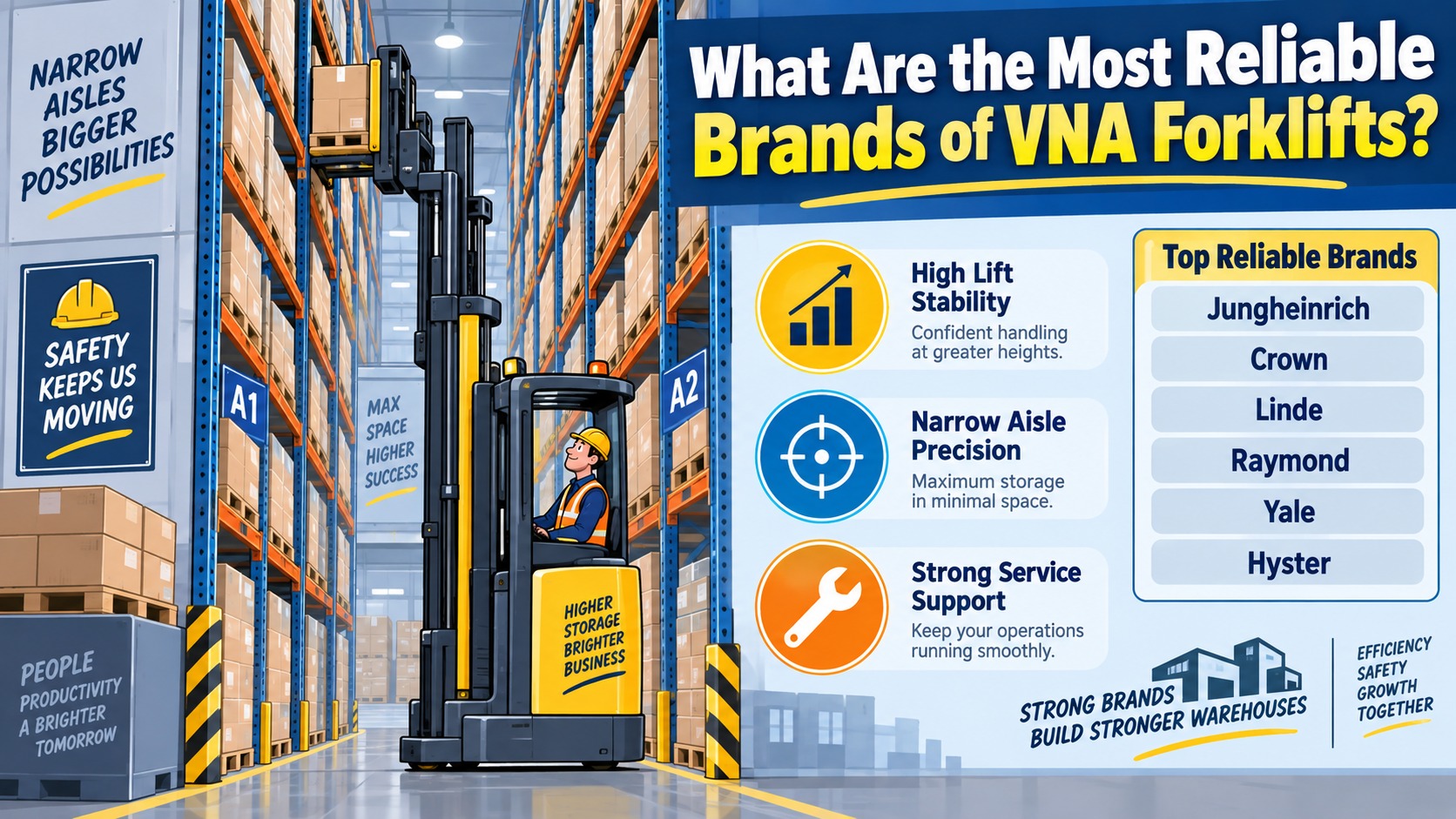
Narrow aisle forklifts are key to maximizing warehouse storage density, and this guide examines the top manufacturers shaping the market. Industry leaders like Toyota, Crown, Jungheinrich, and Raymond offer advanced reach trucks, turret trucks, and VNA solutions with impressive lift heights and automation readiness, while specialists like Combilift and Hangcha provide unique alternatives for niche applications. The piece highlights essential selection criteria, including aisle compatibility, energy sources, and automation potential, ensuring you choose the right equipment for your facility. Discover how lithium-ion technology is transforming operations with faster charging and reduced maintenance, and explore a comparative table of leading models. Whether for cold storage, e-commerce, or heavy-duty distribution, this overview equips you with the knowledge to benchmark manufacturers and make informed purchasing decisions that optimize long-term efficiency.

where are liftron forklifts manufactured

where are liftron forklifts manufactured

Liftron forklifts are manufactured in advanced, ISO-certified facilities in Anhui Province, China, a global hub for industrial vehicle production, ensuring quality, safety, and cost-effectiveness. The brand combines robotic welding, laser-guided assembly, and rigorous testing—including 2-hour full-load tests and 300-point inspections—to deliver reliable electric models. Key components like masts and hydraulics are produced in-house for consistent quality, while lithium-ion batteries from top-tier suppliers ensure long cycle life. Global distribution hubs in Texas, Rotterdam, and Dubai enable fast parts access, and CKD assembly in regions like the U.S. reduces shipping costs and import duties. Liftron offers competitive pricing, a 5-year structural warranty, and transparent manufacturing data, making it a smart choice for businesses seeking premium performance without premium markup. Always verify ISO certifications and factory documentation to ensure you’re investing in a durable support ecosystem, not just a forklift.

Back to Top
Product has been added to your cart