
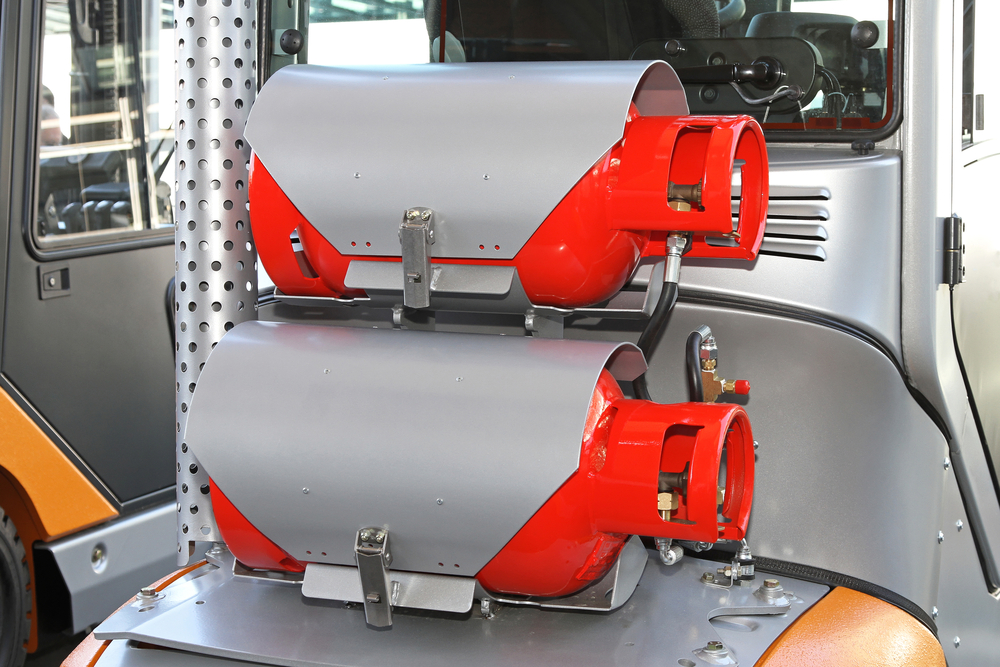
How to Calculate Forklift Propane Cylinder Water Capacity
Propane-powered forklift equipment is widely used in warehouses, loading docks, construction yards, and industrial facilities because propane offers fast refueling and consistent power. However, propane cylinders must be handled correctly. One important marking on every cylinder is the Water Capacity, often shown as “WC” followed by a number.
Understanding WC helps operators, maintenance teams, and propane suppliers confirm the correct fill amount. It is especially important because propane expands as temperature rises. For safety, cylinders are never filled completely with liquid propane. Instead, they are filled to a safe percentage that leaves vapor expansion space.
What Is Water Capacity on a Forklift Propane Cylinder?
Water Capacity, or WC, is the maximum weight of water that a cylinder can hold when completely full. It is not the same as propane capacity. Because propane is lighter than water and requires expansion space, the usable propane fill amount is lower than the stamped WC value.
For example, a cylinder marked “WC 47.6” can physically hold about 47.6 pounds of water. Its safe propane fill is calculated using a conversion factor rather than simply filling it with 47.6 pounds of propane.
Method 1: Locate the Stamped WC
The easiest and most reliable way to find forklift propane cylinder water capacity is to read the stamp on the metal collar or handle area of the cylinder. Manufacturers permanently stamp required cylinder information into this area.
Look for markings such as:
- WC: Water Capacity in pounds
- TW: Tare Weight, or empty cylinder weight
- DOT or TC markings: Cylinder specification and certification
- Manufacture date: Date when the cylinder was made
- Requalification date: Required inspection or recertification date
Common Propane Cylinder Markings
| Marking | Meaning | Why It Matters |
|---|---|---|
| WC | Water Capacity | Used to estimate safe propane fill amount |
| TW | Tare Weight | Empty cylinder weight used when filling by scale |
| DOT / TC | Cylinder standard | Shows regulatory cylinder classification |
| Date Stamp | Manufacture or requalification date | Helps confirm cylinder service eligibility |
Method 2: Calculate Water Capacity by Physical Measurements
If the WC stamp is unreadable, a technician may estimate cylinder water capacity using physical measurements. This method is only for verification and should not replace manufacturer markings or professional cylinder inspection.
A simplified cylinder volume formula is:
Volume = π × radius² × length
After estimating internal volume, the result can be converted to water weight because one gallon of water weighs approximately 8.34 pounds. However, forklift cylinders have curved ends and internal construction details, so a simple geometry estimate may not be exact.
Basic Measurement Calculation Example
| Step | Action | Example |
|---|---|---|
| Measure diameter | Measure cylinder width | 12 inches |
| Find radius | Divide diameter by 2 | 6 inches |
| Measure length | Measure usable cylinder body length | 28 inches |
| Estimate volume | π × radius² × length | 3.14 × 6² × 28 |
| Convert to gallons | Divide cubic inches by 231 | Approximate gallons |
How to Calculate the Maximum Propane Limit
Once you know the WC value, you can estimate the maximum propane fill amount using this common formula:
Maximum propane fill weight = WC × 0.42
This formula accounts for propane density and safe fill limits. For example:
WC 47.6 × 0.42 = about 20 pounds of propane
That means a cylinder with a WC of 47.6 is commonly associated with a 20 lb propane fill. Many forklift propane cylinders are designed around this general capacity range, though operators should always follow supplier and cylinder instructions.
Propane Fill Calculation Table
| Stamped WC | Formula | Approximate Propane Capacity |
|---|---|---|
| WC 47.6 | 47.6 × 0.42 | 20.0 lbs |
| WC 60.0 | 60.0 × 0.42 | 25.2 lbs |
| WC 71.4 | 71.4 × 0.42 | 30.0 lbs |
Step-by-Step Guide to Check Forklift Propane Cylinder Capacity
- Turn off the forklift: Make sure the machine is parked safely before handling the cylinder.
- Inspect the cylinder collar: Look for stamped markings such as WC and TW.
- Record the WC number: This is the cylinder’s water capacity in pounds.
- Apply the fill formula: Multiply WC by 0.42 to estimate propane capacity.
- Check tare weight: Add propane weight to TW if filling by scale.
- Confirm cylinder condition: Do not use damaged, expired, or unreadable cylinders.
Why Tare Weight Matters
Tare Weight, or TW, is the empty weight of the cylinder. When filling propane by weight, the final scale weight is calculated as:
Final full weight = TW + allowed propane fill weight
For example, if the cylinder has a TW of 33 pounds and the safe propane fill is 20 pounds, the full cylinder should weigh about 53 pounds.
Common Mistakes to Avoid
- Confusing WC with propane fill weight
- Ignoring tare weight when filling by scale
- Using damaged or expired cylinders
- Trying to fill a cylinder completely with liquid propane
- Using a cylinder with unreadable or missing markings
Operators using a forklift should never guess propane fill levels. Safe handling requires correct markings, proper filling equipment, and trained personnel.
Propane Forklift Safety Tips
- Store cylinders upright or in the approved forklift position
- Check for leaks before installing the cylinder
- Never use open flames near propane cylinders
- Replace damaged valves, collars, or hoses
- Use only approved propane cylinders for forklift applications
Why Accurate Propane Capacity Matters for Forklift Operations
Accurate propane capacity affects safety, runtime, and equipment planning. Underfilled cylinders may reduce operating time, while overfilled cylinders create serious pressure risks. Proper calculation helps operators plan refueling schedules and reduce downtime.
Whether your business uses propane or electric forklift equipment, safe energy management is essential for productivity and workplace protection.
Conclusion
You normally do not need to calculate forklift propane cylinder water capacity manually because the WC value is stamped into the cylinder collar by the manufacturer. However, knowing how WC works helps you estimate safe propane fill limits and understand cylinder markings.
To calculate the approximate maximum propane amount, multiply the stamped WC value by 0.42. Always verify cylinder condition, tare weight, and safety markings before use. Safe propane handling keeps every forklift operation more reliable, efficient, and compliant.




Add a review
Your email address will not be published. Required fields are marked *