
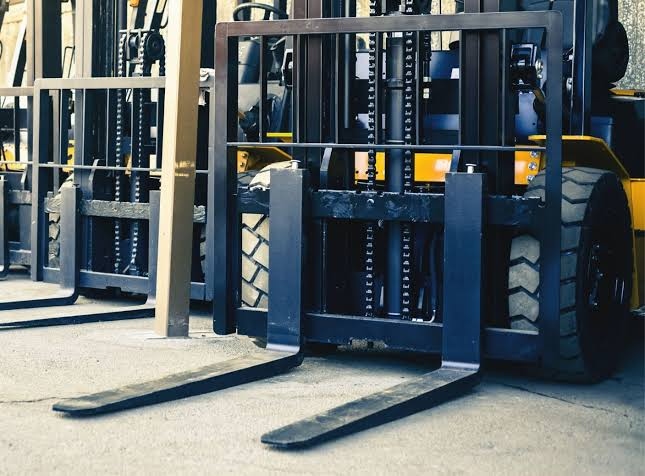
how much space between a forklift mast and door
Wondering how much clearance you really need between a forklift mast and a door? The answer depends on mast type, lift height, and load dimensions, but the general rule is at least 6 inches (15 cm) of vertical clearance above the mast when fully raised, plus a minimum of 4 inches (10 cm) on each side for safe passage. Getting this wrong can cause serious accidents, damaged door frames, or even catastrophic tip-overs when loads shift.
Understanding Forklift Mast Heights and Doorway Clearance
Forklift masts are not fixed in height—they extend as the forks rise, and the top of the mast often reaches much higher than the operator expects. A standard three-stage mast on a counterbalance truck can extend from 83 inches collapsed to over 145 inches fully raised. If you simply measure the collapsed height and compare it to your door opening, you are setting yourself up for a collision.
The Critical Measurement: Fully Raised Mast Height
Always calculate clearance based on the maximum mast height with the forks raised to their highest point, not the resting or collapsed height. For example, a forklift with a collapsed mast of 90 inches may have a fully extended mast height of 168 inches. A standard warehouse door at 100 inches would be completely inadequate—the mast would strike the header long before the forks reach the top.
- Minimum vertical clearance: 6–8 inches above the fully raised mast.
- Minimum side clearance: 4–6 inches on each side of the mast’s widest point (including hoses, chains, and carriage).
- Recommended overhead clearance for safety: 12 inches if the mast has a backrest extension or side shift.
- Load clearance: If carrying a tall load, add the load height to the mast height, then add clearance.
Why Space Requirements Vary by Mast Type
Not all masts behave the same. A two-stage (simplex) mast has a lower free-lift height but a predictable extension. A three-stage (triplex) mast has a taller collapsed height and a greater fully raised height, so the difference between the two can be dramatic. Meanwhile, a four-stage mast can reach extreme heights, often exceeding 200 inches, which requires specialized door openings with high headers or alternate entry points.
| Mast Type | Typical Collapsed Height | Typical Fully Raised Height | Recommended Door Height |
|---|---|---|---|
| Two-Stage (Simplex) | 78–92 inches | 120–140 inches | 128–148 inches |
| Three-Stage (Triplex) | 82–100 inches | 145–180 inches | 153–188 inches |
| Four-Stage (Quad) | 95–110 inches | 180–220 inches | 188–228 inches |
Side Clearance: More Than the Mast Itself
When calculating doorway width, don’t just measure the mast column. The carriage, forks, hoses, and any attachments (like side shifters) can add several inches to the profile. Also consider the operator’s hand and arm clearance when turning through the doorway. A general rule is to add 6 inches to the widest part of the mast assembly on both sides, but many facilities prefer 8–12 inches for comfortable and safe transit.
Special Considerations for Door Thresholds, Slopes, and Seals
If your doorway has a raised threshold, a ramp, or a dock leveler, the forklift’s mast will tilt slightly as it transitions. This tilt changes the effective clearance—even a 3-degree tilt can reduce overhead clearance by 1–2 inches at the mast tip. Also, if the door has a rubber seal or protective bollards, these reduce the usable opening size. Always subtract their width and height from your calculations.
Door Opening Types and Clearance Requirements
- Roll-up doors: Require clearance above the door opening for the drum and track—typically 12–18 inches of extra overhead space.
- Sectional overhead doors: The door panel itself occupies space when open, so the mast must have enough side clearance to pass without touching the track.
- High-speed fabric doors: Usually have a flexible curtain, but they still require proper clearance to avoid tearing from mast impact.
- Pit-mounted doors: Offer more usable clearance but need more floor space for the pit.
Calculating Clearance for Your Specific Forklift
To get the exact number, you need three dimensions from the forklift’s specification sheet: the collapsed mast height, the fully raised mast height, and the overall width of the mast assembly (including hoses and carriage). Then add your desired safety margin. For example, if your mast reaches 170 inches when fully raised, you need a door opening of at least 176 inches (170 + 6) to be safe. For width, if the mast assembly is 48 inches wide, you need a door that is at least 56 inches wide (48 + 4 + 4).
Why Using a Low-Profile or High-Clearance Forklift Helps
Some facilities solve the clearance problem by using equipment specifically designed to overcome these constraints. For instance, the Liftron Material Handling product line offers compact mast configurations that can significantly reduce the required doorway height compared to traditional units. In particular, the Liftron DL SERIES features a streamlined mast design and a lower overall height when collapsed, which is ideal for low-clearance docks and warehouses with older, shorter door frames. These lithium-ion trucks also provide excellent maneuverability, reducing the risk of side collisions.
Best Practices for Doorway Safety with Forklifts
Measure once, verify with a physical test, and then set up procedures. Mark a clear height on the door frame and train operators to check it before entering. Install a mirror or camera at blind corners. Use speed bumps or cues to slow operators near doorways. Also, consider light curtains or proximity sensors that automatically stop the door lift if a mast is too close. Most importantly, perform a clearance test with the actual forklift and a test load—never rely solely on paper specs.
Common Mistakes That Cause Mast-to-Door Collisions
- Measuring only the collapsed mast height and ignoring the raised height.
- Forgetting to add load height to the mast height when carrying tall pallets.
- Ignoring the width of the forklift’s overhead guard, which can be slightly wider than the mast.
- Assuming all doors in a facility have identical dimensions—some may be smaller.
- Failing to account for mast tilt compensation when driving over dock levelers.
Final Recommendation for Clearance Dimensions
For most standard warehouses, maintain a minimum of 8 inches of vertical clearance and 6 inches of side clearance beyond the fully raised mast and widest mast component. For facilities with high traffic, add another 2–4 inches to each dimension. If you are planning a new building or replacing doorways, design for a 12-inch vertical safety margin and 8-inch side margin to future-proof your operation. And always consult the forklift’s manufacturer data sheet and the door manufacturer’s installation guide before finalizing any design.
When in doubt, choose a forklift model like the Liftron DL SERIES, which offers an optimized mast profile that reduces clearance demands. Combined with the expertise of Liftron Material Handling, you can select the right truck and design your doorways with confidence. Remember, the cost of a few extra inches of clearance is far lower than the cost of a damaged mast, a destroyed door, or a serious workplace injury.
Add a review
Your email address will not be published. Required fields are marked *