
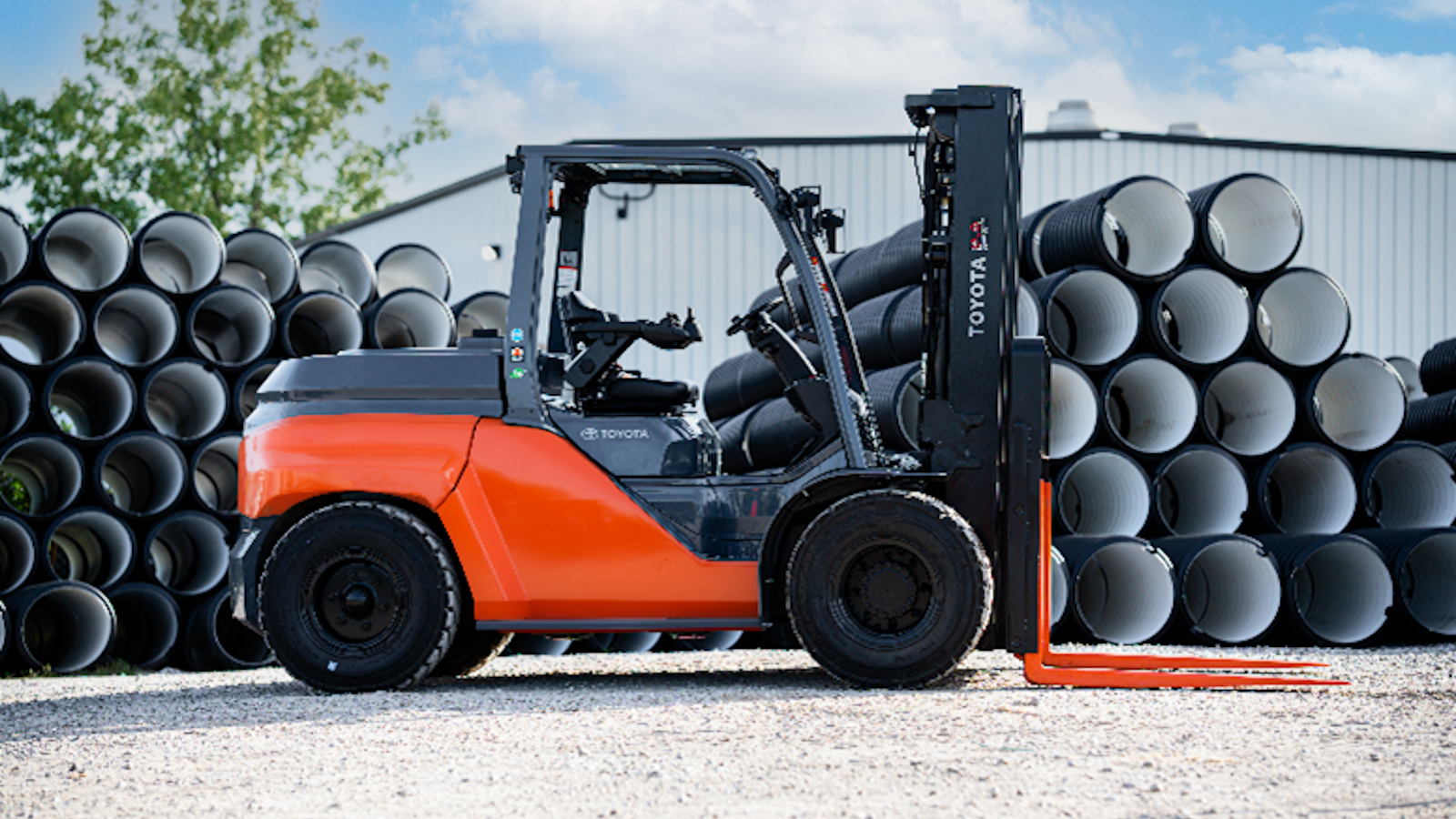
How Much Does a Toyota Forklift Weigh?
Toyota forklift weight varies by model, but a common 5,000-lb truck usually weighs about 7,800 to 8,200 lbs, with larger units rising far higher.
If you are asking how much a Toyota forklift weighs, the answer depends on the exact model, lifting capacity, power source, tire type, mast configuration, and installed options. There is no single weight that applies to every Toyota forklift. A compact electric unit can weigh much less than a diesel outdoor model, while a high-capacity heavy-duty forklift can weigh several times more than a standard warehouse truck. That is why checking the exact spec sheet matters before buying, transporting, or placing a forklift into service.
For many buyers, the most useful reference point is the 5,000-lb class forklift. This is one of the most common size categories in warehouses and general material handling. In Toyota’s lineup, a typical 5,000-lb forklift usually weighs around 8,000 lbs, give or take depending on the tire type and configuration. That often surprises new buyers, but it is completely normal. A forklift must weigh far more than the load it lifts because it needs counterweight and structural stability to operate safely.
Common Toyota Forklift Weight Examples
The table below gives a clear picture of how much Toyota forklift weight can vary from one model to another:
| Model | Type | Rated Capacity | Approx. Truck Weight |
|---|---|---|---|
| Toyota 40-8FGCU25 | Cushion Tire IC | 5,000 lbs | 8,160 lbs |
| Toyota 40-8FGU25 | Pneumatic Tire IC | 5,000 lbs | 8,000 lbs |
| Toyota 50-8FGU25 | Pneumatic Tire IC | 5,000 lbs | 7,840 lbs |
| Toyota 8FBE18U | 3-Wheel Electric | 3,500 lbs | 5,190 lbs without battery / about 6,730 lbs with standard battery |
| Toyota 40-8FDU30 | Diesel Pneumatic | 6,000 lbs | 9,630 lbs |
| Toyota THD3000-24 | High-Capacity IC Pneumatic | 30,000 lbs | 46,999 lbs empty |
As the table shows, Toyota forklift weight can range from the mid-5,000-lb level in smaller electrics to nearly 47,000 lbs in high-capacity models. That is a huge spread, and it is exactly why buyers should never rely on a general estimate when planning shipping, trailer loading, floor loading, or warehouse layout.
Why Does a 5,000-lb Toyota Forklift Weigh Around 8,000 lbs?
Many people assume a 5,000-lb forklift should weigh about 5,000 lbs, but forklifts do not work that way. A counterbalance forklift needs a heavy rear section to offset the load carried on the forks. That rear mass is the counterweight, and it is one of the main reasons the truck itself weighs so much. Without that counterweight, the forklift could tip forward under load.
This is why a standard Toyota 5,000-lb model often weighs roughly 1.5 to 2 times its rated lifting capacity. The truck must remain stable not only while lifting, but also while braking, turning, lowering, and traveling with a load. The mast, frame, axle design, overhead guard, tires, and counterweight all contribute to the final number.
What Factors Affect Toyota Forklift Weight?
1. Load Capacity
As capacity goes up, truck weight usually goes up as well. A 6,000-lb or 8,000-lb truck needs more structural strength and a larger counterweight than a 3,500-lb or 5,000-lb model.
2. Counterweight
The rear counterweight is one of the biggest contributors to forklift mass. It is essential for keeping the truck balanced when lifting and transporting loads.
3. Electric vs. Internal Combustion
Electric forklifts can be heavier than many buyers expect because the battery adds substantial weight. In fact, battery weight is part of the truck’s operating mass and plays a direct role in stability.
4. Tire Type
Cushion tire forklifts and pneumatic tire forklifts are built for different working conditions. Pneumatic models are often configured for outdoor use, while cushion tire models are more common indoors. This difference can affect total truck weight.
5. Mast and Attachments
A taller mast, side shifter, fork positioner, cab, or special attachment can increase the overall operating weight. Two forklifts with the same base model number may still weigh differently if their configurations are not the same.
How Much Is a Toyota Forklift?
Pricing is not as simple as weight, because Toyota generally sells forklifts through dealer quotes rather than one universal public price list. The final cost depends on the model, fuel type, battery type, mast, tire setup, attachments, warranty coverage, and local dealer support. That means a buyer looking at a basic used truck will see a very different price from someone ordering a new forklift with multiple options.
In practice, the smartest way to evaluate cost is to compare the exact truck specifications you need, not just the brand name. A 5,000-lb Toyota cushion-tire unit for indoor use will be priced very differently from a pneumatic-tire outdoor model or a high-capacity diesel machine. Used market condition, operating hours, and maintenance history also make a big difference.
Are Toyota Forklifts Good?
For many buyers, yes. Toyota forklifts are often considered a strong mainstream choice because the brand has a broad product range, a large dealer network, and well-developed support infrastructure. That does not automatically make every Toyota the perfect truck for every operation, but it does help explain why the brand remains high on many buyers’ shortlists.
When people say Toyota forklifts are good, they are usually talking about a combination of support, availability, resale confidence, and familiarity in the market. In other words, the value is not only in the truck itself, but also in the service and ownership experience around it. That matters a lot in real operations, where downtime and parts delays can cost far more than the price difference between brands.
What If Your Budget Is Tight?
If your budget is limited, it can make sense to compare Toyota with newer alternatives. For example, Liftron Forklift may be worth reviewing if you want a forklift with a lithium-ion battery while still keeping a close eye on total investment. Comparing a newer brand against Toyota can help you decide whether you are paying mainly for the truck itself, the dealer structure, or the overall ownership ecosystem.
This comparison is especially useful if you are open to lithium-ion power and want to weigh battery technology, maintenance expectations, and long-term operating efficiency alongside the purchase price.
Conclusion
Toyota forklift weight depends entirely on the specific model. A standard 5,000-lb Toyota forklift usually weighs around 7,840 to 8,160 lbs, smaller electric models can weigh around 5,190 lbs before battery or roughly 6,730 lbs with a standard battery, 6,000-lb diesel models can reach about 9,630 lbs, and high-capacity Toyota forklifts can weigh around 46,999 lbs empty. The key point is simple: always check the exact spec sheet before buying, shipping, or planning your worksite, because load capacity, counterweight, battery, tire type, mast, and attachments all affect the final number.

Add a review
Your email address will not be published. Required fields are marked *