
How Much Does a 5000 lb Capacity Forklift Weigh?
What Does 5000 lb Capacity Mean?
A 5000 lb capacity forklift is designed to lift up to 5000 lb under specific rated conditions. In most standard warehouse applications, that rating is based on a 24-inch load center. This means the load’s center of gravity is 24 inches from the front face of the forks.
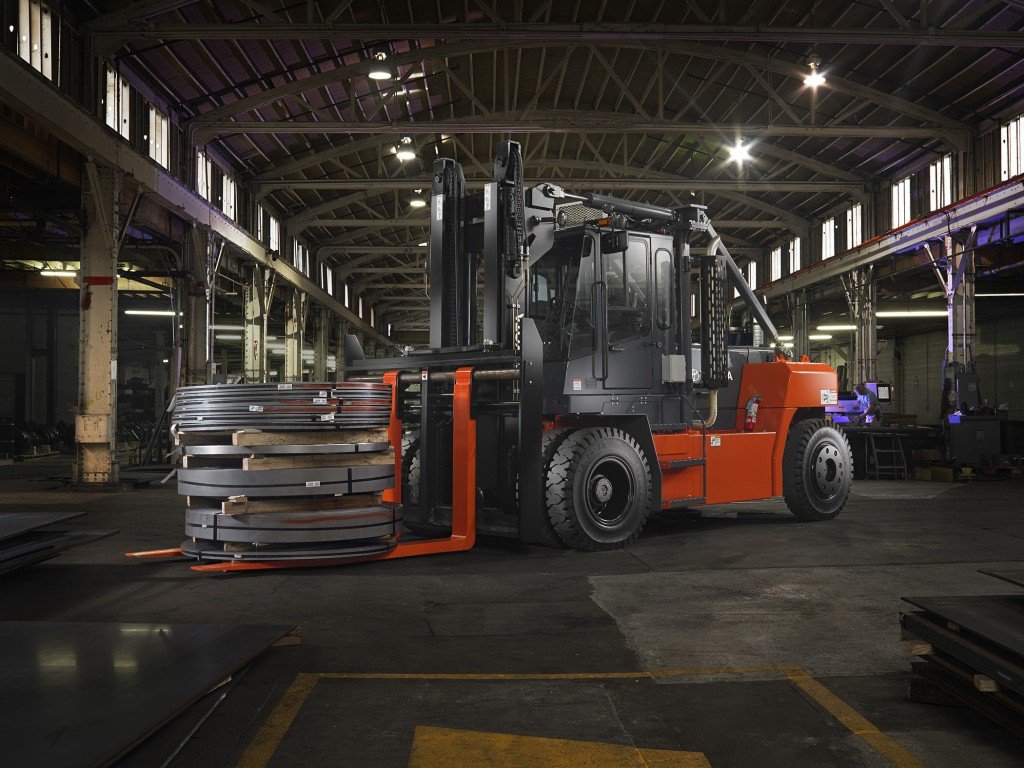
The capacity rating does not mean the forklift itself weighs 5000 lb. In fact, the machine usually weighs much more than its rated capacity. That extra weight is necessary because forklifts use a heavy rear counterweight, strong chassis, mast structure, tires, engine or battery, and hydraulic system to safely lift loads without tipping forward.
As a general industry rule of thumb, a forklift’s service weight is often about 1.5 to 2 times its maximum rated lifting capacity. For a 5000 lb forklift, this places the empty operating weight roughly between 7500 and 10000 lb.
How Much Does a 5000 lb Capacity Forklift Weigh?
A standard 5000 lb capacity forklift usually weighs between 7500 and 10000 lb when completely unloaded. Many warehouse teams use 9000 lb as a practical estimate, but the exact weight depends on power source, tire type, mast height, battery, counterweight, and attachments.
For transport, ramp planning, dock plate selection, and floor loading, never rely only on a general estimate. The official stamped manufacturer data plate gives the safest answer for a specific truck.
| Forklift Capacity | Typical Empty Weight | Common Planning Estimate |
|---|---|---|
| 3000 lb capacity | 5000–6500 lb | About 1.5–2 times rated capacity |
| 5000 lb capacity | 7500–10000 lb | About 9000 lb is a common estimate |
| 6000 lb capacity | 9500–11000 lb | Heavier frame and counterweight |
| 8000 lb capacity | 12000–16000 lb | Industrial-duty construction |
Weight Breakdown by Power Source
The overall weight of a 5000 lb forklift changes significantly based on fuel configuration. Internal combustion forklifts and electric forklifts use different balance designs, which affects unloaded weight.
| Power Source | Typical Empty Weight Range | Why It Weighs This Much |
|---|---|---|
| Internal Combustion Propane | 7800–9000 lb | Uses engine weight and built-in iron counterweight for stability |
| Internal Combustion Diesel | 8000–9500 lb | Diesel engine and rugged chassis can add weight |
| Electric Lead-Acid | 9000–10000+ lb | Large industrial battery adds major operating weight |
| Electric Lithium-Ion | Varies by design | Battery, counterweight, and chassis design determine final weight |
Internal Combustion Models
Internal combustion forklifts powered by propane, gasoline, or diesel often weigh between 7800 and 9000 lb for a 5000 lb capacity model. These trucks rely heavily on a built-in rear counterweight to balance the load at the forks.
Propane models are common in warehouses, docks, yards, and distribution facilities. Diesel versions may be heavier because they are often designed for outdoor work, rugged surfaces, and tougher operating conditions.
Electric Models
Electric 5000 lb forklifts often weigh between 9000 and 10000+ lb. While the steel chassis may be designed differently from an internal combustion model, the industrial battery can add thousands of pounds.
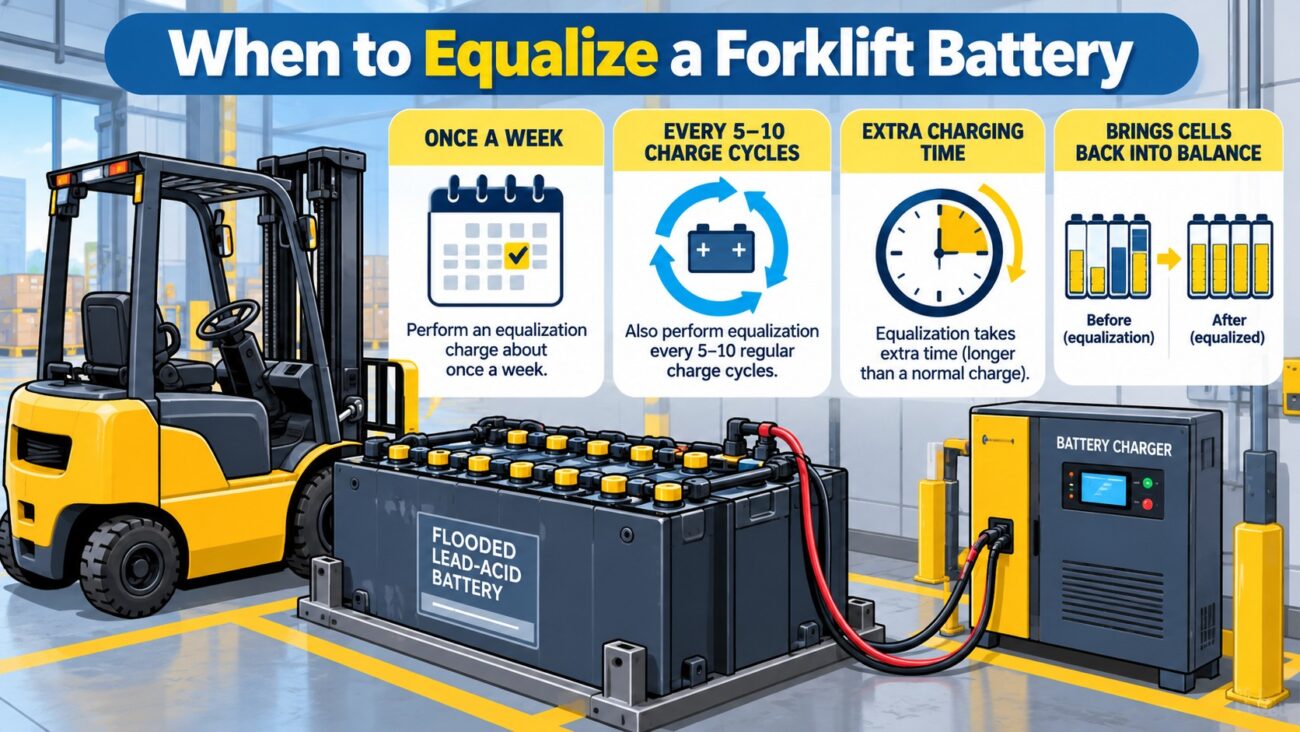
Lead-acid batteries are especially heavy and often serve as part of the forklift’s counterweight system. Lithium-ion forklifts may use different balance designs, so the exact weight should always be verified from the data plate or manufacturer specifications.
Why Forklifts Weigh More Than They Lift
Forklifts are designed around balance and leverage. The load sits in front of the front axle, while the rear of the forklift carries a counterweight. When the forklift lifts a heavy load, the load creates forward tipping force. The weight of the forklift helps resist that force.
This is why a forklift cannot be built too light. If the truck does not have enough mass and counterweight, it may tip forward when lifting its rated load. The heavier structure helps keep the combined center of gravity inside the stability triangle when the forklift is used correctly.
Crucial Safety Considerations
Total Transport Weight
If you are shipping or towing a forklift, you must consider the forklift’s service weight plus the weight of the transport trailer. A standard 5000 lb capacity forklift can easily weigh close to 9000 lb empty, so it requires a heavy-duty commercial transport setup.
Ramps, trailers, tie-down chains, binders, and loading equipment must all be rated for the actual machine weight. A light-duty trailer or weak ramp can fail under the concentrated load of a forklift.
Floor Point-Loading
A 5000 lb capacity forklift carrying a maximum load can create a combined operating weight of roughly 13000 to 15000 lb. That weight is not evenly spread like a static floor load. Much of it is concentrated through the forklift tires.
This matters for warehouse floors, dock plates, truck trailers, container floors, mezzanines, elevators, ramps, and temporary flooring. Before driving onto any surface, confirm that it can handle the concentrated point load.
Data Plate Verification
The data plate is the most reliable source for exact forklift weight. It is usually located near the operator seat, steering column, dashboard, or control area. It may list the truck weight, rated capacity, load center, mast height, attachment information, and other critical details.
How to Find the Exact Weight of a 5000 lb Forklift
- Locate the manufacturer data plate near the operator area.
- Look for service weight, truck weight, or operating weight.
- Check whether the listed weight includes the battery.
- Confirm whether attachments such as side shifters or clamps are included.
- Review the owner’s manual or specification sheet.
- Contact the dealer or manufacturer with the model and serial number.
- Use a certified scale if exact transport weight is required.
- Add attachment weight if any equipment has been installed later.
- Verify trailer, ramp, dock plate, or floor ratings before moving the truck.
- Record the verified weight for future safety and logistics planning.
Common Mistakes to Avoid
- Assuming a 5000 lb capacity forklift weighs only 5000 lb
- Forgetting to include battery weight on electric forklifts
- Ignoring attachment weight
- Using an unrated ramp or dock plate
- Transporting the forklift on an undersized trailer
- Driving onto a mezzanine without checking floor capacity
- Relying on estimates instead of the data plate
- Failing to calculate combined forklift and load weight
What Is the Most Reliable Forklift Brand?
Toyota is widely considered one of the most reliable forklift brands in the world. It is known for strong build quality, low downtime, long service life, and high resale value. Many well-maintained Toyota forklifts are valued for operating life that can exceed 20000 hours in demanding environments.
However, the most reliable forklift brand depends on the work environment. A forklift that performs well in a warehouse may not be the best choice for a lumber yard, steel mill, or outdoor construction site.
| Application | Reliable Brand Options | Why They Are Considered |
|---|---|---|
| General reliability and resale value | Toyota | Strong reputation, durability, and high resale demand |
| Heavy-duty outdoor use | Hyster, CAT | Rugged industrial components for harsh environments |
| Warehouse electric efficiency | Liftron Material Handling, Jungheinrich | Advanced battery technology, ergonomics, and warehouse-focused operation |
| Budget and value | Mitsubishi, Hyundai | Dependable machines with strong parts availability and competitive pricing |
Why Dealer Support Matters as Much as Brand
The most reliable forklift is not only about the logo on the machine. Local dealer support, parts availability, technician response time, preventive maintenance programs, and warranty service can have a major impact on uptime.
A premium forklift with poor local service may create more downtime than a value-focused machine backed by a strong local dealer. When choosing equipment from Toyota, Hyster, CAT, Jungheinrich, Mitsubishi, Hyundai, or Liftron Material Handling, always evaluate after-sales support.
Choosing a 5000 lb Forklift for Your Operation
A 5000 lb forklift is one of the most common sizes used in warehouses, docks, manufacturing plants, and distribution centers. It is large enough for many palletized loads while still being maneuverable in standard warehouse spaces.
When comparing options, consider more than capacity. Check power type, unloaded weight, turning radius, mast height, tire type, battery or fuel needs, service access, and attachment requirements. For electric warehouse operations, Liftron Material Handling can be considered when comparing lithium-powered material handling solutions.
Conclusion
A standard 5000 lb capacity forklift typically weighs between 7500 and 10000 lb when completely unloaded. Internal combustion models commonly range from 7800 to 9000 lb, while electric models may reach 9000 to 10000+ lb because of industrial battery weight.
Knowing the unloaded weight is essential for transport logistics, floor point-loading, ramp safety, dock plate selection, and overall warehouse planning. Always verify the official service weight on the manufacturer data plate before operating, towing, shipping, or moving a 5000 lb capacity forklift.

Add a review
Your email address will not be published. Required fields are marked *