
Can You Damage a Forklift by Plugging the Charger Into the Wrong Connection?
Why Forklift Charging Connections Matter
An electric forklift may operate at 24V, 36V, 48V, 72V, 80V or another system voltage. Its charger must be designed for the exact battery voltage and chemistry.
Traditional flooded lead-acid batteries use a different charging profile from lithium-ion or LiFePO4 batteries. Even when two plugs appear similar, their wiring, polarity, current rating and communication pins may be different.
A correct connector does more than physically join two cables. It must safely carry high charging current while maintaining the proper polarity and, on some modern lithium systems, communication between the charger and battery management system.
What Can Happen If You Use the Wrong Connection?
| Charging Mistake | Possible Consequence |
|---|---|
| Wrong battery connector | Arcing, loose contact, overheating or melted plug housings |
| Incorrect charger voltage | Overcharging, undercharging, battery damage or BMS shutdown |
| Wrong battery chemistry | Unsafe charging profile, excessive heat or shortened battery life |
| Reversed polarity | Blown fuse, damaged charger, burned wiring or electronic failure |
| Charger connected to the truck-side plug incorrectly | Possible damage to contactors, controller or onboard electrical equipment |
| Connector forced together | Bent contacts, broken housings and poor electrical connection |
| Connection made while energized | Electrical arcing, pitted terminals and ignition risk |
1. Plugging the Charger Into the Wrong Forklift Connection
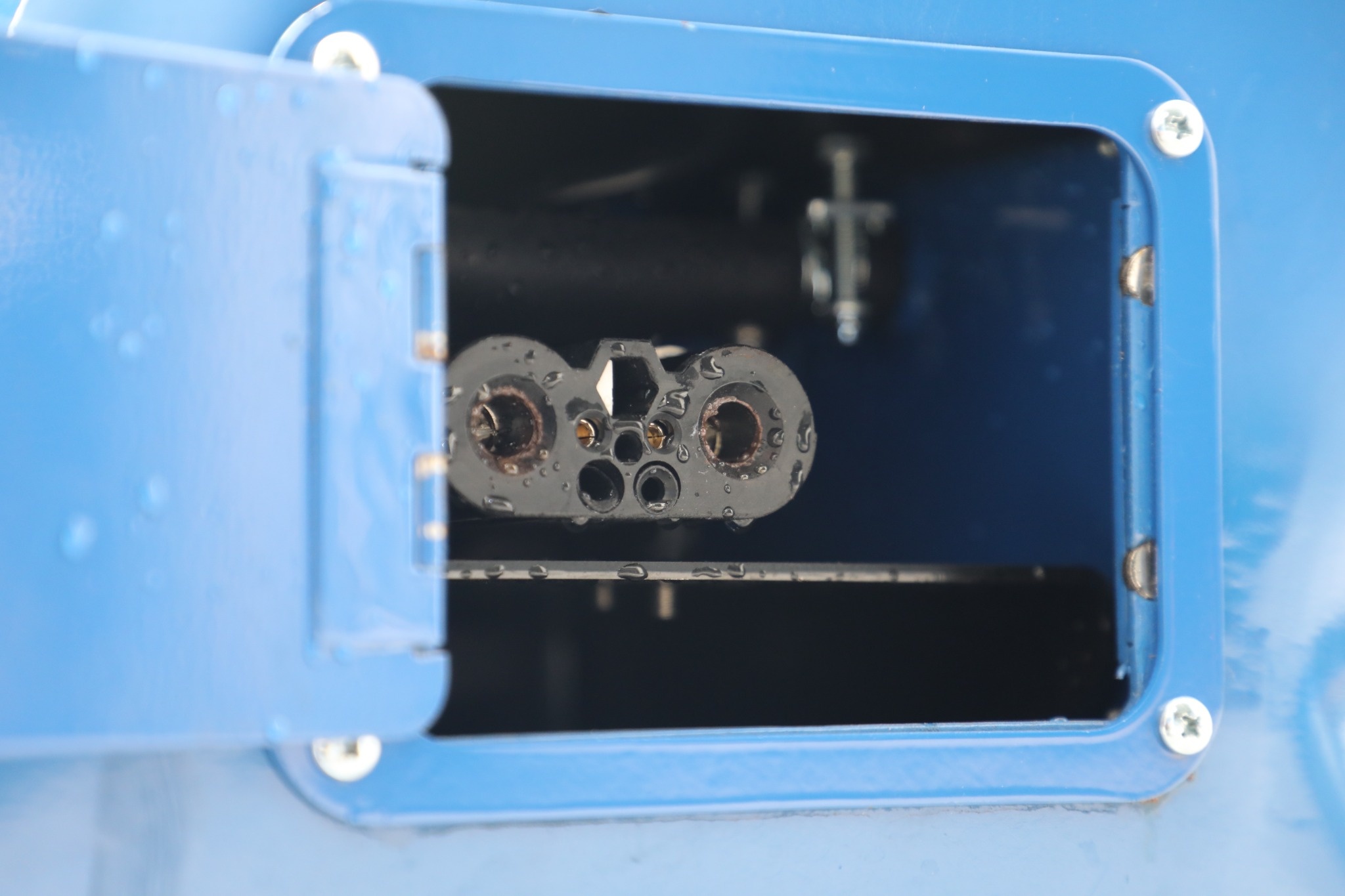
Many traditional electric forklifts use two related battery connectors. During operation, the battery is connected to the truck. Before charging, the truck is switched off, and the battery connector is disconnected from the truck-side connector. The charger is then connected directly to the battery connector.
If the charger is incorrectly connected to a truck-side circuit that was not designed as a charging inlet, current may reach the forklift’s contactors, controller, DC converter or other electrical components.
However, not every forklift follows this arrangement. Some modern trucks have a dedicated charging port or an onboard charger. For those models, disconnecting the battery may be unnecessary or incorrect.
2. Mismatched Charger Voltage
Using the wrong voltage is one of the most dangerous charging errors. A charger designed for a higher-voltage battery can force excessive voltage into a lower-voltage pack.
For example, connecting a 48V charger to a 36V battery may cause severe overcharging, heating, electrolyte gassing, BMS protection or permanent cell damage. A lower-voltage charger connected to a higher-voltage battery may fail to charge it correctly or may not begin charging at all.
The voltage printed on the charger should match the nominal battery voltage. The final charging voltage and charging algorithm must also be suitable for the battery chemistry.
3. Using the Wrong Charging Amperage
Charging current must remain within the battery manufacturer’s permitted range. A charger with an excessive output current can overheat cables, connectors and battery cells.
A charger with a lower current rating may be electrically compatible but charge too slowly for the operating schedule. However, charger compatibility cannot be determined by amperage alone.
Before charging, verify:
- Battery nominal voltage
- Battery amp-hour capacity
- Maximum permitted charging current
- Charger output voltage
- Charger output current
- Battery chemistry
- Required charging profile
4. Reversed Polarity
Reverse polarity occurs when the charger’s positive output is connected to the battery’s negative terminal and the negative output is connected to the positive terminal.
Many industrial connectors are keyed or color-coded to make reverse connection difficult. Modern chargers may also detect polarity before supplying current. These protections reduce risk but should not be intentionally tested.
If protection is absent or defective, a reversed connection can cause:
- A large electrical spark
- A blown charger or battery fuse
- Burned connector contacts
- Damaged charger rectifiers
- BMS shutdown or damage
- Melted wiring insulation
- Battery overheating
- Fire risk
Never modify a plug, cut away a keying feature or use a homemade adapter to force incompatible connectors together.
5. Using a Lead-Acid Charger on a Lithium Battery
A charger may have the correct nominal voltage yet still be unsuitable because its charging profile was designed for another chemistry.
Lead-acid chargers may use bulk, absorption, float and equalization stages. Certain chargers also apply desulfation pulses. These functions may not be appropriate for a lithium battery.
A lithium battery normally requires a charger designed to work with its BMS and permitted charging voltage. Some systems also require CAN communication or another control connection before charging begins.
Using an incompatible charger may cause repeated BMS shutdowns, incomplete charging or excessive voltage. Always use the charger approved for the battery model.
Warning Signs of a Wrong Charging Connection
| Warning Sign | Recommended Action |
|---|---|
| Loud spark or electrical arc | Stop immediately and disconnect power safely |
| Connector becomes hot | Shut down charging and inspect the plug and contacts |
| Burning odor | Isolate the area and contact qualified maintenance personnel |
| Charger shows a voltage or polarity fault | Do not bypass the warning; verify all specifications |
| Battery swells, hisses or vents | Move away and follow the site emergency procedure |
| Forklift does not power on after charging | Check fuses, contactors, BMS status and controller faults |
| Plug housing is discolored or melted | Remove the equipment from service and replace damaged parts |
How to Prevent Forklift Charging Damage
Turn the Charger Off First
Whenever the charger design allows it, switch off or de-energize the charger before connecting or disconnecting the battery. This reduces the possibility of electrical arcing across the connector contacts.
Some automated chargers control their output electronically and may require a specific sequence. Follow the charger manufacturer’s instructions rather than relying on a general assumption.
Park and Shut Down the Forklift
Before charging, park the truck in the designated charging area, lower the forks, place the controls in neutral, apply the parking brake and switch off the forklift.
Do not charge a truck where it blocks an aisle, exit, fire extinguisher or pedestrian route.
Disconnect the Forklift When Required
For trucks with removable battery-to-truck connectors, disconnect the battery from the truck before connecting the charger. Hold the connector body rather than pulling on the cable.
For a truck with an onboard charger or dedicated charging port, follow the specific instructions. Do not disconnect cables that are intended to remain connected.
Verify the Specifications
Read the identification labels on the battery and charger. Confirm the voltage, chemistry, capacity, charging current, connector and polarity before beginning.
Inspect the Connector
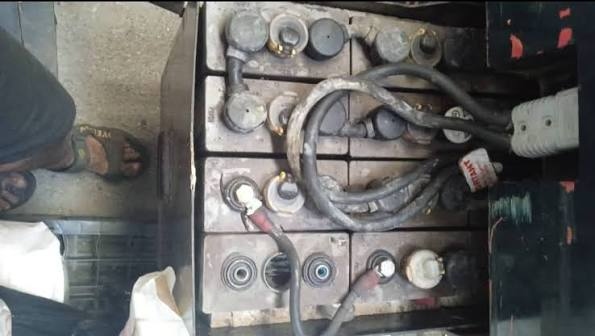
Look for cracked housings, loose contacts, corrosion, burned areas, damaged insulation or exposed conductors. A damaged connector can overheat even when the charger is otherwise compatible.
Safe Forklift Charging Procedure
- Use the designated charging area. Confirm that the area is ventilated and free from smoking, flames and sparks.
- Park the truck safely. Lower the forks, neutralize the controls and apply the parking brake.
- Switch off the forklift. Remove the key or disable the operator access system.
- Identify the battery. Check voltage, chemistry, amp-hour rating and charging limits.
- Identify the charger. Confirm that it is approved for the battery.
- Inspect plugs and cables. Do not use damaged or overheated connections.
- De-energize the charger when required. Follow the charger’s connection procedure.
- Connect the correct plug. Never force the connector or use an improvised adapter.
- Begin charging. Confirm that the charger recognizes the battery without fault codes.
- Monitor the initial charging period. Check for heat, odor, arcing or abnormal noise.
- Complete the shutdown sequence. Stop the charger before disconnecting when required.
- Reconnect the truck correctly. Secure the connector and cables before returning the truck to use.
What Are OSHA Requirements for Forklift Battery Charging?
OSHA addresses forklift battery charging under 29 CFR 1910.178(g). The exact requirements depend partly on whether batteries are only charged in place or are also removed, changed or serviced.
Designated Charging Areas
Battery charging must take place in designated areas. These areas should be protected from vehicle movement and kept free from unnecessary ignition sources.
Prevent Movement
Facilities must provide a way to prevent trucks from moving during battery charging. Parking brakes and appropriate site procedures should be used.
Ventilation
Charging areas must have adequate ventilation to disperse gases produced during charging, particularly with flooded lead-acid batteries.
No Smoking or Open Flames
Smoking is prohibited in battery-charging areas. Precautions must also be taken to prevent open flames, sparks and electric arcs.
Keep Caps and Covers in Place
Vent caps should remain in place to prevent electrolyte spray, while battery or compartment covers may need to be opened as specified to dissipate heat.
Control Electrolyte Hazards
Where batteries are changed, electrolyte is handled or maintenance is performed, suitable flushing and neutralizing provisions, fire protection and material-handling equipment may be required.
Protect Cables and Connectors
Charging cables should be positioned to avoid physical damage. Connectors must be handled correctly rather than disconnected by pulling on the cable.
Can a Damaged Connector Be Repaired?
Minor external dirt may be removed according to the manufacturer’s instructions, but burned contacts, loose terminals, melted housings and damaged cables require professional repair or replacement.
Do not reshape electrical contacts with improvised tools or tape a cracked connector back together. High charging current can quickly overheat a poor connection.
The replacement connector must match the voltage, current rating, polarity, housing style and keying configuration of the original system.
What to Do After Connecting the Wrong Charger
- Stop charging immediately. Do not continue to see whether the fault clears.
- De-energize the charger. Use the approved disconnect or emergency procedure.
- Do not touch hot components. Allow connectors and cables to cool safely.
- Inspect for smoke or swelling. Keep the area isolated if the battery appears unstable.
- Tag the forklift and charger. Prevent anyone from attempting another charge.
- Record the charger and battery details. Note voltage, chemistry and displayed fault codes.
- Contact qualified service personnel. Have the battery, charger, fuses, connector and truck electronics tested.
- Do not return the truck to service prematurely. Hidden electrical damage may remain after the visible fault is corrected.
Charging Lithium-Powered Forklifts
Modern lithium-powered forklift systems often include a BMS that monitors cell voltage, temperature, charging current and other conditions.
The BMS may interrupt charging when it detects excessive voltage, high temperature, low-temperature charging or a communication error. However, the BMS should not be treated as permission to use an incorrect charger.
Some lithium forklifts support opportunity charging during scheduled breaks. Only the approved charger and charging port should be used, and cables should be disconnected before the truck resumes operation.
Final Charging Checklist
- Correct charger for the battery chemistry
- Matching nominal voltage
- Approved charging current
- Correct keyed connector
- Verified polarity
- Undamaged cables and contacts
- Forklift parked and switched off
- Charging area properly ventilated
- No smoking, sparks or open flames
- Charger free from active fault codes
Conclusion
Connecting a forklift charger to the wrong connection can damage the battery, charger, plugs, cables and sensitive truck electronics. Incorrect voltage, reversed polarity and incompatible battery chemistry are especially dangerous.
Never force two plugs together, modify a keyed connector or assume that a charger is suitable because its cable fits. Verify the battery voltage, chemistry, current limits and charging procedure first.
When charging an electric forklift, use a designated charging area, secure the truck, control ignition sources and follow the instructions supplied with the vehicle, battery and charger.
If the wrong connection has already been made, stop charging, isolate the equipment and arrange a qualified inspection before returning the forklift to service.


Add a review
Your email address will not be published. Required fields are marked *