
How Do Forklift Brakes Work?
Understanding braking systems is essential for safe operation of any forklift. These machines can weigh several tons, so their braking systems are designed to handle extreme loads and frequent stopping cycles in warehouse and industrial environments.
Basic Working Principle of Forklift Brakes
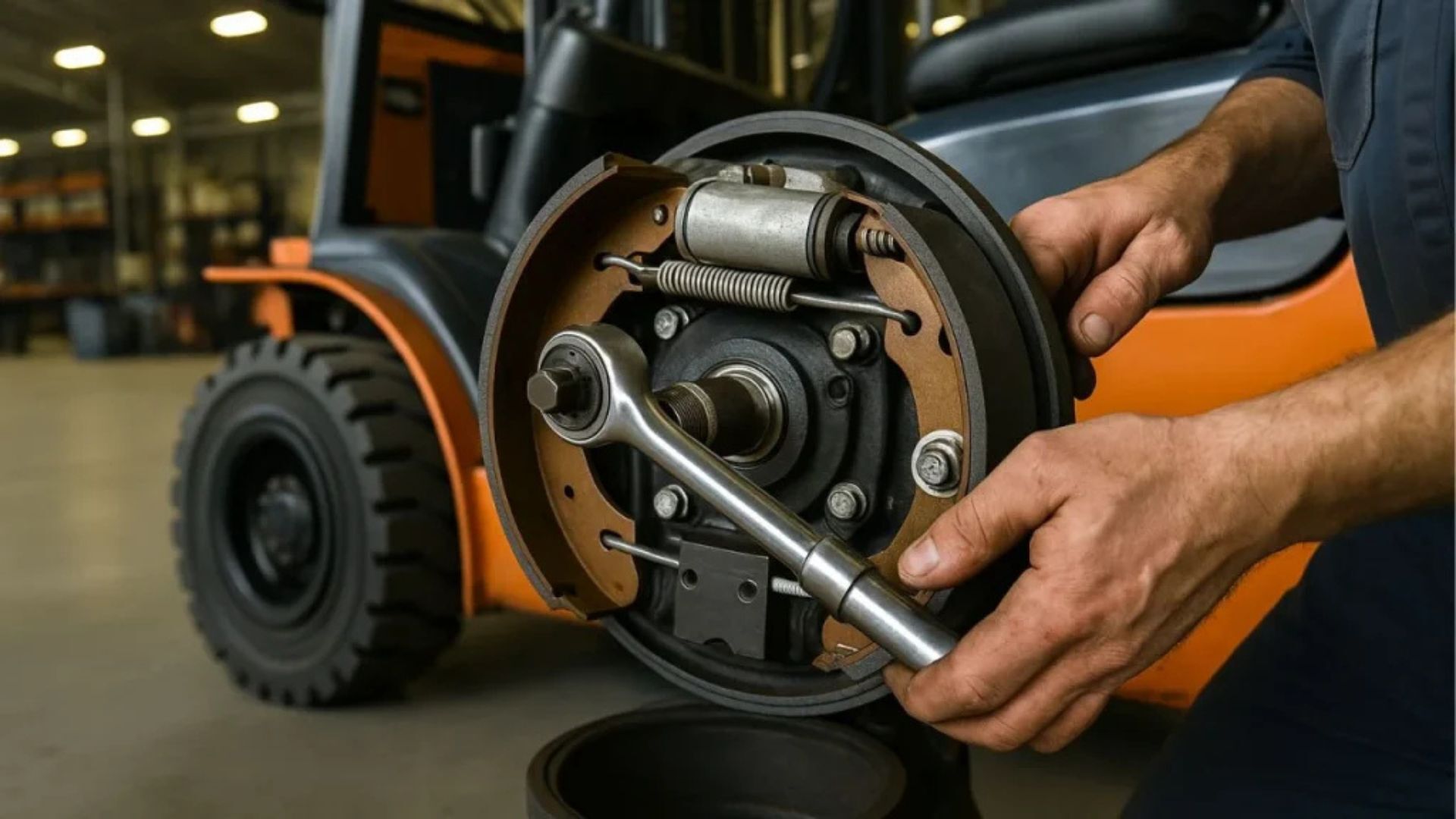
Forklift braking systems operate by converting mechanical pedal input into hydraulic pressure. This pressure activates wheel cylinders that force brake shoes or pads against rotating surfaces.
The resulting friction slows wheel rotation and brings the forklift to a controlled stop, even when carrying heavy loads.
Main Types of Forklift Braking Systems
1. Hydraulic Service Brakes
These are the primary braking systems used for everyday stopping. When the operator presses the brake pedal, hydraulic fluid is pressurized and sent to wheel cylinders.
2. Inching Brake System
The inching system allows operators to slow the forklift while still using hydraulic lift functions. This is essential for precise load positioning.
3. Parking Brakes
Parking brakes keep the forklift stationary when not in use. These are typically mechanical and engage the wheels directly.
4. Regenerative Braking (Electric Models)
Modern electric forklifts use regenerative braking, where kinetic energy is converted back into battery charge, improving efficiency.
Forklift Brake System Table
| Brake Type | Function | Usage |
|---|---|---|
| Hydraulic Service Brake | Main stopping system | Normal driving conditions |
| Inching Brake | Controls slow movement | Precision load handling |
| Parking Brake | Locks forklift in place | Idle or parked condition |
| Regenerative Brake | Energy recovery braking | Electric forklift systems |
How Forklift Braking Force Is Generated
When the brake pedal is pressed, hydraulic fluid is pushed through the system to wheel cylinders. These cylinders expand and force brake shoes or pads against drums or discs.
The friction created between these surfaces converts kinetic energy into heat, slowing the forklift safely and efficiently.
Step-by-Step Braking Process
- Operator presses brake pedal: Mechanical force is applied.
- Hydraulic system activates: Fluid is pressurized.
- Wheel cylinders engage: Brake shoes or pads move outward.
- Friction is created: Wheels slow down.
- Forklift stops: Controlled braking is achieved.
Safety Considerations for Forklift Brakes
Proper brake maintenance is essential for safe operation. Worn brake shoes, low hydraulic fluid, or air in the system can significantly reduce stopping power.
Regular inspections ensure that forklifts remain safe and reliable in high-demand environments such as warehouses and construction sites.
What Not to Do With Forklift Brakes
- Do not operate with known brake issues
- Do not ignore warning sounds or grinding noises
- Do not overload the forklift beyond rated capacity
- Do not use parking brake while moving
- Do not skip maintenance checks
Importance of Brake Systems in Modern Forklifts
Advanced systems in modern industrial equipment from manufacturers like forklift providers are designed to ensure maximum safety and control under heavy load conditions.
These systems combine hydraulic precision with electronic monitoring to improve reliability and reduce maintenance risks.
Conclusion
Forklift brakes work by converting hydraulic pressure into friction-based stopping power, allowing heavy machines to safely decelerate under load. Understanding how these systems operate is essential for safe industrial operations.
Whether using traditional or modern electric models, proper brake maintenance ensures safe performance and extends equipment life across all industrial applications involving forklift systems.




Add a review
Your email address will not be published. Required fields are marked *