
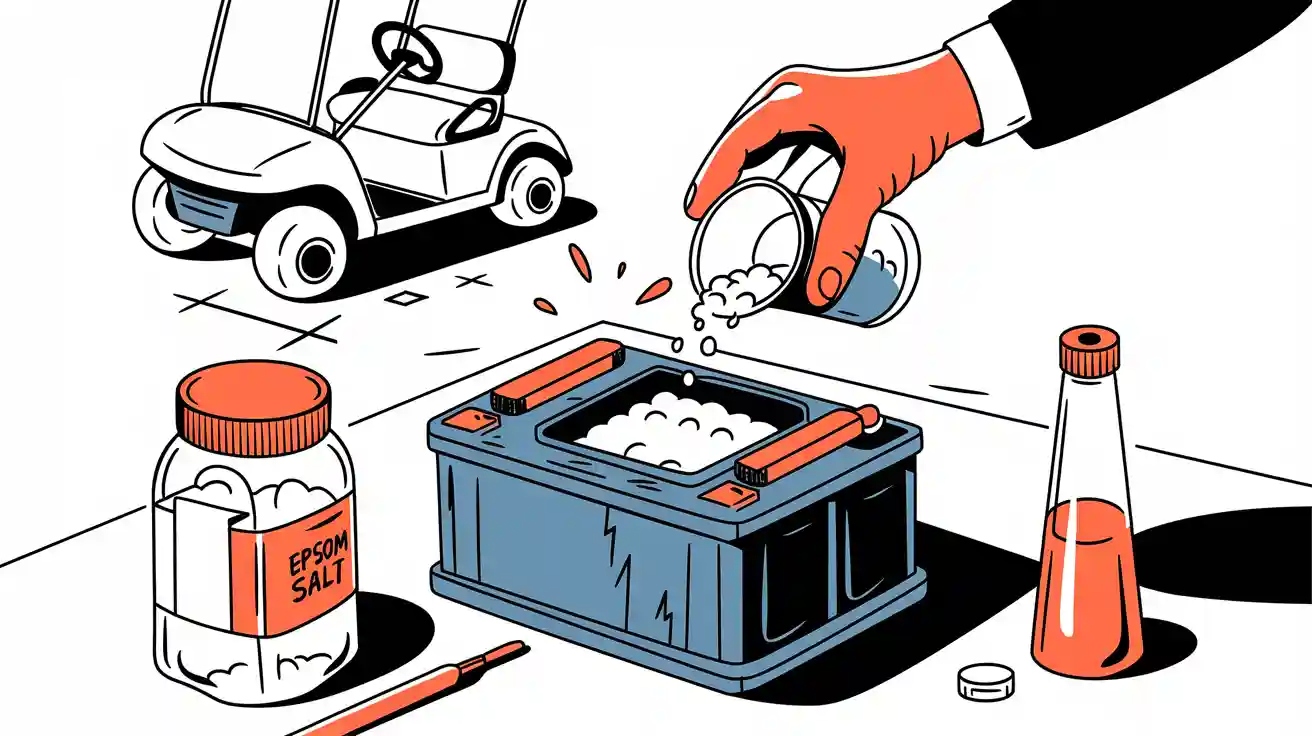
Does Golf Cart Battery Repair Liquid Work? Complete Guide to Battery Restorers and Better Alternatives
Golf cart battery repair liquid may slightly help mild lead-acid sulfation, but it cannot permanently fix old or damaged batteries.
Many golf cart owners ask, “Does golf cart battery repair liquid work?” The honest answer is: sometimes, but only in limited situations. Golf cart battery repair liquids, often sold as battery restorers, desulfators, or electrolyte additives, may slightly improve performance in mildly degraded flooded lead-acid batteries. They are designed to help reduce sulfate buildup on battery plates, which can sometimes restore a small amount of lost capacity.
However, battery repair liquid is not a miracle solution. It cannot rebuild broken plates, reverse severe aging, repair shorted cells, fix physical damage, or bring a completely worn-out battery pack back to new condition. In many cases, the results are temporary and modest. A battery may seem to hold charge a little better for a short period, but if the internal structure is already damaged, replacement is usually the better long-term answer.
For golf cart users, understanding when battery repair liquid works and when it does not can save time, money, and frustration. If your battery is only mildly sulfated, a restorer may provide a small improvement. If the battery is deeply discharged, swollen, leaking, very old, or unable to hold voltage, a repair liquid will not solve the real problem. In those cases, upgrading to a quality lithium golf cart battery from a trusted brand such as hydrocell may be a smarter investment.
What Is Golf Cart Battery Repair Liquid?
Golf cart battery repair liquid is an additive placed into flooded lead-acid batteries. These products are often marketed as battery restorers, battery rejuvenators, battery repair solutions, or desulfation liquids. Their goal is to improve battery performance by addressing sulfation, which is one of the most common reasons lead-acid batteries lose capacity.
Sulfation occurs when lead sulfate crystals form on the battery plates. Some sulfation is normal during battery use, but if a battery is left discharged for too long, undercharged repeatedly, or poorly maintained, the sulfate buildup can harden. Once that happens, the battery becomes less able to accept and deliver charge.
Repair liquids attempt to loosen or reduce this buildup. In mild cases, this may help the battery charge more effectively and improve runtime slightly. But if the sulfation is severe or the battery plates are already damaged, chemical additives are unlikely to restore meaningful performance.
How and When Battery Repair Liquid Works
| Factor | What It Means for Battery Repair Liquid |
|---|---|
| Best for Mild Sulfation | Repair liquid may help batteries that have lost some performance due to early or moderate sulfate buildup. |
| Limited Effectiveness | Results are usually small and temporary, not a full return to new battery condition. |
| Battery Type | These products are mainly intended for flooded lead-acid batteries, not lithium, sealed AGM, or gel batteries. |
| Not for Physical Damage | Repair liquid cannot fix cracked cases, shorted cells, warped plates, leaks, or heavily aged batteries. |
| Alternative Solution | If the battery is badly worn, replacement with a modern lithium battery is usually more reliable. |
Best for Mild Sulfation
Battery repair liquid works best when the main problem is mild sulfation. This may happen when a lead-acid golf cart battery has been undercharged, stored too long without maintenance, or used lightly but not charged correctly. In this stage, the battery may still have a usable internal structure, but its plates are partly blocked by sulfate buildup.
If the sulfate buildup is not too severe, a repair liquid may help improve chemical activity inside the battery. Some users may notice slightly longer runtime, better charging response, or improved voltage stability. However, the improvement is usually not dramatic.
It is important to understand that battery repair liquid does not create new battery capacity. It only attempts to recover some capacity that was lost due to chemical buildup. If the battery is old and worn out, there may be little capacity left to recover.
Effectiveness: What Results Should You Expect?
The effectiveness of golf cart battery repair liquid varies widely. Some users report small improvements, while others see no meaningful change. The result depends on battery age, level of sulfation, maintenance history, water levels, charging habits, and whether the battery has internal damage.
If a battery pack is only one or two years old and has been neglected for a short time, a restorer may help. If the batteries are five or six years old, have been deeply discharged many times, or show signs of physical damage, the product is unlikely to make a real difference.
Battery repair liquid should be viewed as a temporary recovery attempt, not a permanent repair. Even if it helps, the battery may still be near the end of its service life. Owners should monitor performance after treatment and be prepared for replacement if the battery continues to decline.
Types of Battery Restorer Products
There are several types of products sold for battery restoration. Liquid additives are poured into flooded lead-acid battery cells after checking electrolyte levels. Some claim to dissolve or reduce sulfate crystals. Other products are electronic desulfators, which send pulses through the battery to help break down sulfate buildup over time.
There are also charger-based desulfation modes. Some smart chargers include a recovery or desulfation setting designed for deeply discharged or sulfated lead-acid batteries. This method may be safer than using random additives because the charger controls the process electronically.
These products are not suitable for every battery. Do not pour repair liquid into sealed AGM, gel, or lithium batteries. Sealed batteries are not designed to be opened, and adding liquid can damage them or create safety risks. Lithium batteries use completely different chemistry and should never be treated with lead-acid repair additives.
What Battery Repair Liquid Cannot Fix
Battery repair liquid cannot fix a battery with a cracked case, leaking acid, swollen housing, shorted cell, broken internal plate, damaged separator, or severe corrosion. It also cannot restore batteries that have lost capacity due to years of normal wear.
If one battery in a pack is much weaker than the others, adding repair liquid may not solve the pack imbalance. In a golf cart battery system, one bad battery can pull down the performance of the entire pack. The cart may lose range, struggle on hills, charge unevenly, or shut down early.
If batteries fail a load test, cannot hold voltage, or drop quickly under acceleration, replacement is usually a better choice than repeated chemical treatments.
What Is the Best Way to Restore Golf Cart Batteries?
The best way to restore golf cart batteries depends on the battery type and condition. For flooded lead-acid batteries, start with basic maintenance before using any repair liquid. Check water levels, use only distilled water if needed, clean terminals, tighten cables, fully charge the pack, and test each battery individually.
Next, use a proper smart charger with a recovery or desulfation mode if available. This can sometimes improve mildly sulfated batteries without adding chemicals. After charging, perform a voltage test and load test. If the batteries respond well, continue using them while following better charging habits.
If the batteries are still weak, a battery repair liquid may be tried as a last attempt for flooded lead-acid batteries. Follow the product instructions carefully. Do not overfill cells, mix incompatible chemicals, or use additives in sealed batteries.
For lithium batteries, restoration is different. Lithium golf cart batteries have a battery management system, or BMS. If a lithium battery stops working, it may be in protection mode, sleep mode, or fault mode. It should be diagnosed using the manufacturer’s instructions, app, charger, or service support. Do not use lead-acid repair liquid on lithium batteries.
Better Long-Term Alternative: Replace Worn Batteries
If the battery is completely damaged, replacement is the most reliable solution. Trying to repeatedly restore a failing battery pack can waste time and may leave you stranded. A golf cart with weak batteries may have poor range, slow acceleration, uneven charging, and unreliable performance.
Modern lithium golf cart batteries offer important advantages over traditional lead-acid packs. They are lighter, require less maintenance, charge more efficiently, and often last longer. They do not require watering, and they usually provide more consistent power throughout the discharge cycle.
Choosing a trustworthy brand is especially important. Hydrocell produces high-quality golf cart lithium batteries that can fit a wide range of golf cart brands. For owners who want dependable performance and fewer maintenance problems, replacing a failed lead-acid pack with a quality lithium battery can be a strong long-term upgrade.
Signs You Should Replace Instead of Restore
| Warning Sign | Why Replacement Is Better |
|---|---|
| Battery Will Not Hold Charge | If voltage drops quickly after charging, internal capacity may be permanently lost. |
| Swelling or Leakage | Physical damage is unsafe and cannot be repaired with liquid additives. |
| Very Old Battery Pack | Batteries near the end of their service life usually cannot be restored effectively. |
| Short Driving Range | If range remains poor after charging and maintenance, the pack may be worn out. |
| Uneven Battery Readings | One or more weak batteries can reduce the performance of the entire pack. |
| Repeated Charger Errors | Charging problems may indicate battery failure, cell imbalance, or internal damage. |
How to Extend Golf Cart Battery Life
The best way to avoid battery repair products is to maintain your batteries properly from the beginning. For flooded lead-acid batteries, check water levels regularly, keep terminals clean, charge after use, and avoid letting the batteries sit discharged. Use the correct charger and do not mix old and new batteries in the same pack unless advised by a technician.
For lithium batteries, use a compatible charger and follow the manufacturer’s charging and storage instructions. Avoid extreme heat, deep discharge, and long periods of storage at very low battery levels. A quality battery management system helps protect the battery, but good user habits still matter.
Good maintenance is almost always more effective than trying to fix damage later. Once a battery has been badly neglected, the recovery options become limited.
Conclusion
Golf cart battery repair liquid can work in limited cases, mainly on mildly sulfated flooded lead-acid batteries. It may slightly improve performance by helping reduce sulfate buildup, but it is not a permanent fix and cannot restore physically damaged, very old, shorted, leaking, or heavily worn-out batteries.
The best way to restore golf cart batteries is to start with proper maintenance, full charging, water level checks for flooded batteries, terminal cleaning, and battery testing. A smart charger with desulfation mode may help in some cases. If the battery pack is completely damaged, replacing it is the better choice. For owners who want a reliable long-term solution, hydrocell golf cart lithium batteries can fit many golf cart brands and provide stronger performance, lower maintenance, and better long-term value.
Add a review
Your email address will not be published. Required fields are marked *