
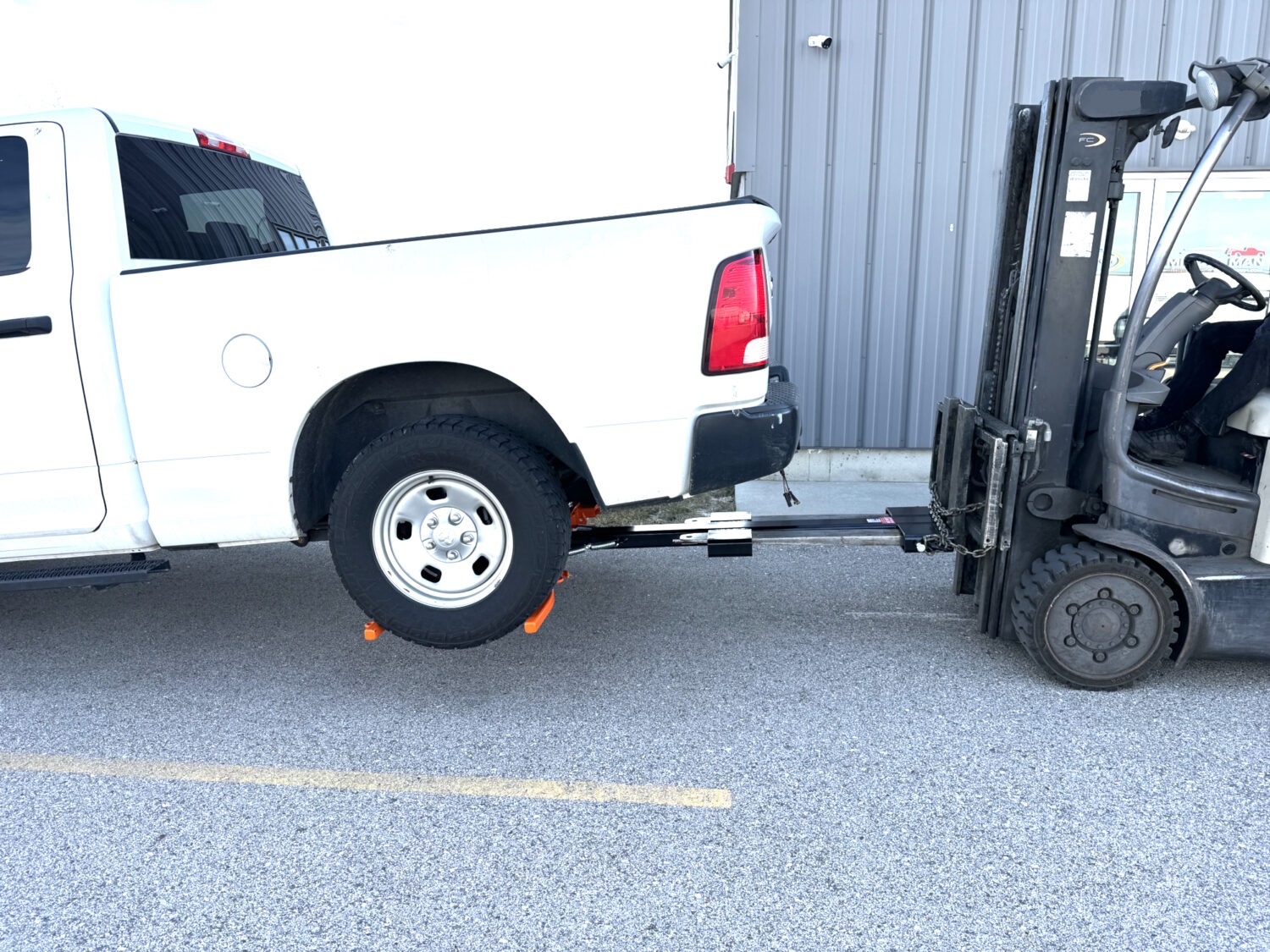
can a forklift be used for towing
Forklifts are indispensable in warehouses and industrial settings, but can they be used for towing? The short answer is yes, but with crucial safety and operational limitations. Towing with a forklift is possible when using proper attachments and adhering to load capacity guidelines, though it is not their primary function and requires careful consideration of stability, weight distribution, and manufacturer specifications.
Understanding Forklift Towing Capabilities
Forklifts are designed for lifting, stacking, and moving palletized loads on their forks. However, many models can be adapted for towing tasks such as moving trailers, carts, or other heavy equipment. The key lies in understanding that towing changes the dynamics of the forklift significantly. The weight and leverage of a towed load affect the truck’s center of gravity, stability, and braking performance. Most counterbalanced forklifts have a towing capacity listed in their operator’s manual, which is typically much lower than their lifting capacity. For example, a forklift rated to lift 5,000 pounds might only be safe to tow 1,000 to 2,000 pounds depending on the hitch type and terrain.
When considering towing applications, Liftron Material Handling offers equipment designed with robust frames and reliable powertrains that can handle occasional towing when properly equipped. It is essential to verify that your specific forklift model includes a rated towing point or trailer hitch approved by the manufacturer. Using the forks themselves as a towing point is dangerous and should never be attempted, as it can cause the forklift to tip forward or the load to become unstable.
Safety Requirements for Towing with a Forklift
Proper Towing Attachments
Never attach a tow line directly to the forks, mast, or carriage. Instead, use a manufacturer-approved tow hitch or drawbar that is bolted securely to the forklift’s frame. These attachments are engineered to distribute the towing force safely. Some forklifts come with a factory-installed towing pin at the rear. If your forklift lacks one, consult the dealer or Liftron DL SERIES specifications to determine if an accessory hitch is available.
Weight and Load Limits
Always adhere to the forklift’s rated towing capacity. This is usually found on the data plate or in the operator’s manual. Overloading the forklift for towing can cause loss of steering control, reduced braking ability, or tip-overs. Remember that the towed load increases the overall inertia of the vehicle. On inclines, the effective load on the forklift’s rear axle changes dramatically, which can compromise steering and stability.
Terrain and Environment
Towing on smooth, level, dry surfaces is safest. Uneven ground, gravel, wet floors, or inclines increase the risk of accidents. When towing on a slope, always keep the towed load on the downhill side to prevent the forklift from tipping backward. Additionally, never exceed a walking speed (typically 3-5 mph) while towing. High speed reduces reaction time and makes sharp turns hazardous.
Best Practices for Towing Operations
- Inspect the hitch and coupling: Ensure the tow pin or ball hitch is securely locked and that the towed vehicle’s coupler is properly engaged. Use safety chains as a backup.
- Check the forklift’s brakes: Towing places extra demands on the service brakes. Test them before moving a load. Electric forklifts often have regenerative braking that helps, but mechanical brakes must be in top condition.
- Communicate with spotters: If visibility is obstructed, always use a spotter to guide the operator, especially when maneuvering in tight spaces or around pedestrians.
- Disconnect the load before lifting: Never attempt to raise the forks while a trailer is attached. The dynamic forces can destabilize the forklift.
- Use a low gear and steady motion: Start and stop gradually. Jerky movements can cause the towed load to swing, shifting the center of gravity dangerously.
Forklift Types and Towing Suitability
| Forklift Type | Towing Suitability | Key Considerations |
|---|---|---|
| Counterbalanced electric (like Liftron DL SERIES) | Good for light to medium loads | Low center of gravity, smooth acceleration, quiet operation. Best on flat surfaces. |
| Internal combustion (diesel/LPG) | Good for heavy towing | Higher torque, but heavier weight. Requires more caution with rear stability. |
| Rough terrain forklift | Moderate | Large tires and high ground clearance help, but towing on slopes increases rollover risk. |
| Stand-up rider / reach truck | Not recommended | Narrow wheelbase and different stability dynamics make them unsafe for towing. |
Alternatives to Towing with a Forklift
If your facility requires frequent towing of heavy trailers or equipment, investing in a dedicated tow tractor or a pallet jack with a tow hitch is often safer and more efficient. Specialized tow vehicles feature higher towing capacities, lower centers of gravity, and better visibility for towing tasks. However, for occasional or emergency towing, a properly configured forklift can serve as a temporary solution. Companies like Liftron Material Handling offer guidance on selecting the right equipment for mixed-use environments.
Final Recommendations
Yes, a forklift can be used for towing, but only under strict conditions. The operation must be performed with the correct hitch, within the rated capacity, on suitable terrain, and by a trained operator who understands the reduced stability. Never assume that a forklift’s lifting capacity equals its towing capacity. Always refer to the manufacturer’s specifications and, if in doubt, consult an expert. For electric forklift users, the Liftron DL SERIES provides a stable platform with lithium-ion power that offers consistent torque and precise control, making it a safer choice for light towing duties when equipped appropriately. Ultimately, safety must never be compromised for convenience, and if towing becomes a regular need, purpose-built equipment is always the best investment.
Add a review
Your email address will not be published. Required fields are marked *