
are chinese forklifts any good
Chinese forklifts have transformed from budget alternatives into serious contenders in the global material handling market, offering compelling value without sacrificing core functionality. With aggressive pricing, rapid technological adoption, and growing export volumes, many businesses now ask whether these machines can truly replace established Western or Japanese brands in demanding daily operations. The answer depends on your application, load capacity, maintenance infrastructure, and long-term total cost of ownership, not just the initial sticker price.
The State of Chinese Forklift Manufacturing
China’s forklift industry has grown into the world’s largest producer, shipping over one million units annually. Major players like Hangcha, Heli, and Lonking have invested heavily in automated production lines, robotic welding, and quality control systems that meet ISO and CE standards. This industrial maturity means today’s Chinese forklifts are far removed from the questionable imports of two decades ago. Many models now feature engines and electric drivetrains from reputable global suppliers, while entire chassis and mast assemblies are engineered with finite element analysis for structural integrity.
Key Advantages of Chinese Forklifts
- Price competitiveness: Chinese units often cost 30-50% less than comparable Japanese or European models, making them accessible for small warehouses and startups.
- Decent standard features: Many Chinese forklifts come with LED lighting, integrated displays, and ergonomic seats as standard, which are often optional extras elsewhere.
- Electric and lithium-ion innovation: Chinese manufacturers are aggressively pushing electric and lithium-ion technology, partly due to domestic battery supply chains and government incentives.
- Parts availability: With global dealer networks expanding, genuine parts are increasingly easy to source, and aftermarket components are abundant and inexpensive.
Where Chinese Forklifts Struggle
Despite improvements, several weaknesses persist. The most common complaint is inconsistent build quality across batches, particularly in hydraulic hoses, electrical connectors, and paint durability. Dealership support varies widely, and some budget models use proprietary electronic components that are difficult to troubleshoot without specialized diagnostic tools. Additionally, resale value remains low compared to Toyota, Linde, or Caterpillar, which can be a deciding factor for companies that upgrade fleets every few years.
Performance in Heavy-Duty Applications
For light to medium duty (up to 5,000 lb capacity) and intermittent indoor use, Chinese forklifts perform admirably. However, in continuous multi-shift operations, harsh outdoor terrain, or high-stacking applications, they may experience more frequent downtime and faster component wear than premium competitors. The mast and carriage assemblies are generally robust, but drive motors and steer axles on cheaper models can overheat under prolonged stress. Sand, dust, and extreme temperatures expose sealing weaknesses.
Comparing Chinese vs. Japanese Forklifts
| Aspect | Chinese Forklifts | Japanese Forklifts (Toyota, Komatsu) |
|---|---|---|
| Initial purchase price | Low to moderate | High |
| Build consistency | Improving but variable | Excellent |
| Fuel efficiency (internal combustion) | Moderate | Superior |
| Electric runtime | Good, especially lithium-ion | Excellent |
| Operator comfort | Good | Superior |
| Resale value | Low | High |
| Parts cost | Very low | Moderate to high |
| Service network in North America | Regional, growing | Nationwide, mature |
Lithium-Ion Options from Chinese Brands
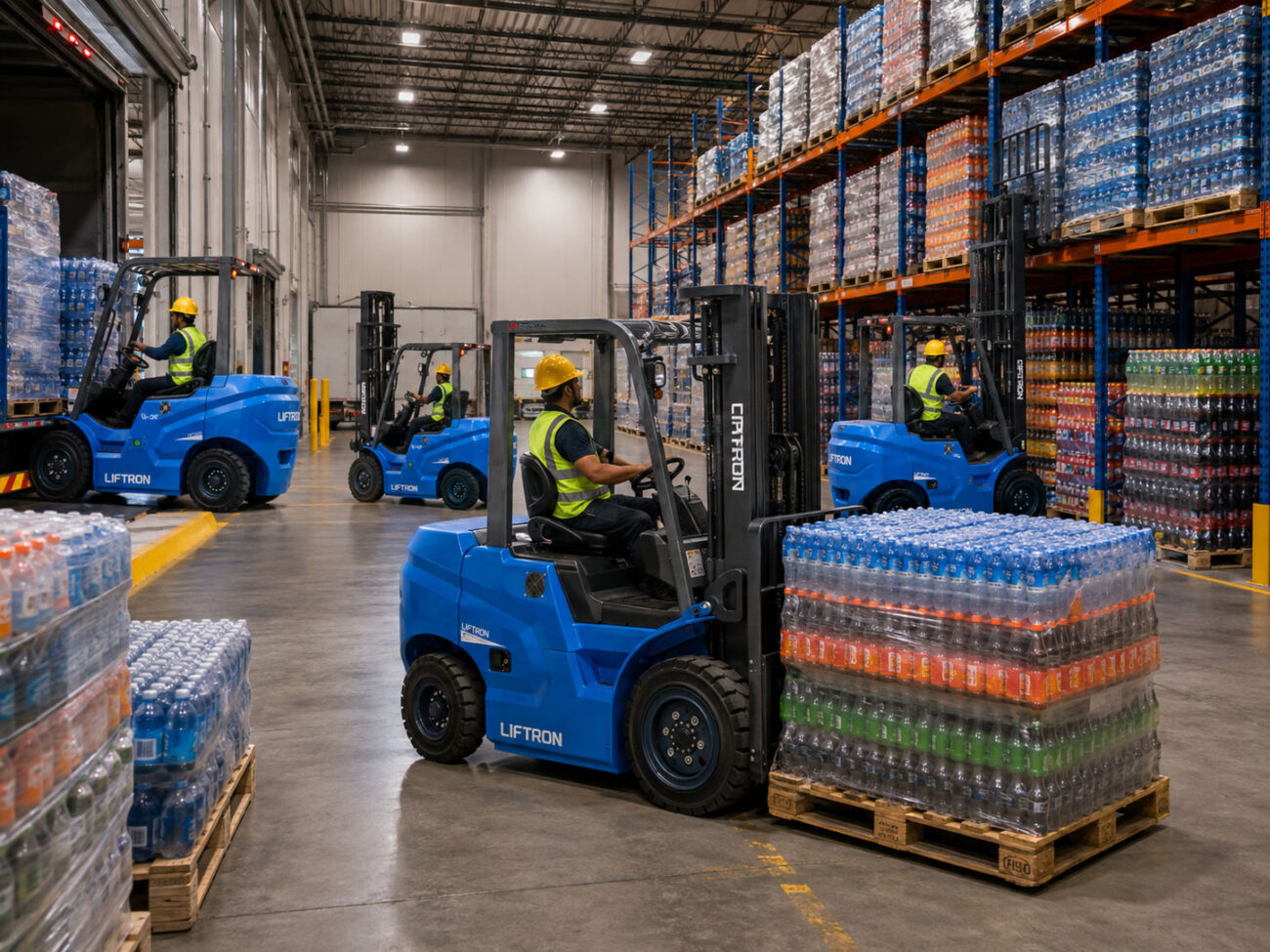
One area where Chinese manufacturers genuinely lead is lithium-ion battery technology. Lithium forklifts eliminate battery swapping, charge faster than lead-acid, and deliver consistent power throughout a shift. Many Chinese models now use CATL or BYD cells, which are globally recognized for energy density and lifecycle. For example, Liftron Material Handling offers a range of electric and lithium-powered forklifts that combine Chinese manufacturing efficiency with modern battery management systems. Their Liftron DL SERIES is specifically designed for indoor logistics and cold storage applications, featuring rapid opportunity charging and zero-emission operation.
Who Should Buy a Chinese Forklift?
Chinese forklifts are ideal for businesses that prioritize upfront cost savings, operate in single-shift environments, and have basic in-house maintenance capability. They also suit companies handling uniform loads under 3,000 kg with predictable floor conditions. For example, a packing, assembly, or cross-docking operation with light pallet movement will likely get several years of reliable service. Additionally, if you are expanding seasonally or have multiple depots with low utilization per truck, the lower capital outlay allows you to deploy more units per facility.
Who Should Avoid Them?
If your operation runs 24/7, moves heavy loads over rough asphalt, or requires complex attachments like rotating forks or side shifters with precise positioning, a premium forklift is a safer investment. Similarly, if your team lacks qualified technicians and your nearest dealer is more than 100 miles away, downtime risk outweighs price savings. In such cases, the total cost of ownership—including lost productivity, repair labor, and rental replacements—can quickly erase the initial advantage.
How to Choose a Reliable Chinese Forklift
- Check actual dealer certification: Ask for credentials from the manufacturer and verify they have a physical service facility in your region.
- Request load tests: Insist on a load chart and a real-world test with your heaviest pallet and highest stacking height.
- Inspect welds and hydraulic fittings: Look for consistent weld beads and adequate hose routing to prevent chafing.
- Ask about controller brands: Reputable models use Curtis, ZAPI, or OEM controllers with proven diagnostics.
- Review spare parts availability: Ensure filters, brake pads, and electric contactors are stocked locally or can ship within two days.
Final Verdict
Chinese forklifts are absolutely good enough for a significant portion of the market, especially when you compare them against other budget brands or used premium units. Their lithium-ion offerings, in particular, are closing the technology gap quickly. However, they are not universal replacements for high-end industrial machines. The smart approach is to define your duty cycle, maintenance capability, and budget ceiling, then test multiple Chinese models side by side. Brands like Liftron Material Handling are making inroads by offering thorough documentation and responsive support. When precision, durability, and residual value matter more than initial savings, you may still choose a Japanese or German forklift. But for many warehouses, a Chinese forklift with the right spec and dealer support is no longer a compromise—it is a practical, modern choice.
Add a review
Your email address will not be published. Required fields are marked *