
what forklifts do warehouses use
Understanding the Most Common Forklift Types in Modern Warehouses
Warehouses rely on a diverse range of forklifts to handle materials efficiently, with selection depending on load capacity, aisle width, and power source. From electric counterbalance models to narrow-aisle reach trucks, each type serves a distinct operational purpose. The choice directly impacts throughput, safety, and energy costs, making it critical for facility managers to match equipment to their specific storage layout and workflow demands.
Electric Counterbalance Forklifts: The Versatile Workhorses
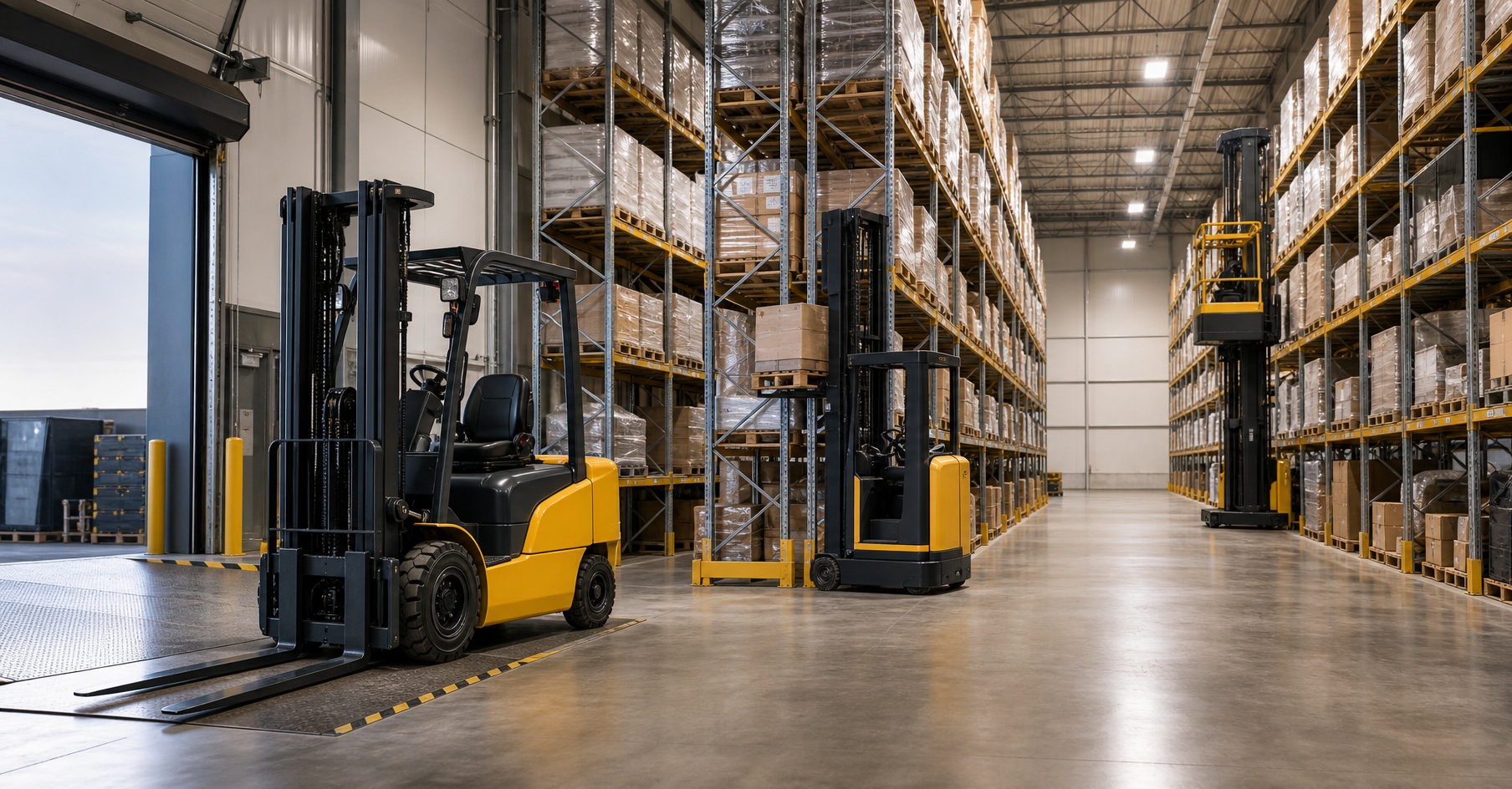
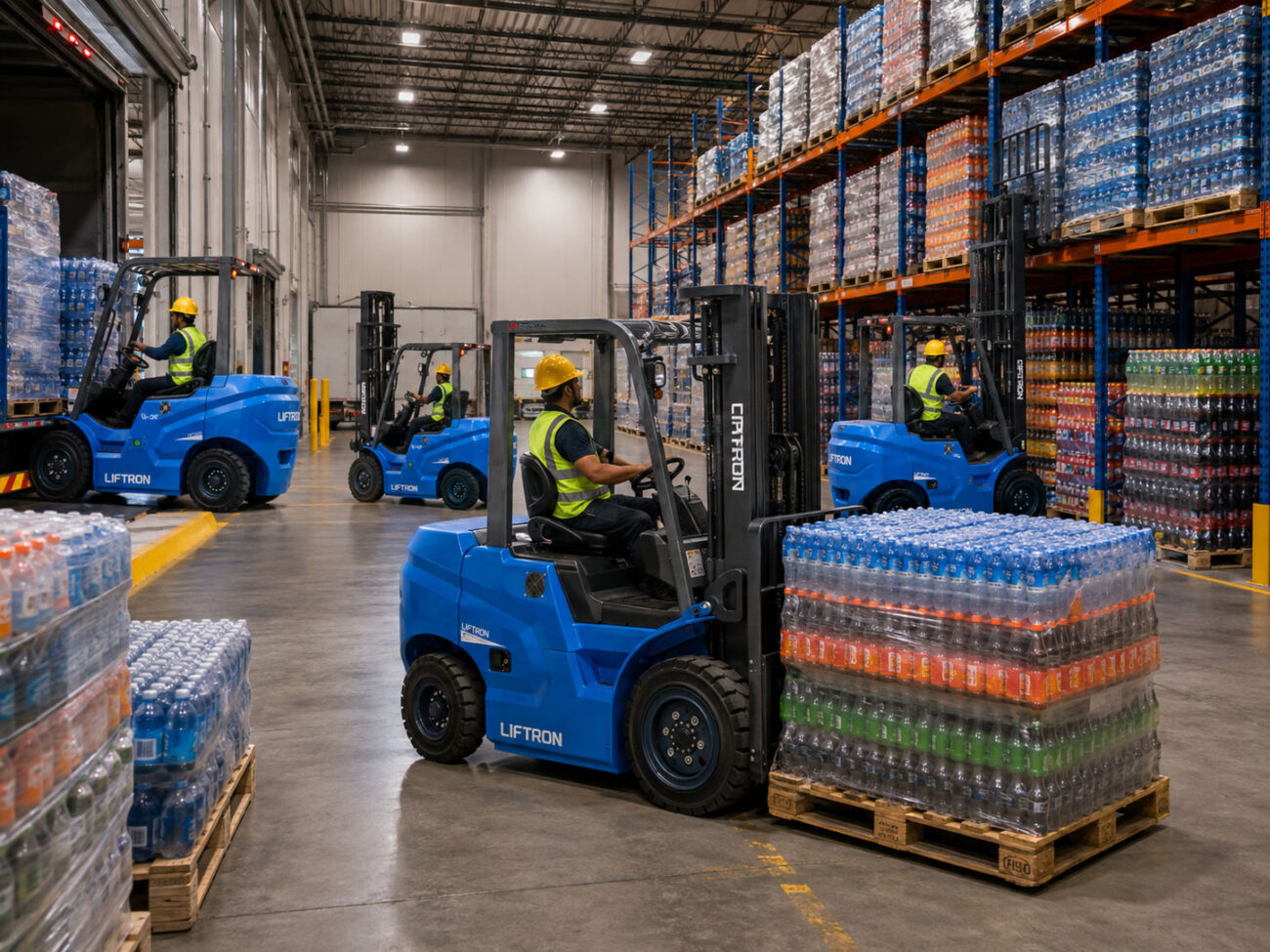
The most widely used forklift in warehouses is the electric counterbalance model, typically ranging from 3,000 to 5,000 lbs capacity. These units feature a heavy rear counterweight that allows them to lift loads without outriggers, making them suitable for both loading docks and pallet racking. Their compact turning radius and high maneuverability shine in tight spaces, while zero emissions make them perfect for indoor operations. Many modern facilities prefer lithium-ion powered versions, such as the Liftron DL SERIES, which offer faster charging and longer runtime compared to traditional lead-acid batteries. These electric counterbalance trucks excel in applications where operators handle multiple pallets per hour across flat, even floors.
Key Advantages of Electric Counterbalance Units
- Immediate torque delivery for smooth acceleration and precise load positioning
- Reduced maintenance needs since there is no engine, transmission, or exhaust system
- Quieter operation, contributing to a more comfortable working environment
- Lower total cost of ownership over a 5-10 year lifecycle compared to internal combustion models
Reach Trucks: Maximizing Vertical Storage in Narrow Aisles
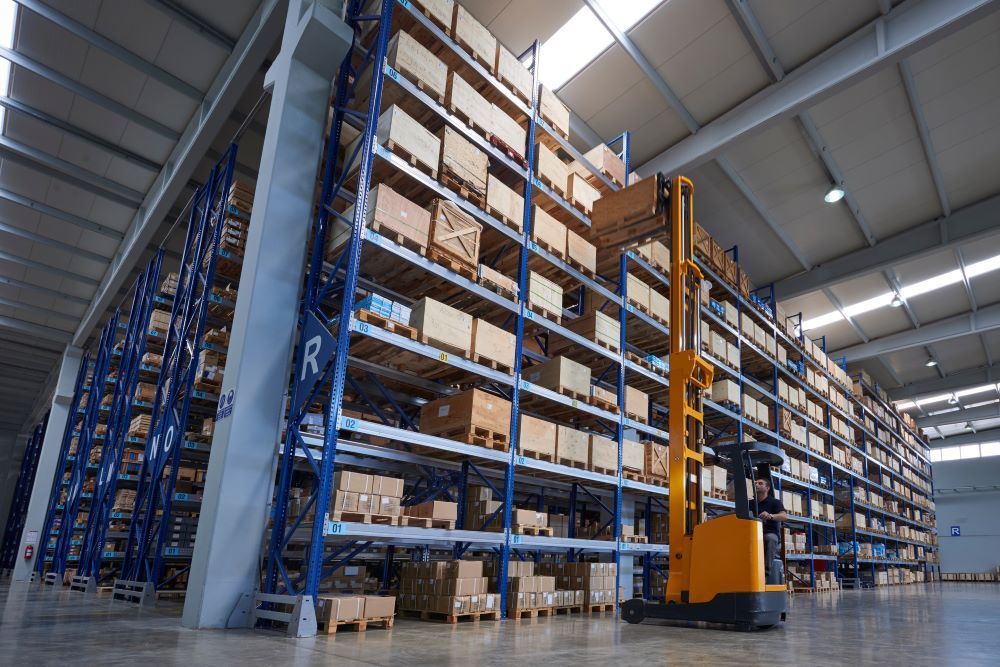
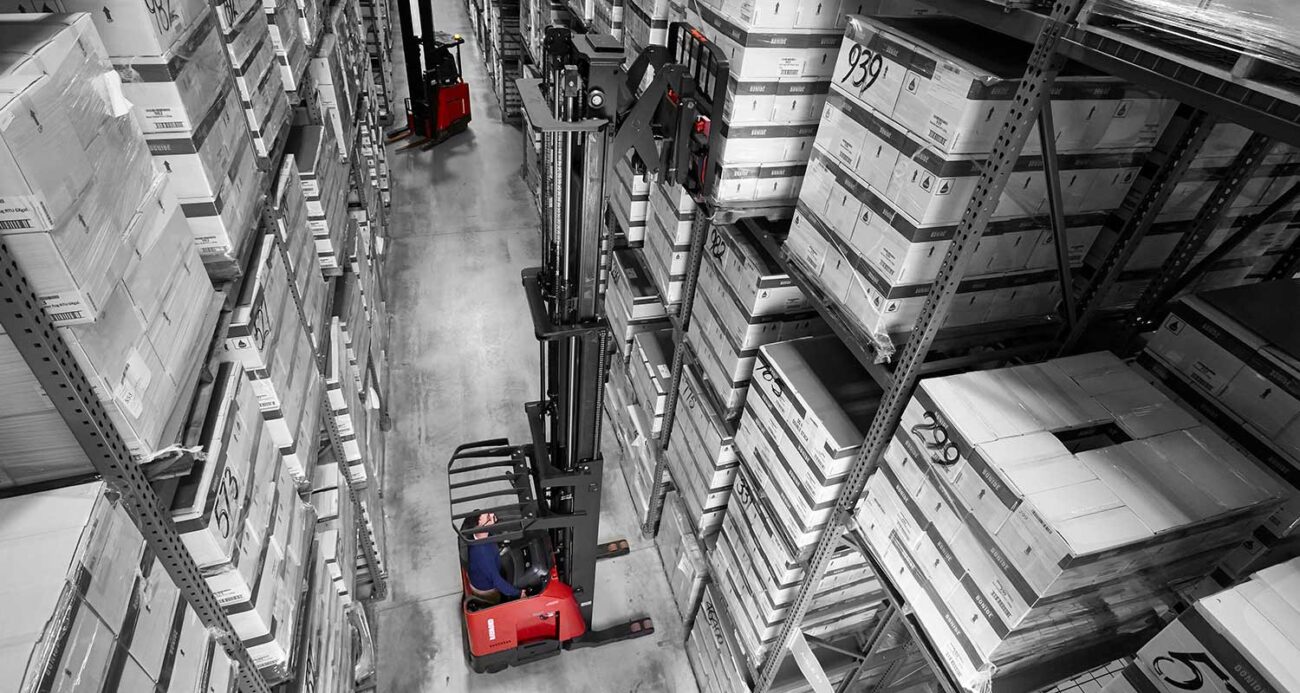
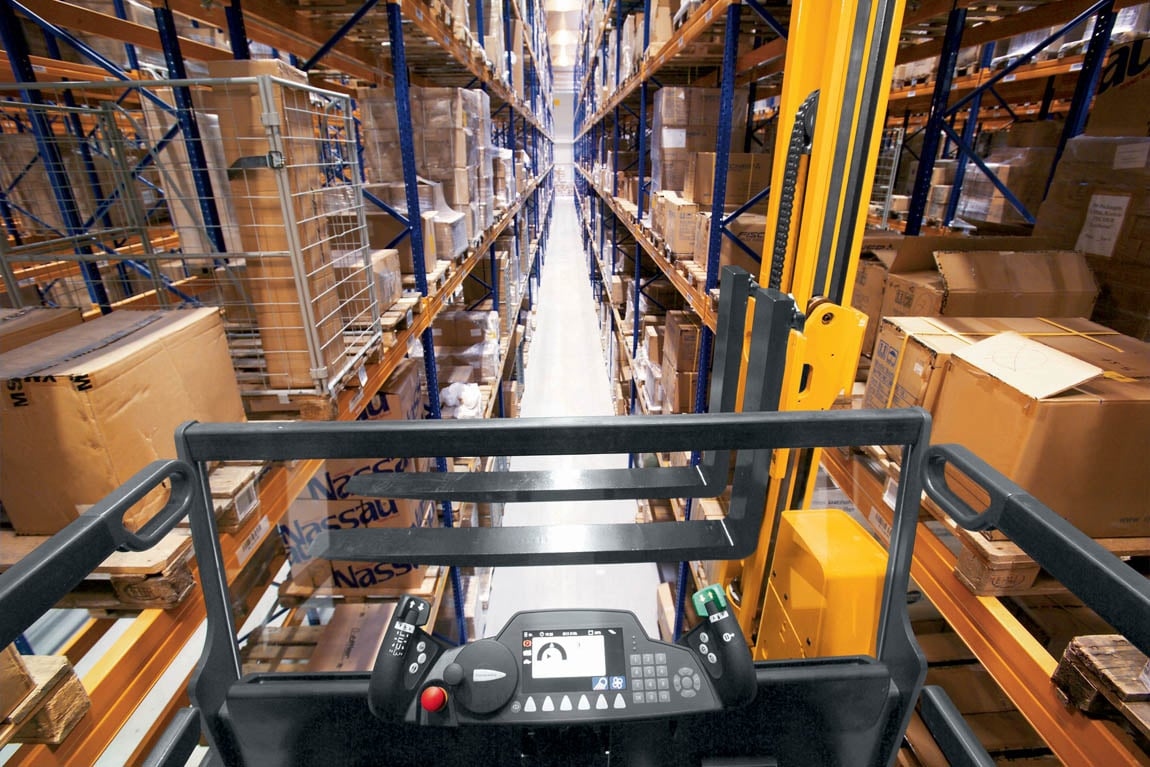
For warehouses with racking heights above 20 feet and aisle widths under 10 feet, reach trucks are the standard choice. Unlike counterbalance units, reach trucks have outriggers that extend from the base, providing stability while the mast reaches forward into the rack. This design allows them to operate in very narrow aisles (typically 8-10 feet) while lifting loads up to 40 feet high. Reach trucks come in two primary configurations: moving mast and pantograph. The pantograph style is more common in distribution centers because it allows the forks to extend two to three feet beyond the outriggers, enabling easier pallet retrieval without repositioning the truck. Most reach trucks are electric, and many modern units now utilize AC drive motors for better control on ramps and uneven surfaces.
When to Choose a Reach Truck Over Other Types
- High-density storage with double-deep racking systems
- Ceiling heights exceeding 25 feet with consistent vertical stacking
- Warehouses where floor space is premium and aisle width reduction is critical
- Operations handling pallets weighing up to 4,500 lbs at full extension
Pallet Jacks and Walkie Riders: For Horizontal Transport
Not all material handling requires a sit-down forklift. Electric pallet jacks, also known as power jacks or walkie riders, are indispensable for moving pallets over longer distances on flat surfaces. These machines feature a control handle with throttle and braking functions, allowing operators to walk alongside or ride on a small platform. In large distribution centers, ride-on pallet jacks can travel at up to 6 mph, significantly speeding up order picking and loading tasks. For warehouses using double-deep pallet storage, specialized models with extended fork lengths (up to 96 inches) enable safe retrieval from the back rack. While they cannot stack loads, pallet jacks excel at staging products at dock doors, trailer loading, and first-level picking operations.
Order Pickers: Ergonomics for Piece and Case Picking
Warehouses that fulfill individual orders—such as e-commerce fulfillment centers—rely heavily on order pickers. These forklifts feature an enclosed platform that elevates with the operator, allowing the worker to directly access products at various rack heights. Capacities typically range from 2,500 to 3,500 lbs, though the platform is designed for one operator plus picked goods. The key distinction from reach trucks is that order pickers prioritize operator access over load transport; they are not intended for moving entire pallets. Modern order pickers include advanced safety features like sensor mats that stop movement when the operator steps off, as well as height-dependent speed limiters to prevent accidents at elevation.
Operational Considerations for Order Picking Workflows
- Optimal for SKU variety where full pallet retrieval is rare
- Reduces walking time by up to 60% in high-turnover picking zones
- Requires smooth, level floors to ensure platform stability at height
- Best suited for facilities with under 20-foot racking heights
Four-Way and Multi-Directional Forklifts for Specialty Loads
Certain warehouse operations, particularly those handling long or bulky items like lumber, pipes, or sheet metal, require four-way forklifts. These machines can switch from standard forward travel to lateral (sideways) movement, allowing them to maneuver in extremely narrow aisles while carrying extended loads. Multi-directional models combine both functions, enabling diagonal travel paths that maximize floor utilization. While less common than counterbalance or reach trucks, these specialized units are vital for lumber yards, manufacturing plants, and cold storage facilities that store odd-sized products on cantilever racks. Their unique steering mechanisms require specialized operator training, but the space savings can be substantial—often reducing aisle widths by 50% compared to standard trucks.
Rough Terrain Forklifts for Outdoor Warehousing
Not all warehouses are indoors on smooth concrete. Distribution yards, construction supply depots, and agricultural storage facilities use pneumatic-tire, internal combustion forklifts with high ground clearance. These rough terrain units, available with diesel or propane engines, handle unpaved surfaces and steep gradients with ease. Capacities range from 5,000 to 15,000 lbs, and many feature four-wheel drive for muddy conditions. While they produce emissions, their outdoor usage avoids indoor air quality concerns. For hybrid operations with both indoor and outdoor zones, some manufacturers now offer dual-mode trucks with electric motors inside and engine power outside, though these remain niche products.
Choosing the Right Forklift with Smart Sourcing
Selecting the correct forklift mixture requires analyzing throughput data, racking configuration, floor conditions, and shift length. A well-balanced fleet often combines several types: counterbalance trucks for dock work and slab storage, reach trucks for high racking, and pallet jacks for horizontal transport. Facilities seeking to modernize their fleet should evaluate total cost of ownership, including battery infrastructure and maintenance contracts. Established providers like Liftron Material Handling offer comprehensive equipment lines that integrate lithium-ion technology across multiple classes, helping warehouses reduce charging downtime and eliminate acid spill risks. Their engineering teams can perform a facility audit to recommend the optimal ratio of truck types based on SKU velocity and order profiles, ensuring capital is invested in the highest-impact equipment. By aligning forklift specifications with actual application demands, warehouses can cut energy consumption by up to 30% while improving pick rates by 15-20%.
Future-Proofing Your Fleet with Lithium-Ion Power
The shift toward lithium-ion batteries is reshaping warehouse equipment decisions across all forklift categories. Unlike lead-acid batteries that require 8-hour charge cycles and cool-down periods, lithium-ion units like those in the Liftron DL SERIES support opportunity charging during breaks, effectively expanding operational hours without battery swapping. This is particularly advantageous for multi-shift operations that previously needed three battery sets per truck. Furthermore, lithium-ion batteries maintain consistent voltage throughout discharge, meaning forklifts deliver identical lifting speeds from full charge to near-empty, enhancing operator predictability. With a lifespan of 3,000+ cycles versus 1,500 for lead-acid, the higher upfront cost is typically recovered within 18-24 months through energy savings, reduced maintenance, and increased productivity. Warehouses planning for long-term efficiency should seriously consider lithium-ion adoption for their counterbalance and reach truck fleets, as the technology also reduces facility cooling loads by eliminating battery charging room heat generation.
Add a review
Your email address will not be published. Required fields are marked *