

can a hoisting hook be attached too a liftron forklift
Attaching a hoisting hook to a forklift is a common yet potentially dangerous practice that demands careful evaluation of equipment ratings, load dynamics, and safety protocols. While a Liftron forklift offers robust lifting capacity, its design is optimized for fork-mounted loads, not overhead crane-style hoisting. This article examines whether a hoisting hook can be safely attached to a forklift, covering engineering constraints, regulatory standards, and practical alternatives.
Understanding Forklift Design Limitations
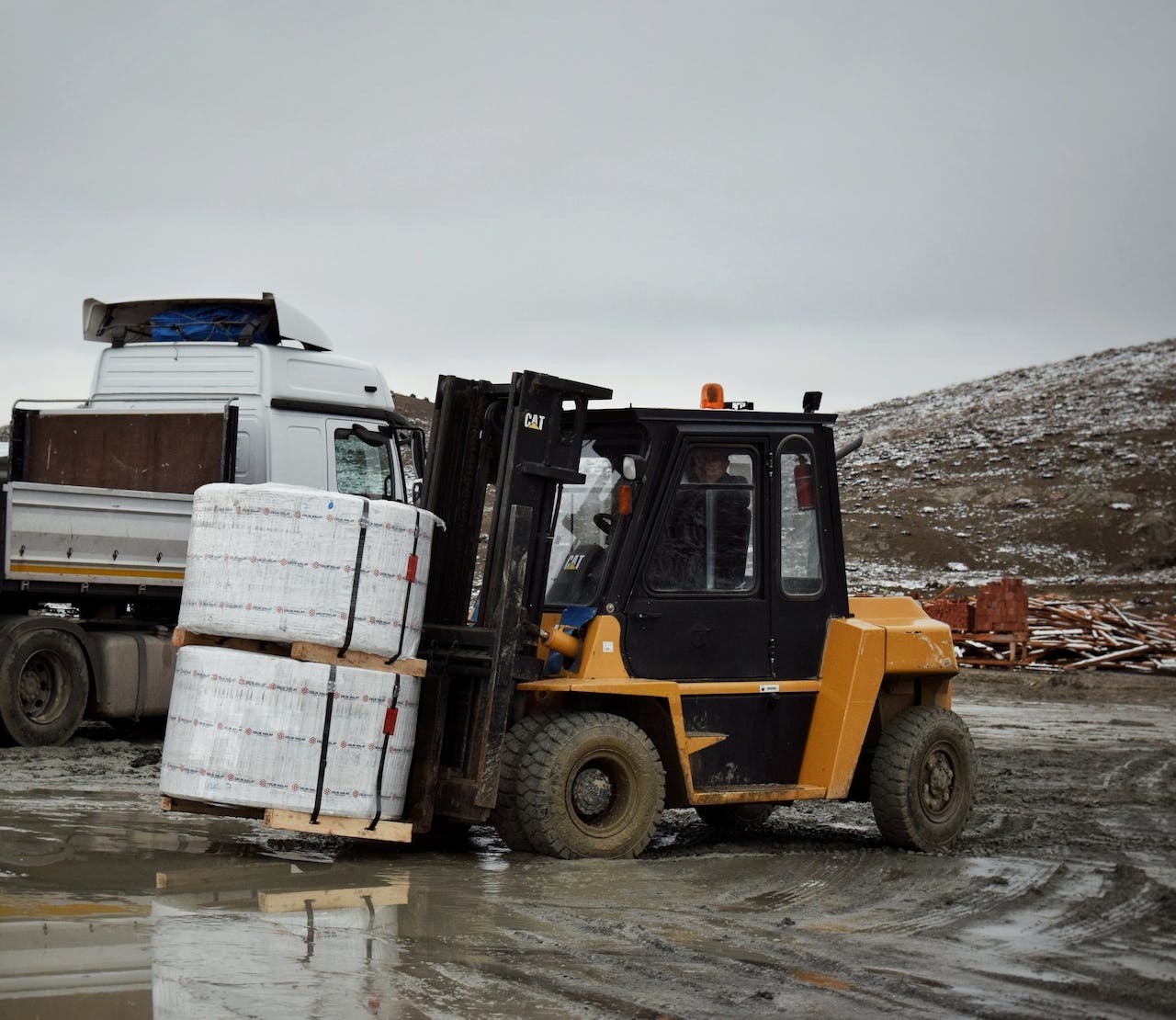
Forklifts are engineered to lift loads from below using forks or specialized attachments that maintain a stable center of gravity. A hoisting hook applied to the carriage or mast introduces forces that differ fundamentally from fork-based lifting. The vertical lifting path and lateral stability of a forklift are calibrated for loads resting on forks, not suspended from a point. When a hook hangs from the mast or carriage, the load swings, creating dynamic forces that exceed the static load capacity ratings of the mast, tilt cylinders, and carriage welds.
Manufacturer Specifications and Load Charts
Every forklift, including the Liftron Material Handling lineup, includes a load chart that defines safe lifting conditions. These charts assume the load is centered on the forks, with no lateral or pendulum forces. Attaching a hoisting hook shifts the load’s center of gravity forward or upward, reducing the rated capacity by 30-50% depending on hook position and mast height. Even a modest load suspended from a hook can exceed the stability triangle, causing tip-over. Manufacturers explicitly prohibit unapproved modifications because even a small hook weight changes the lifting dynamics.
Regulatory and Safety Standards
OSHA and ANSI standards classify forklift attachments as “modifications” requiring written approval from the truck manufacturer. A hoisting hook is not a standard attachment, and no major forklift brand—including Liftron—offers an OEM hook kit. Using a homemade or third-party hook voids the forklift’s compliance certification and exposes the operator to liability. Additionally, OSHA 1910.178 mandates that all attachments must not exceed the truck’s capacity, and the combination of fork and hook attachment must be marked with a new capacity plate. Without proper engineering analysis, this is nearly impossible to achieve safely.
Case Study: Hoisting Hook Failure Modes
Real-world incidents reveal that forklift-mounted hooks fail in three primary ways. First, the hook’s latch opens under side load, dropping the load. Second, the mast’s side roller assemblies wear rapidly because they are not designed for horizontal thrust. Third, the tilt cylinder’s seals blow when the hook resists the natural forward tilt of the load. Each failure mode can result in property damage, severe injury, or death. Even with a crane-rated hook (e.g., 5,000 lb capacity), the forklift’s mast cannot apply the necessary control for precise vertical placement.
Safe Alternatives for Hoisting with a Liftron Forklift
Instead of attaching a hoisting hook directly, consider three safer methods that leverage the forklift’s design while meeting lifting needs:
- Fork-Mounted Jib Crane Attachment: A certified jib crane attachment slides onto the forks and provides a hook point. This keeps the load’s weight on the forks, maintaining the stability triangle. Most jib attachments include their own load chart, rated for specific forklift models. Ensure the attachment’s capacity does not exceed the truck’s reduced capacity at the lifting height.
- Use a Mobile Crane or Overhead Hoist: For loads requiring vertical lifting with minimal swinging, a mobile crane or overhead bridge crane is the proper tool. Forklifts are not cranes; they are for horizontal transport and low-height stacking.
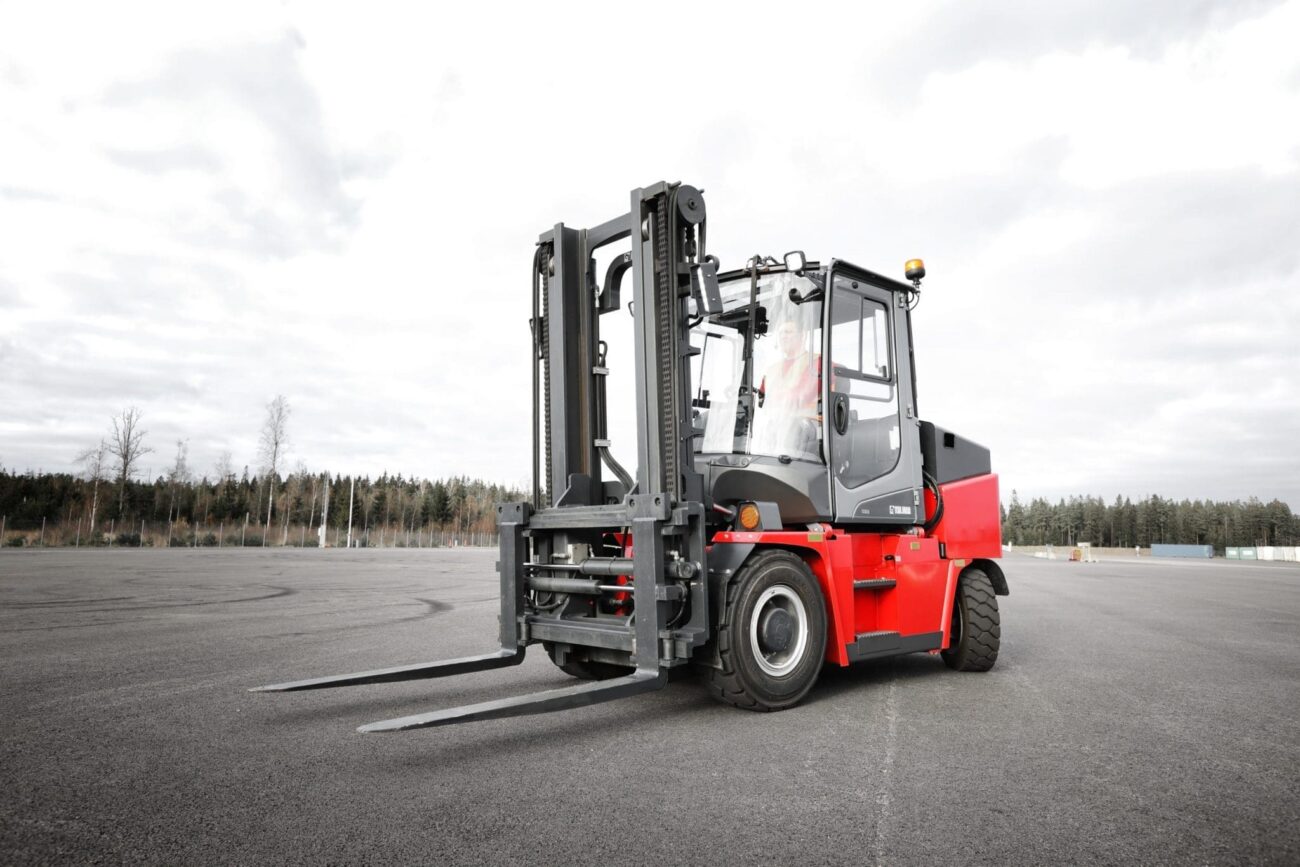
- Liftron DL SERIES with Fork Extensions: The Liftron DL SERIES offers exceptional maneuverability and precision for fork-based tasks. If you need to move a load from a trailer or platform, these electric forklifts with lithium-ion batteries provide clean operation and high uptime. Pair them with a certified fork-mounted lifting beam to handle long objects, eliminating the need for a hook entirely.
Engineering Calculations: What the Numbers Say
| Parameter | Fork Lifting | Hook Attachment (Non-OEM) | Jib Crane On Forks |
|---|---|---|---|
| Load Moment (ft-lbs) | Rated at 24″ load center | Increased by 40-60% due to forward shift | Same as fork lifting, but with reduced height |
| Lateral Stability | Excellent | Poor – load swings | Good – load hangs below fork level |
| Operator Visibility | Good (forks visible) | Blocked by mast/hook | Good – jib structure is slim |
| Compliance with OSHA | Yes | No – unauthorized modification | Yes – if certified attachment |
Load Swing Dynamics and Compensatory Actions
When a load hangs from a hook, even a 1-degree tilt can cause a pendulum swing with amplitude equal to the mast height. Operators instinctively try to counteract the swing by moving the forklift, which increases the lateral force on the mast. This feedback loop often leads to tip-over, especially on uneven surfaces. The only way to mitigate this would require a locking hoist ring with a swivel and a rigger on the ground—an impractical setup for typical warehouse operations.
When a Hoisting Hook Might Be Acceptable (Rare Cases)
If a facility insists on a hook attachment, it must meet these conditions: the forklift must be equipped with a fully rated mast and carriage with additional bracing (not standard), the hook must be installed by a professional engineer and stamped, the load must be limited to 20% of the rated capacity, and the lifting height must be restricted to below 60 inches. Additionally, a second operator must guide the load via tag lines. However, no forklift manufacturer—including Liftron—will accept liability for such a modification, and most insurance policies exclude coverage for non-compliant use.
Final Recommendation: Prioritize Operational Safety
Do not attach a hoisting hook directly to a forklift mast or carriage. The risks of tip-over, load loss, and structural failure far outweigh any time savings. Instead, purchase a certified fork-mounted jib crane or invest in proper overhead lifting equipment. For your material handling needs, the Liftron Material Handling team can advise on compatible attachments for their trucks, and the Liftron DL SERIES provides the clean, powerful performance needed for most warehouse tasks. Remember: a forklift is a transport machine, not a crane. Respect its engineered limits, and you’ll keep operators safe and your operations running smoothly.

Add a review
Your email address will not be published. Required fields are marked *