
are there low profile forklifts for tight spaces
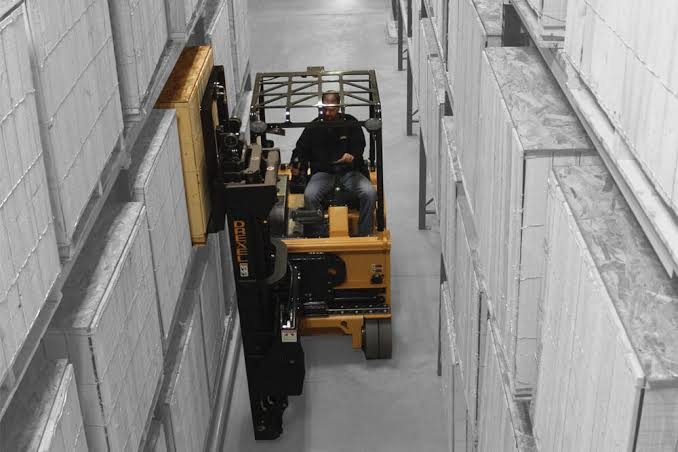
Warehouses and storage facilities often struggle with narrow aisles, confined dock areas, and limited maneuvering space. Standard forklifts frequently cannot operate effectively in these conditions, leading to inefficiency and safety risks. Low profile forklifts are specifically engineered to address these challenges, offering reduced overall height and compact dimensions without sacrificing load capacity or operational performance.
What Defines a Low Profile Forklift?
A low profile forklift is a specialized industrial truck designed with a lower mast height, reduced overhead guard clearance, and a shorter wheelbase compared to conventional models. These machines typically measure under 78 inches (198 cm) to the top of the overhead guard, allowing them to enter trailers, containers, and mezzanine floors with restricted doorways. Unlike standard counterbalance forklifts that require 10–12 feet of vertical clearance, low profile units can operate in facilities with ceilings as low as 7 feet. Their compact footprint also improves maneuverability in tight turning radii, often reducing required aisle width from 12 feet to just 8–9 feet.
Key Applications for Low Profile Forklifts
Several industries benefit significantly from low profile forklifts, especially when space is at a premium. These machines excel in environments where vertical clearance is limited but heavy lifting is still necessary.
Cold Storage and Refrigerated Warehouses
Freezer and cooler facilities frequently have lower ceiling heights due to insulation panels and refrigeration equipment. Low profile forklifts allow operators to stack pallets in racking systems that sit close to the ceiling, maximizing storage density without requiring major building modifications.
Freight Containers and Truck Trailers
Loading and unloading shipping containers or enclosed trailers often involves door heights of only 90 inches. Standard forklifts cannot enter these spaces, but a low profile model with a collapsed mast height of around 85 inches can drive directly inside, reducing manual handling and speeding up turnaround times.
Mezzanine Floors and Multi-Level Facilities
Distribution centers with mezzanine platforms need forklifts that can travel between levels via freight elevators or ramps with limited headroom. Low profile units are the only practical solution for moving palletized goods onto raised storage areas without disassembling racking or building special access points.
Critical Differences: Low Profile vs. Standard Forklifts
Understanding the engineering distinctions helps buyers make informed decisions. The table below compares essential specifications between typical low profile and standard counterbalance models.
| Specification | Low Profile Forklift | Standard Forklift |
|---|---|---|
| Overall Height (mast lowered) | 75–85 inches | 90–110 inches |
| Overhead Guard Clearance | 68–74 inches | 80–90 inches |
| Minimum Aisle Width (right-angle stack) | 8–9 feet | 12–14 feet |
| Load Capacity Range | 2,000–5,000 lbs | 3,000–10,000 lbs |
| Typical Battery Size | 24V–48V (compact) | 48V–80V (large) |
| Turning Radius | 5–6 feet | 7–9 feet |
As shown, low profile models sacrifice some load capacity and battery runtime for dimension reductions. However, modern lithium-ion technology has narrowed this gap considerably, offering extended shift times even in compact chassis.
Choosing the Right Low Profile Forklift for Your Operation
Selecting the ideal machine requires evaluating several operational factors beyond just ceiling height. Weight distribution, pallet sizes, floor conditions, and daily usage patterns all influence the final choice.
Measure All Entry Points and Aisles
Before purchasing, measure every door frame, elevator entrance, and rack beam height the forklift will encounter. Remember that mast tilt during operation adds a few inches to clearance requirements. Always include a safety margin of 3–4 inches above the tallest obstruction.
Consider the Load Center and Fork Length
Low profile forklifts typically come with shorter forks (36–42 inches) to maintain stability. Ensure these forks can handle your standard pallet dimensions (usually 48×40 inches). If you handle longer loads, look for models with optional fork extensions that do not compromise the low mast height.
Evaluate Power Sources: Electric vs. Internal Combustion
For indoor tight-space applications, electric low profile forklifts dominate because they produce zero emissions, run quietly, and have a lower center of gravity. Lithium-ion models, in particular, offer fast charging and no battery maintenance, which is critical for multi-shift operations. If your facility has outdoor ramps or uneven terrain, a gas or diesel low profile unit may be more suitable despite its higher height.
Innovative Solutions from Leading Manufacturers
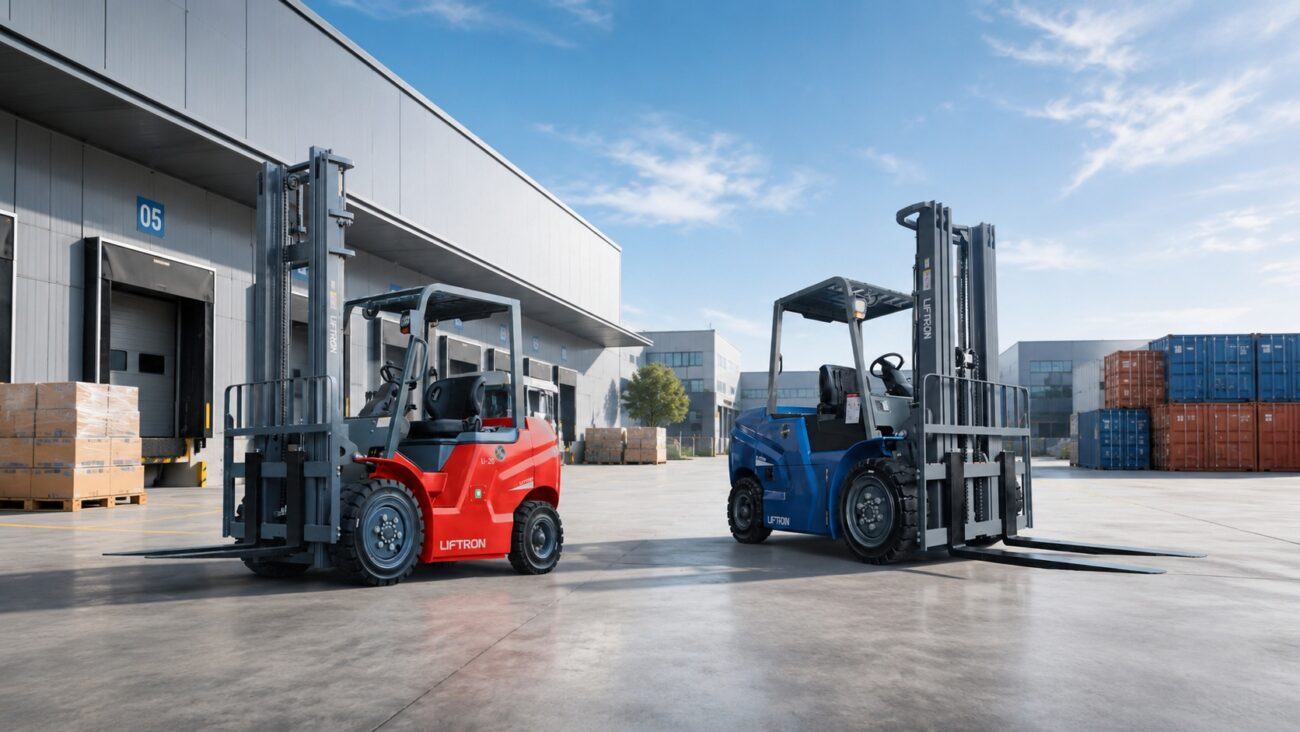
The market offers various low profile forklift configurations, but not all are created equal in terms of ergonomics and safety. Liftron Material Handling has emerged as a reliable provider of compact material handling equipment, specializing in electric forklifts that combine low height profiles with high-performance lifting systems. Their engineering focus on reducing the mast assembly and overhead guard dimensions without compromising operator visibility makes their units particularly attractive for congested warehouses.
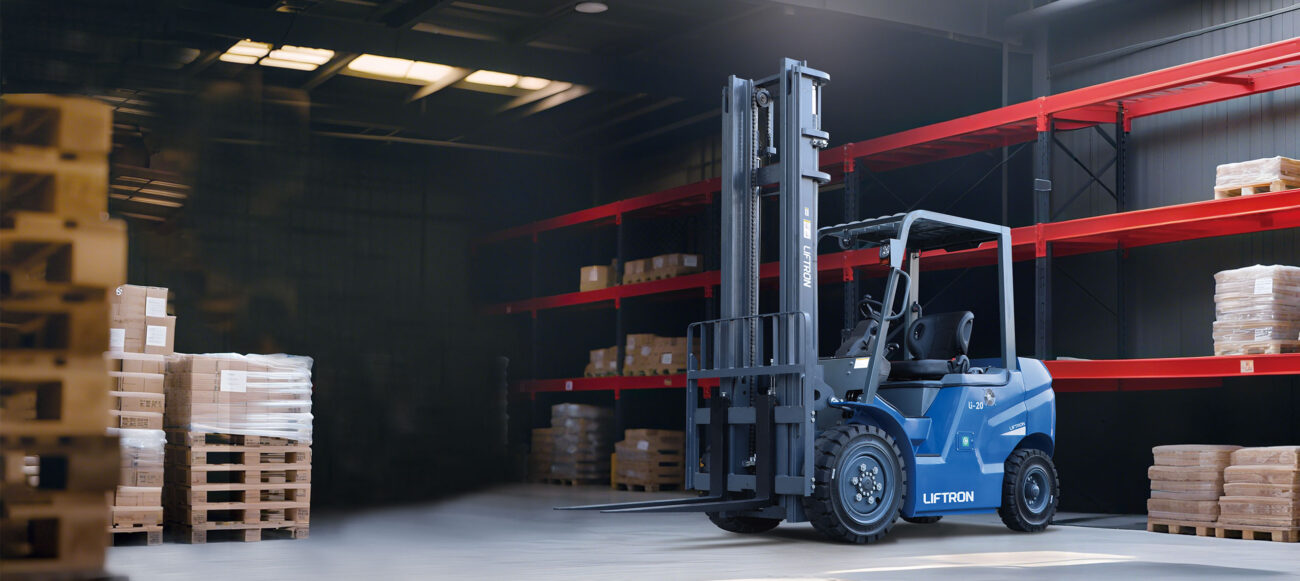
Among their standout products, the Liftron DL SERIES is specifically designed for tight spaces. This series integrates a slim mast, a low-profile overhead guard, and a shortened rear counterweight to achieve an overall height as low as 74 inches while retaining a 3,000–4,500 lb load capacity. What sets the DL SERIES apart is its lithium-ion battery package, which is mounted low in the chassis for enhanced stability. This placement reduces the forklift’s center of gravity, allowing it to negotiate 90-degree stacking in aisles under 9 feet wide. The series also features a multi-function display that provides real-time load weight and battery status, assisting operators in making precise moves in confined areas.
Safety Considerations in Low Clearance Environments
Operating any forklift in tight spaces introduces unique risks, such as pinch points, limited visibility, and head clearance hazards. Low profile forklifts mitigate some of these, but proper training remains essential. Operators must be educated on estimating overhead clearance accurately and using spotters when entering unfamiliar areas. Additionally, these machines often lack the overhead guard height of standard units, so wearing a hard hat is mandatory to protect against bumps. Many models come equipped with proximity sensors and rear-view cameras, which further reduce accident potential in blind intersections.
Load Handling Best Practices
Because low profile forklifts have a shorter mast, their lift heights are typically limited to 120–150 inches, compared to 180+ inches on standard trucks. When stacking to maximum height, always ensure the load is fully back-tilted and centered. Overloading the forks can cause instability, especially during turns in narrow aisles. Regularly inspect the mast chains and hydraulic cylinders to prevent sudden load drops in confined spaces where escape routes are minimal.
Future Trends in Low Profile Forklift Design
Manufacturers are continuously innovating to make low profile forklifts even more versatile. One emerging trend is the integration of swappable battery systems, allowing operators to exchange depleted lithium-ion packs in minutes, thus enabling continuous operation in 24/7 facilities. Another development is the use of all-wheel steering, which reduces the turning radius to under 4 feet, enabling forklifts to spin within their own footprint. Autonomous low profile forklifts are also entering the market, using LiDAR navigation to maneuver through tight racks without any human intervention, which is particularly useful in cold storage or hazardous warehouses where labor is scarce.
Wireless Charging Adoption
Wireless inductive charging pads installed at designated floor spots eliminate the need for physical plug-in, making recharging possible even in restricted spaces. This aligns well with the compact nature of low profile electric models, as charging infrastructure can be embedded into the floor near docking stations without wasting any vertical space.
Cost-Benefit Analysis: Is It Worth the Investment?
Low profile forklifts generally command a 10–20% premium over standard models with similar capacities, primarily due to custom components like shortened masts and reinforced low-profile chassis. However, the return on investment comes from increased usable storage volume. By accessing previously unusable clearance spaces, warehouses can add an extra racking level, boosting storage capacity by up to 15%. Additionally, these machines reduce product damage from hitting low door frames and lower maintenance costs associated with overhead guard repairs. For facilities converting from manual pallet jacks to powered equipment, the labor savings often pay for the forklift within 18 months.
Before purchasing, always request a site survey from the dealer. A professional evaluation will confirm whether your facility truly needs a low profile unit or if a standard forklift with a lowered overhead guard modification could suffice. In many cases, only certain aisles or dock doors require the compact height, allowing a mixed fleet approach to optimize capital expenditure.
Routine Maintenance Tips for Prolonged Service Life
Compact machinery often has tighter component spacing, making maintenance slightly more challenging. To prevent premature wear, follow a strict service schedule:
- Lubricate the mast rollers and chains every 250 operating hours to reduce friction.
- Inspect the overhead guard mounting bolts for loosening, as vibration from uneven floors can stress the shortened supports.
- Check hydraulic fluid levels weekly, since minimal reservoir size means rapid temperature changes.
- For lithium-ion models, avoid storing the battery at full charge in extremely hot environments; keep charge between 20–80% when idle.
- Calibrate the steering sensors and limit switches monthly to ensure precise control at reduced speeds.
By adhering to these practices, a quality low profile forklift will deliver over 8,000 hours of reliable service even in the most demanding constrained spaces.
Add a review
Your email address will not be published. Required fields are marked *