
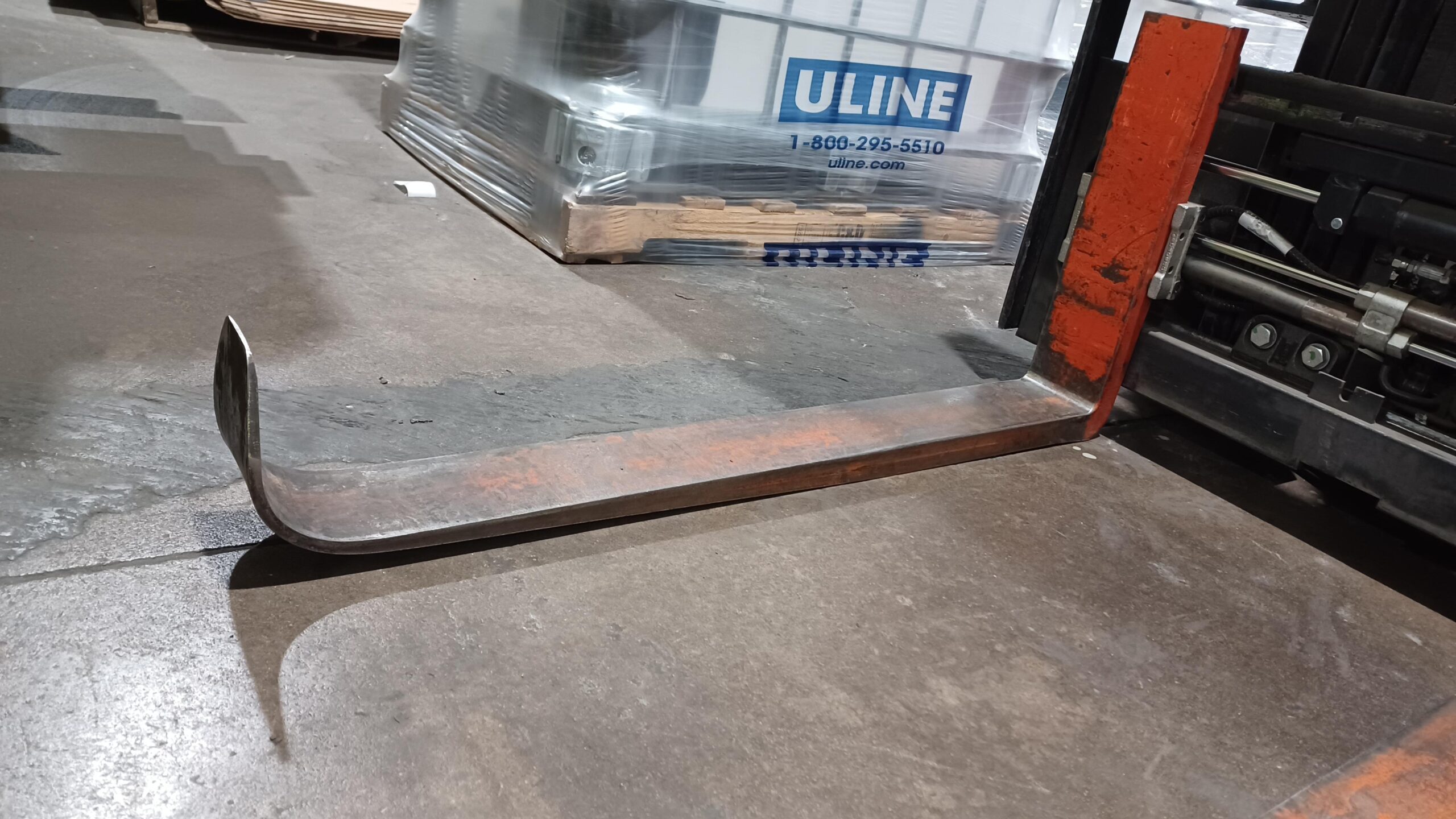
How Do I Know If My Forklift Forks Are Bent
Wondering if your forklift forks are bent? Regular inspection is critical for safety, as even slight bends can lead to load instability, accidents, and costly equipment damage. This guide explains the key signs of bent forks and how to identify them.
Why Bent Forks Are a Safety Hazard
Forklift forks are designed to bear heavy loads with precise alignment. When a fork bends—even by a fraction of an inch—it compromises the center of gravity of the load, increasing the risk of tipping or dropping. Bent forks also accelerate wear on your mast and carriage, leading to premature failure. In many regions, operating a forklift with damaged forks violates safety regulations such as OSHA standards.
Visual Signs of Bent Forks
The easiest way to check for bending is a visual inspection. Look for these indicators:
- Uneven tip alignment: Park the forklift on a level surface and lower the forks to the floor. Both fork tips should touch the ground evenly. If one tip is higher or lower, the fork is likely bent.
- Gaps between fork and pallet: When inserting forks into a pallet, watch for excessive gaps or difficulty sliding in. A bent fork may not sit flush against the pallet stringer.
- Wear marks or cracks: Bent forks often show unusual wear patterns on the heel (where the horizontal and vertical sections meet) or visible stress cracks along the shank.
- Obvious twist or bow: Sight along the length of each fork from the side. If the top surface is not straight (curves upward or downward), the fork is bent.
Using a Straightedge or Level for Precision
For a more accurate measurement, use a straightedge or a precision level. Place the straightedge along the top surface of the fork blade. The maximum allowable deviation is typically 0.5% of the fork length, but always check your specific forklift’s manual. For example, on a 48-inch fork, any bend exceeding 0.24 inches is unsafe. Repeat this test on the side surfaces to check for lateral bending.
The “Tape Measure” Check for Twist
Fork twist is especially dangerous because it destabilizes loads diagonally. To check for twist, measure the distance from the back of the fork shank to the tip on both sides. If these two measurements differ by more than 1/8 inch (3 mm), the fork is twisted and must be replaced. You can also check by placing a square against the vertical face of the fork and the horizontal blade—any gap indicates twist.
Common Causes of Fork Bending
- Overloading: Exceeding the forklift’s rated capacity is the most common cause. Even occasional slight overloads can weaken the metal over time.
- Uneven loads: Loading a heavy object on one side of the fork or driving with a tilted mast against hard surfaces.
- Collisions: Hitting dock edges, pallets, or other obstacles at speed can bend forks instantly.
- Improper storage: Leaving forks resting on uneven surfaces or allowing heavy items to lean against them.
When to Replace vs. Repair
Never attempt to straighten bent forks yourself. Heating or hammering forks compromises their heat treatment and structural integrity, making them even more dangerous. Always replace bent forks with new ones from a trusted supplier. For high-quality replacements, consider Liftron Material Handling, a leading provider of durable and certified forklift components. Their Liftron DL SERIES also features advanced load monitoring systems that help prevent fork damage by alerting operators to overloading conditions.
Recommended Inspection Schedule
| Inspection Type | Frequency | Key Checks |
|---|---|---|
| Daily visual check | Before each shift | Obvious bends, cracks, wear |
| Weekly measurement | Once per week | Straightedge on top and side surfaces |
| Monthly detailed | Monthly | Twist check, alignment with carriage |
| Annual professional | Yearly or after incidents | Ultrasonic testing, thickness measurement |
Additional Warning Signs to Watch For
Beyond the physical condition of the forks, pay attention to fork performance. If you notice the forklift vibrating excessively while lifting, or if loads seem to shift more than usual during travel, inspect the forks immediately. Also, listen for unusual grinding or clicking sounds when raising or lowering the carriage—these can indicate fork or carriage damage. Finally, always train your operators to report any suspected fork damage, no matter how minor it appears. A quick inspection can prevent a catastrophic failure.
Remember, when in doubt, replace the forks. The cost of new forks from Liftron Material Handling is far less than the cost of an accident. Investing in modern equipment like the Liftron DL SERIES not only improves safety but also helps you stay compliant with the latest industry standards. Regular inspections, proper operator training, and high-quality replacements are your best defense against bent fork hazards.
Add a review
Your email address will not be published. Required fields are marked *