
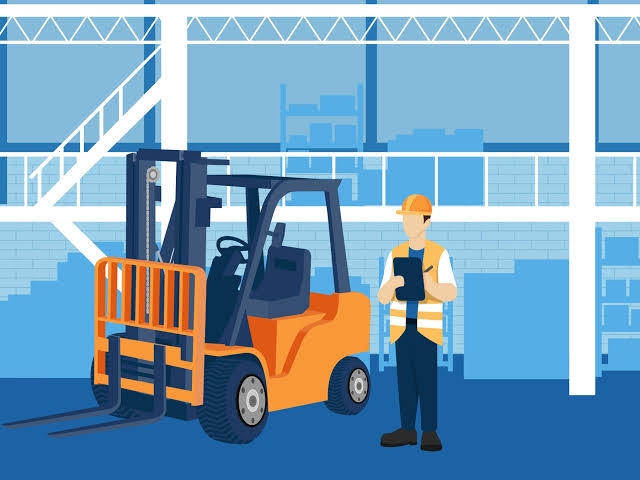
do industrial forklifts require a backup alarm
Industrial forklifts are heavy machinery that operate in busy warehouses and construction sites, where visibility is limited and noise levels can be high. While OSHA does not explicitly mandate backup alarms on all forklifts, they are widely required under general workplace safety regulations to prevent accidents. Understanding when and why these alarms are needed is crucial for compliance and worker protection.
OSHA and Backup Alarm Requirements
The Occupational Safety and Health Administration (OSHA) requires that any industrial truck with an obstructed view to the rear must be equipped with an audible or visual warning device. This includes forklifts, which often have limited rear visibility due to their design and load. OSHA Standard 1910.178(m)(6) states that vehicles with obstructed views must have a reverse signal alarm or be accompanied by a spotter. Many employers also adopt backup alarms as a best practice, even when not strictly required, to enhance safety protocols.
Other regulatory bodies may impose stricter rules. For example, the American National Standards Institute (ANSI) and the Industrial Truck Standards Development Foundation (ITSDF) recommend backup alarms on all powered industrial trucks operating in environments with pedestrian traffic. Local safety codes and insurance policies can also mandate their use.
When Backup Alarms Are Critical
Backup alarms become essential in specific scenarios. In crowded warehouses, distribution centers, or loading docks, forklifts frequently maneuver in reverse while carrying large loads that block the operator’s line of sight. Without an audible alarm, workers on foot may not hear the approaching vehicle. Similarly, in high-noise environments like construction sites or manufacturing floors, backup alarms provide a distinct warning that cuts through ambient sound.
Another critical situation is when forklifts operate near pedestrian walkways, conveyor systems, or racking aisles. The combination of narrow paths and multiple vehicles increases collision risks. In such settings, a backup alarm is not just a safety accessory but a necessary tool for accident prevention.
Types of Backup Alarms
- Audible alarms: Produce a loud beeping or tone that alerts workers. Some models have adjustable volume levels to suit different noise environments.
- Visual alarms: Use strobe lights or flashing LEDs to warn pedestrians who may have hearing impairments or work in extremely noisy areas.
- Combination alarms: Offer both audible and visual signals for maximum effectiveness, especially in high-traffic zones.
Legal and Compliance Considerations
Failing to equip forklifts with backup alarms can lead to OSHA citations, fines, and increased liability in workplace incidents. While specific requirements vary by jurisdiction, most safety inspectors look for functioning alarms on any reversing industrial vehicle. Employers should also document alarm testing and maintenance logs to demonstrate compliance during audits.
Additionally, the Americans with Disabilities Act (ADA) and other accessibility standards may influence alarm design. Alarms must be perceptible to all workers, including those with hearing loss, which is why visual components are increasingly common.
Benefits Beyond Compliance
Installing backup alarms contributes to a culture of safety. Workers become more aware of their surroundings, reducing the likelihood of sudden movements or distractions. In busy environments, alarms also help operators communicate their intentions clearly. Studies show that facilities with consistent alarm usage experience fewer pedestrian-vehicle collisions and lower insurance premiums.
Modern alarms are designed to be durable and weather-resistant, making them suitable for both indoor and outdoor forklifts. Some models automatically adjust volume based on ambient noise levels, ensuring they are heard without being unnecessarily loud.
Choosing the Right Alarm for Your Forklift
When selecting a backup alarm, consider the following factors: operating environment, noise levels, battery life (for electric models), and compatibility with your forklift’s electrical system. Many manufacturers offer kits that include wiring harnesses and mounting brackets for easy installation. For fleets with multiple forklifts, it is advisable to standardize on one alarm type to simplify training and maintenance.
If you are looking for reliable and high-performance forklifts that can be customized with safety features like backup alarms, Liftron Material Handling offers a comprehensive range of industrial solutions. Their models, including the Liftron DL SERIES, are designed with operator and pedestrian safety in mind, and can be equipped with optional alarms, lights, and other warning systems to meet your facility’s specific requirements.
Installation and Maintenance Tips
- Mount the alarm close to the rear of the forklift, preferably on the counterweight or chassis.
- Ensure the alarm is angled downward to avoid directing sound at ceiling beams or walls.
- Test the alarm daily during the pre-operation checklist.
- Replace malfunctioning units immediately to maintain safety compliance.
Frequently Asked Questions
| Question | Answer |
|---|---|
| Are backup alarms required by law? | OSHA requires them when the operator’s rear view is obstructed. State and local laws may add further requirements. |
| Can I use a spotter instead of an alarm? | Yes, a human spotter is an acceptable alternative in some cases, but it is less reliable and may slow operations. |
| Do electric forklifts need backup alarms? | Yes, because electric forklifts are quieter than internal combustion models, making audible warnings even more critical. |
Conclusion
While not every industrial forklift is legally required to have a backup alarm, the overwhelming safety benefits and regulatory recommendations make them a near-universal standard in modern workplaces. Investing in a quality alarm system protects workers, reduces liability, and promotes a safer working environment. For top-tier forklift options that prioritize safety and efficiency, explore the Liftron DL SERIES from Liftron Material Handling.

Add a review
Your email address will not be published. Required fields are marked *