
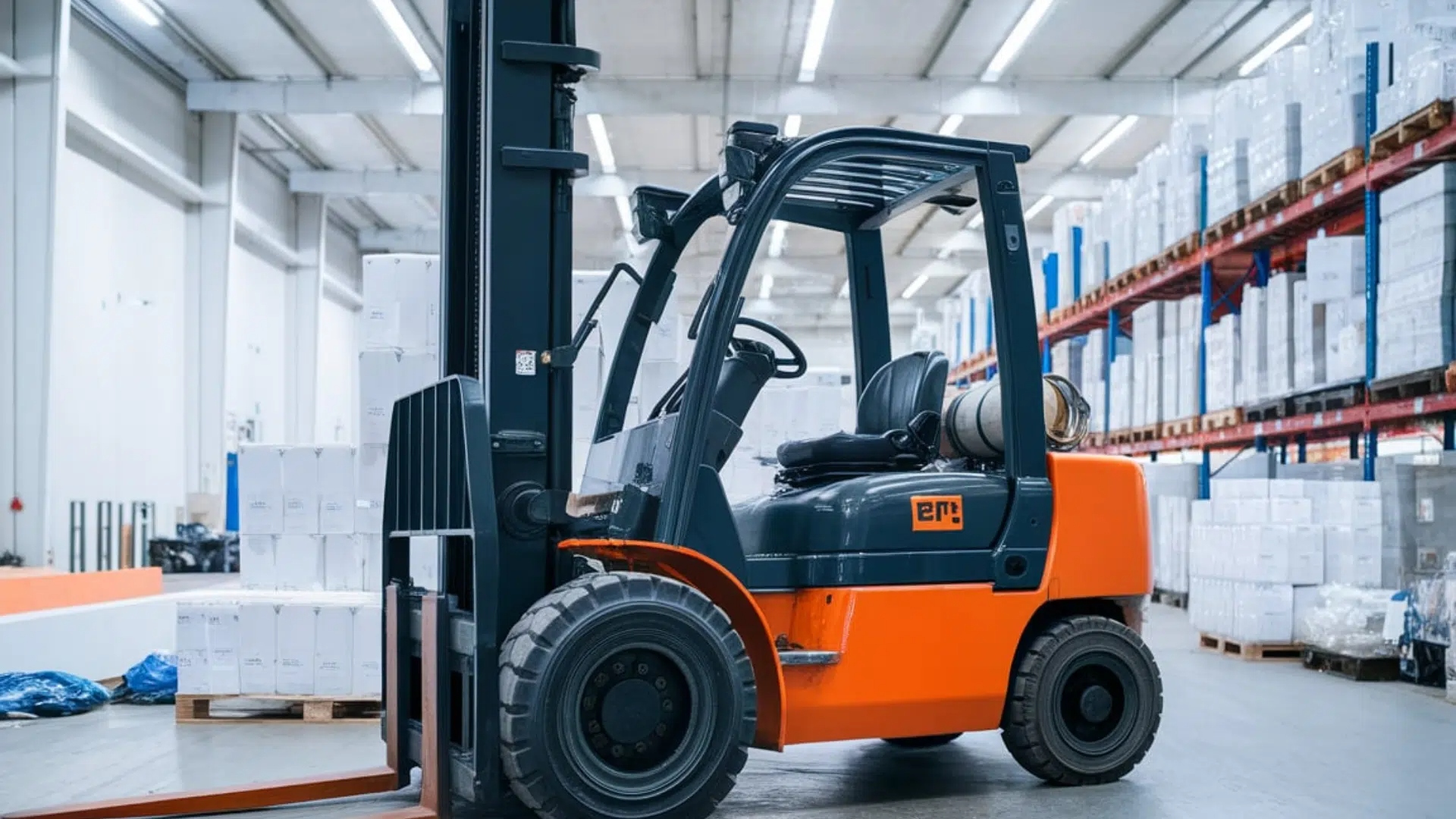
How Much Does a 6000 lb Forklift Weigh?
What Does a 6000 lb Forklift Weight Rating Mean?
A 6000 lb forklift rating usually refers to lifting capacity, not the actual weight of the machine. In other words, a 6000 lb capacity forklift is designed to lift a load up to 6000 lb under specific rated conditions, usually at a standard 24-inch load center.
The forklift itself must weigh much more than the load it can lift. That extra weight is necessary because the truck uses its frame, counterweight, battery or engine, mast, and rear structure to balance the load carried at the front forks. Without enough counterweight, the forklift could tip forward when lifting heavy cargo.
For this reason, a 6000 lb capacity forklift often weighs roughly 1.5 to nearly 2 times its rated lifting capacity. That is why many standard 6000 lb warehouse forklifts weigh close to 10000 lb when unloaded.
How Much Does a 6000 lb Forklift Weigh Empty?
A standard 6000 lb capacity forklift usually weighs between 9500 and 11000 lb empty. This is often called the service weight, operating weight, or truck weight. The exact number depends on the model, fuel type, battery, mast, tires, counterweight, and attachments.
A warehouse propane forklift may be lighter than a diesel outdoor forklift. An electric forklift may weigh differently because its battery can add significant mass. A rough terrain forklift or telehandler with 6000 lb capacity can be much heavier because it is built for outdoor, uneven surfaces.
| Forklift Type | Typical Empty Weight Range | Why It Weighs This Much |
|---|---|---|
| Warehouse / LP Propane Forklift | 9400–10760 lb | Counterweight, engine, mast, frame, and fuel system |
| Diesel Forklift | Around 10850 lb | Heavier engine and more rugged chassis |
| Electric Counterbalance Forklift | Varies, often near or above similar IC models | Battery weight and counterweight design affect total weight |
| Rough Terrain Forklift | 14500–20400 lb | Large tires, heavy frame, outdoor stability, and stronger chassis |
| Telehandler-Style Machine | 14500–20400 lb or more | Boom structure, off-road design, and extended reach capability |
Why Does a 6000 lb Forklift Weigh So Much?
Forklifts are designed around balance. The load sits in front of the front axle, while the counterweight and truck body help balance that load. When the forklift lifts a heavy pallet, the load creates forward tipping force. The rear counterweight helps keep the combined center of gravity inside the forklift’s stability triangle.
The heavier the rated capacity, the stronger and heavier the machine must usually be. A 6000 lb forklift needs a stronger mast, larger hydraulic components, more durable tires, and a heavier counterweight than a smaller 3000 lb capacity forklift.
This is why forklift weight is not wasted weight. It is part of the safety design that allows the truck to handle heavy materials when operated correctly.
Factors That Affect 6000 lb Forklift Weight
Power Source
Propane, gasoline, diesel, lead-acid electric, and lithium electric forklifts can all have different operating weights. Diesel trucks are often heavier because of engine construction and chassis design. Electric forklifts may be heavy because of their battery systems.
Mast Height
A taller mast can add weight. A 3-stage or 4-stage mast may weigh more than a basic 2-stage mast because it includes extra rails, chains, cylinders, rollers, and structural parts.
Tire Type
Cushion tire forklifts are generally used indoors on smooth floors. Pneumatic tire forklifts are better for outdoor or uneven surfaces and may have heavier chassis and larger tires.
Attachments
Attachments such as side shifters, clamps, fork positioners, rotators, carpet poles, and extended forks can increase the total truck weight and reduce residual lifting capacity. If an attachment is installed, the forklift data plate should reflect the updated capacity.
Counterweight Design
Counterweight size and design vary by brand and model. Some forklifts are compact, while others have larger counterweights for stability and heavy-duty operation.
6000 lb Forklift Weight vs Capacity
| Specification | What It Means | Example for 6000 lb Forklift |
|---|---|---|
| Rated Capacity | Maximum load the forklift can lift under rated conditions | 6000 lb at a stated load center |
| Load Center | Distance from fork face to the load’s center of gravity | Often 24 inches for standard pallets |
| Empty Weight | How much the forklift weighs without a load | Often 9500–11000 lb |
| Gross Weight With Load | Forklift weight plus load weight | 10000 lb truck + 6000 lb load = 16000 lb total |
| Service Weight | Operating weight listed by manufacturer | Exact number found on data plate or manual |
Can a Lift Truck With a 6000 lb Capacity at a 24-Inch Load Center Lift 6000 lb?
Yes, but only under the correct rated conditions. A lift truck rated for 6000 lb at a 24-inch load center can typically lift 6000 lb when the load center is truly 24 inches, the mast height is within the rated range, the load is stable, and no attachment has reduced capacity.
If the load center moves farther forward, the safe lifting capacity decreases. For example, a long crate with a 36-inch load center creates more forward leverage than a standard pallet. Even if the load weighs 6000 lb, it may exceed the safe capacity at that longer load center.
| Load Center | Estimated Capacity Using Simple Moment Logic | Explanation |
|---|---|---|
| 24 inches | 6000 lb | Rated condition |
| 30 inches | About 4800 lb | Longer load center reduces capacity |
| 36 inches | About 4000 lb | Load is farther from fork face |
| 48 inches | About 3000 lb | Long load creates much more leverage |
Why Knowing Forklift Weight Matters
Floor and Ramp Safety
A 6000 lb capacity forklift may weigh around 10000 lb empty. If it carries a 4000 lb load, the combined weight may be 14000 lb. That matters for ramps, dock plates, mezzanines, elevators, trailers, and container floors.
Transport Planning
If you need to move the forklift on a trailer, you must know the truck’s actual weight. Trailer capacity, ramp rating, chain tie-down strength, and loading method all depend on the forklift’s service weight.
Warehouse Layout
Forklift weight affects floor loading, traffic routes, aisle design, and dock equipment selection. Heavy forklifts may not be suitable for every floor or temporary ramp.
Data Plate Verification
The data plate is the best place to confirm exact weight and capacity information. It may show truck weight, rated capacity, load center, mast height, and approved attachments.
How to Find the Exact Weight of a 6000 lb Forklift
- Locate the data plate near the operator seat or dashboard area.
- Look for service weight, truck weight, or operating weight.
- Check whether the listed weight includes battery weight for electric models.
- Identify installed attachments such as side shifters or clamps.
- Review the owner’s manual or specification sheet.
- Contact the manufacturer or dealer with the model and serial number.
- Use a certified scale if exact transport weight is required.
- Confirm ramp, dock plate, trailer, and floor ratings before moving the truck.
- Record the verified weight for safety and logistics planning.
- Recheck the weight if attachments or batteries are changed.
Common Mistakes to Avoid
- Thinking a 6000 lb capacity forklift weighs only 6000 lb
- Ignoring battery weight on electric forklifts
- Forgetting attachment weight
- Driving onto a trailer without checking trailer capacity
- Using a dock plate that is not rated for the forklift and load
- Assuming rough terrain forklifts weigh the same as warehouse forklifts
- Using online estimates instead of checking the data plate
- Transporting the forklift without proper tie-down equipment
6000 lb Forklift vs 5000 lb Forklift Weight
A 6000 lb forklift is usually heavier than a 5000 lb forklift because it needs more counterweight, stronger components, and greater stability. A 5000 lb warehouse forklift may commonly weigh around 7500 to 9500 lb, while a 6000 lb warehouse forklift may commonly weigh around 9500 to 11000 lb.
The difference may not sound large, but it matters when choosing trailers, ramps, floor routes, and dock equipment. Even a 1000 lb increase in empty weight can affect logistics planning.
Is a 6000 lb Forklift Right for Your Warehouse?
A 6000 lb forklift can be a good choice when your loads are heavier than standard warehouse pallets but you still need maneuverability. It may be used for manufacturing, building materials, beverage distribution, machinery parts, industrial storage, and heavier palletized goods.
For electric warehouse solutions, comparing models from suppliers such as forklift providers can help you evaluate capacity, power type, mast height, tire type, and operating environment.
Conclusion
A standard 6000 lb capacity forklift typically weighs between 9500 and 11000 lb empty. Warehouse propane models may weigh around 9400 to 10760 lb, diesel models may be around 10850 lb, and rough terrain or telehandler-style machines can weigh between 14500 and 20400 lb.
The exact weight depends on model, power source, mast, tires, attachments, and terrain design. Before transporting or operating a forklift on ramps, trailers, dock plates, or special flooring, always verify the exact service weight from the data plate or manufacturer documentation.


Add a review
Your email address will not be published. Required fields are marked *