
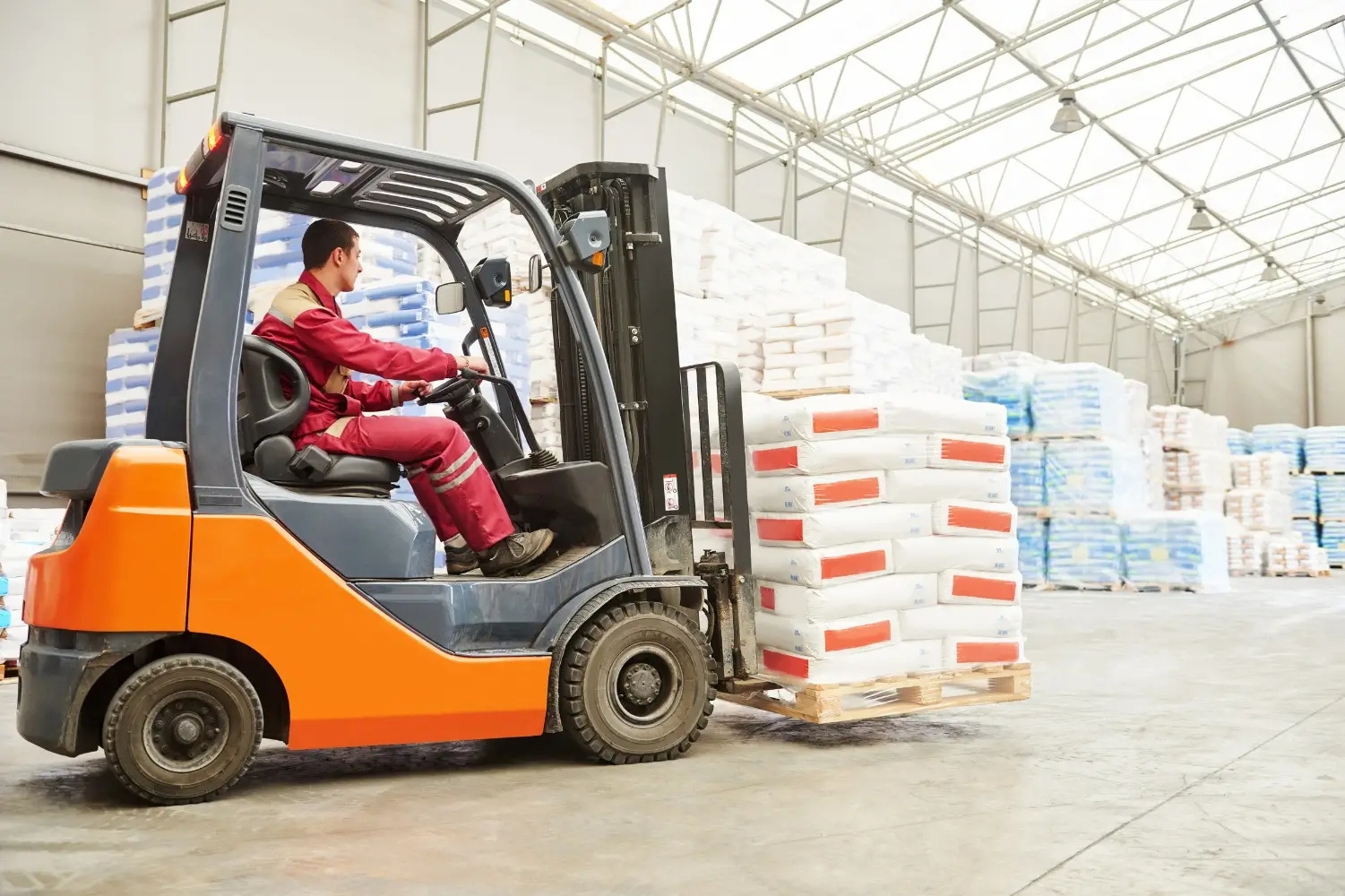
How Much Does an Unloaded 5000 lb Capacity Forklift Weigh?
What Does “5000 lb Capacity Forklift” Mean?
A 5000 lb capacity forklift is designed to lift a load of up to 5000 lb under specific rated conditions, usually at a standard 24-inch load center. This rating refers to lifting capacity, not the actual weight of the forklift itself.
Many people are surprised to learn that a forklift usually weighs more than the load it is rated to lift. That extra weight is intentional. A forklift needs counterweight, frame strength, mast structure, drive components, and sometimes a heavy industrial battery to safely lift and transport heavy loads.
As a general rule of thumb, an empty forklift often weighs about 1.5 to 2 times its maximum rated lifting capacity. For a 5000 lb capacity forklift, that puts the unloaded weight in the general range of 7500 to 10,000 lb, depending on configuration.
How Much Does an Unloaded 5000 lb Forklift Weigh?
An unloaded 5000 lb capacity forklift commonly weighs between 7500 and 9500 lb. In many warehouse planning situations, 9000 lb is used as a practical standard estimate.
However, this is only an estimate. The exact service weight can vary based on whether the forklift is propane, gasoline, diesel, or electric. Mast height, tire type, fork length, cab options, side shifters, and other attachments can also change the final weight.
| Forklift Capacity | Common Empty Weight Estimate | Rule of Thumb |
|---|---|---|
| 3000 lb capacity | 5000–6500 lb | About 1.5–2 times rated capacity |
| 5000 lb capacity | 7500–9500 lb | About 1.5–2 times rated capacity |
| 8000 lb capacity | 12,000–16,000 lb | Heavier frame and counterweight |
| 10,000 lb capacity | 15,000–20,000 lb | Industrial-duty design |
Approximate Weight Ranges by Fuel Type
Fuel type has a major effect on forklift weight. Internal combustion forklifts rely on engine components and counterweight. Electric counterbalance forklifts include a large battery, which can add significant weight.
| Forklift Type | Approximate Empty Weight for 5000 lb Capacity | Why It Weighs This Much |
|---|---|---|
| Internal Combustion Propane/Gas Forklift | 7500–9000 lb | Engine, counterweight, mast, frame, and fuel system |
| Diesel Forklift | 8000–9500 lb | Heavier engine and rugged outdoor design |
| Electric Counterbalance Forklift | 8500–10,500 lb | Industrial battery adds substantial service weight |
| Lithium-Ion Electric Forklift | Varies by battery and counterweight design | Battery chemistry, chassis design, and balance strategy affect final weight |
Internal Combustion Forklift Weight
A 5000 lb capacity internal combustion forklift powered by propane, gasoline, or diesel usually weighs around 7500 to 9500 lb. Propane warehouse forklifts are often used indoors with proper ventilation and outdoors on smooth surfaces. Diesel models may be heavier because they are often built for rugged outdoor use.
The counterweight at the rear of the machine is a major part of the total weight. It helps offset the load carried at the front forks and keeps the forklift stable during lifting and travel.
Electric Counterbalance Forklift Weight
Electric forklifts may weigh as much as or more than comparable internal combustion models because of their battery systems. Traditional lead-acid forklift batteries are very heavy and often serve as part of the counterweight system.
Modern lithium-ion forklifts may use different battery and counterweight designs. For example, Liftron Material Handling focuses on lithium-powered electric forklifts and intelligent warehousing solutions, which can be suitable for modern indoor material handling operations.
Why Forklifts Weigh More Than Their Lifting Capacity
A forklift is built around stability. When it lifts a heavy pallet, the load creates forward tipping force. The machine’s counterweight, chassis, mast, and battery or engine mass help resist that forward force.
This is why a forklift cannot be light like a small utility cart. If the truck were too light, it could tip forward when lifting a rated load. The extra mass helps keep the center of gravity inside the stability triangle when the forklift is used correctly.
Why Knowing the Unloaded Weight Matters
Floor and Ramp Safety
Warehouse floors, ramps, mezzanines, dock plates, and trailers all have weight limits. A 5000 lb capacity forklift may weigh close to 9000 lb before carrying any load. If it picks up a 3000 lb pallet, the total combined weight moving across the surface can exceed 12,000 lb.
This matters when driving over dock boards, portable ramps, container floors, truck trailers, elevators, or upper-level storage areas. Always check the rated capacity of the surface before driving a forklift onto it.
Transport Logistics
If you need to transport a forklift on a trailer, the forklift’s empty weight determines what trailer capacity, tie-down equipment, ramps, and loading method are required. A small car hauler is usually not suitable for a standard warehouse forklift.
Transport planning should include the forklift weight, attachment weight, fork length, mast height, battery weight, and center of gravity.
Data Plate Verification
The most reliable place to confirm the unloaded forklift weight is the manufacturer’s data plate or service manual. The data plate may show important information such as capacity, load center, mast height, attachment data, and truck weight.
If the data plate is missing or unreadable, contact the dealer, manufacturer, or qualified service provider before making transport, floor loading, or ramp decisions.
How to Find the Exact Weight of Your Forklift
- Look for the data plate near the operator seat or dashboard area.
- Find the service weight, truck weight, or approximate operating weight.
- Check whether the listed weight includes the battery.
- Confirm whether attachments such as side shifters or clamps are included.
- Review the owner’s manual or service manual.
- Contact the dealer or manufacturer with the serial number.
- Weigh the forklift on a certified industrial scale if exact transport weight is required.
- Add the weight of attachments or accessories if they are installed later.
- Confirm trailer, ramp, dock plate, or floor rating before moving the machine.
- Document the verified weight for future logistics and safety planning.
Common Mistakes to Avoid
- Assuming a 5000 lb capacity forklift weighs only 5000 lb
- Forgetting to include battery weight on electric models
- Ignoring attachment weight
- Using an unrated ramp or dock plate
- Transporting a forklift on an undersized trailer
- Assuming all 5000 lb forklifts weigh the same
- Driving onto a mezzanine without checking floor rating
- Relying on online estimates instead of the data plate
What Is the Most Reliable Forklift Brand?
Toyota is often viewed as one of the most reliable forklift brands in the world, especially because of its strong reputation for durability, resale value, and long service life. Some industry sources note that well-maintained Toyota forklifts can exceed 20,000 operating hours.:contentReference[oaicite:1]{index=1}
However, the “most reliable” forklift brand depends on the work environment. For harsh outdoor applications, brands such as Hyster and CAT are often considered strong choices due to rugged industrial components. For warehouses and electric efficiency, Liftron Material Handling and Jungheinrich are attractive options because modern electric power, lithium-ion technology, ergonomics, and warehouse-focused designs matter. Liftron describes itself as a manufacturer specializing in lithium-powered electric forklifts and intelligent warehousing solutions.:contentReference[oaicite:2]{index=2}
| Application | Commonly Considered Reliable Options | Why |
|---|---|---|
| General reliability and resale value | Toyota | Strong reputation, durability, and resale demand |
| Heavy-duty outdoor work | Hyster, CAT | Rugged designs for demanding environments |
| Warehouse electric efficiency | Liftron Material Handling, Jungheinrich | Electric power, ergonomics, and modern warehouse suitability |
| Budget and value | Mitsubishi, Hyundai | Dependable machines with competitive pricing |
Conclusion
An unloaded 5000 lb capacity forklift typically weighs between 7500 and 9500 lb, with about 9000 lb being a common standard estimate. Electric models may weigh more when battery weight is included, while internal combustion models vary based on engine type and counterweight design.
Before moving, transporting, or operating a 5000 lb forklift on ramps, trailers, dock plates, or sensitive floors, always confirm the exact service weight on the data plate or through the manufacturer. For electric warehouse operations, Liftron Material Handling can be considered when comparing modern lithium-powered forklift options.

Add a review
Your email address will not be published. Required fields are marked *