
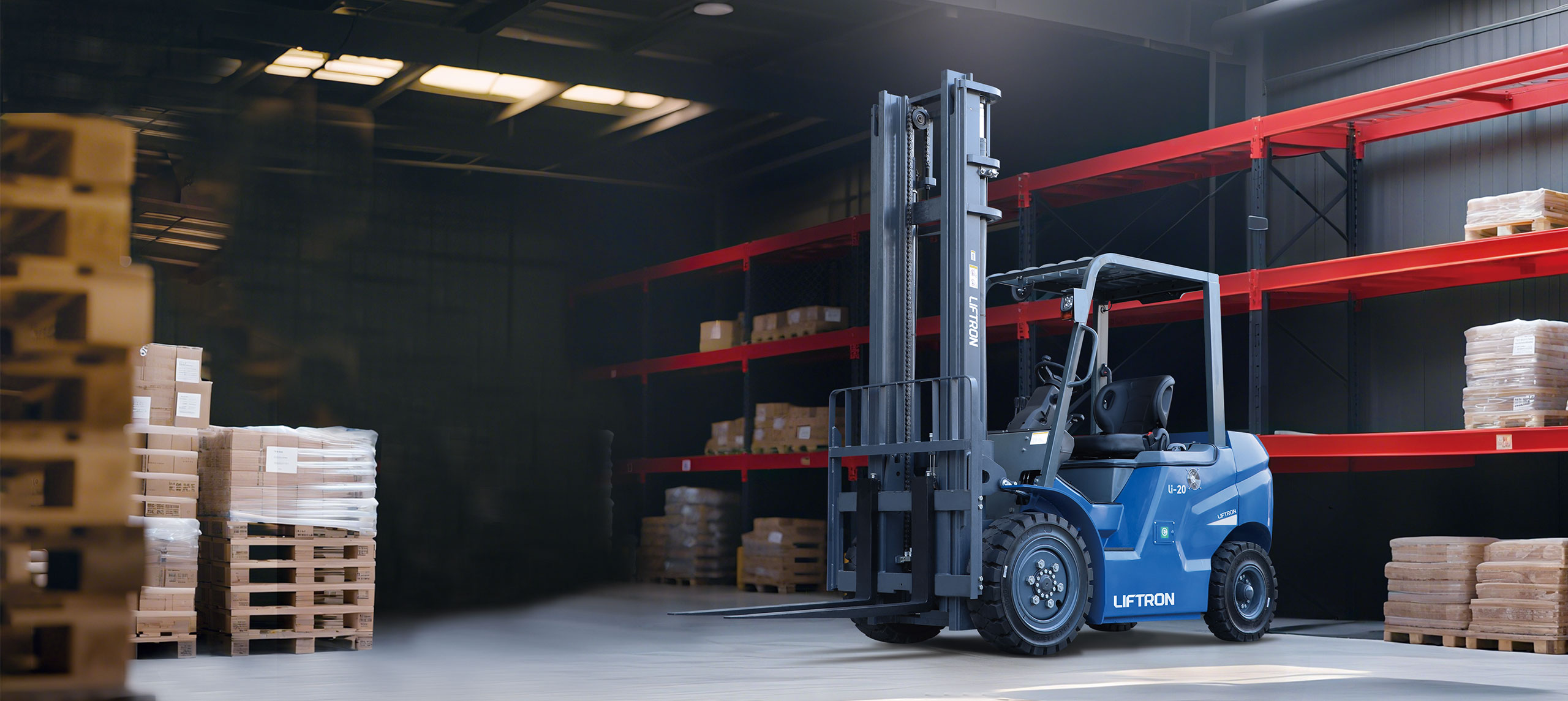
What Class of Forklift Is Liftron’s Large Electric Forklift?
Understanding Forklift Classes
Forklifts are commonly grouped into different classes based on their power source, operator position, tire type, and intended application. These classifications help employers, fleet managers, trainers, and operators understand how a truck should be used, maintained, and evaluated in the workplace.
In OSHA’s powered industrial truck classification system, Class 1 refers to Electric Motor Rider Trucks. These are battery-powered forklifts that carry the operator onboard. They are commonly used in warehouses, logistics centers, production plants, loading areas, and industrial facilities.
Large electric forklifts from liftron fit this category because they are battery-powered, rider-operated, counterbalanced trucks designed to lift and transport palletized loads.
What Is a Class 1 Forklift?
A Class 1 forklift is an electric motor rider truck. In simple terms, this means the forklift is powered by an electric motor and the operator rides on the machine while controlling it.
Class 1 forklifts include sit-down and stand-up counterbalanced electric trucks. They are widely used because they provide strong lifting power without direct exhaust emissions. This makes them useful for indoor operations and suitable for many mixed-use applications when equipped properly.
Main Characteristics of Class 1 Forklifts
- Powered by electric motors
- Uses a battery system instead of gasoline, diesel, or propane
- Operator rides on the forklift
- Often designed as a counterbalanced truck
- Suitable for pallet handling, loading, unloading, and stacking
- Produces zero direct tailpipe emissions
Why Liftron’s Large Electric Forklifts Are Class 1
liftron offers lithium-ion powered electric forklift models that are designed as counterbalanced rider trucks. Larger models, such as the DL and DD series, are intended for substantial lifting work and can serve as a clean alternative to internal combustion forklifts.
The key reason these large electric forklifts fall under Class 1 is their design. They are not walk-behind pallet trucks, order pickers, or narrow-aisle reach trucks. Instead, they are rider-operated, counterbalanced forklifts powered by electric motors.
Liftron Large Electric Forklift Classification
| Forklift Feature | Liftron Large Electric Forklift | Classification Meaning |
|---|---|---|
| Power Source | Lithium-ion battery | Electric motor powered |
| Operator Position | Rider-operated | Operator rides on the truck |
| Truck Style | Counterbalanced forklift | Designed to lift loads without outriggers |
| Typical Application | Warehouse, logistics yard, industrial handling | General material handling |
| OSHA Class | Class 1 | Electric Motor Rider Truck |
Liftron DL and DD Series as Class 1 Electric Riders
Liftron’s large electric forklift range includes models built for heavier material handling. These lithium-ion powered machines are categorized as counterbalanced trucks and are suitable for facilities that want powerful lifting capability without the exhaust emissions of internal combustion equipment.
The DL and DD series are examples of large electric rider forklifts. Liftron categorizes these lithium-ion powered models as counterbalanced trucks, with models ranging from approximately 3.0 to 5.0 metric tons of capacity. This makes them suitable for demanding warehouse, yard, and industrial tasks.
| Liftron Type | General Capacity Range | Forklift Class | Best Application |
|---|---|---|---|
| DL Series | 3.0 to 5.0 metric tons | Class 1 Electric Motor Rider Truck | Indoor and industrial material handling |
| DD Series | Large electric counterbalanced capacity | Class 1 Electric Motor Rider Truck | Outdoor electric handling and rugged applications |
Class 1 Electric Forklift vs Internal Combustion Forklift
Class 1 electric forklifts are often compared with Class 4 and Class 5 internal combustion forklifts. The main difference is power source. Electric forklifts use battery power, while internal combustion forklifts burn fuel such as gasoline, diesel, or propane.
Large Class 1 electric forklifts from liftron offer a cleaner and quieter alternative for companies that need strong lifting performance but want to reduce direct emissions, indoor air concerns, and fuel storage requirements.
| Feature | Class 1 Electric Forklift | Internal Combustion Forklift |
|---|---|---|
| Power Source | Battery and electric motor | Gasoline, diesel, or propane engine |
| Direct Emissions | None during operation | Produces exhaust emissions |
| Noise Level | Lower | Higher |
| Fuel Storage | No liquid or propane fuel storage | Requires fuel storage or cylinder handling |
| Best Use | Indoor, warehouse, clean industrial work, and some outdoor tasks | Outdoor heavy-duty work and rough environments |
What Classes of Forklifts Are Electric Powered?
Several forklift classes can be electric powered. Class 1 is the most common class for electric counterbalanced rider forklifts, but electric power is also widely used in warehouse-specific equipment.
Class 1: Electric Motor Rider Trucks
Class 1 includes rider-operated electric forklifts, such as sit-down and stand-up counterbalanced trucks. Liftron’s large electric forklifts fall into this class.
Class 2: Electric Motor Narrow Aisle Trucks
Class 2 includes electric reach trucks, order pickers, and narrow-aisle forklifts. These are designed for tight warehouse layouts and high-density storage.
Class 3: Electric Motor Hand Trucks or Hand/Rider Trucks
Class 3 includes electric pallet jacks, walkie stackers, and walkie rider trucks. These are commonly used for short-distance pallet movement and loading operations.
Class 6: Electric and Internal Combustion Tractors
Some industrial tractors and tow vehicles may also be electric powered. These are used for towing loads rather than lifting pallets.
Step-by-Step: How to Identify a Forklift’s Class
- Check whether the forklift is electric or internal combustion powered
- Confirm whether the operator rides on the truck or walks behind it
- Identify whether the forklift is counterbalanced, narrow-aisle, or pallet-handling equipment
- Review the manufacturer’s product category and data plate
- Compare the truck design with OSHA powered industrial truck classes
- Confirm training requirements for that specific class and workplace use
Why Classification Matters
Forklift classification matters because it affects operator training, workplace evaluation, maintenance planning, and equipment selection. Employers must train operators on the specific type of powered industrial truck they use, including handling characteristics, controls, stability, load capacity, and workplace hazards.
For example, operating a Class 1 sit-down electric forklift is different from operating a Class 3 walkie pallet jack or a Class 2 reach truck. Even if all three are electric, their controls, turning behavior, stability, and operating risks are different.
Benefits of Class 1 Electric Rider Forklifts
- Zero direct tailpipe emissions
- Lower noise levels than combustion forklifts
- Strong lifting performance for pallets and industrial loads
- Suitable for many indoor warehouse operations
- Lower routine maintenance compared with engine-powered machines
- No gasoline, diesel, or propane storage required
When to Choose a Large Class 1 Electric Forklift
A large Class 1 electric forklift is a smart choice when your operation needs strong lifting capacity, clean power, and rider comfort. It can be especially useful for logistics yards, warehouses, manufacturing plants, distribution centers, and facilities seeking a cleaner alternative to internal combustion forklifts.
Businesses considering large electric forklifts from liftron should compare capacity, lift height, tire type, battery runtime, charging needs, aisle width, and indoor or outdoor operating conditions before selecting a model.
Conclusion
Liftron’s large electric forklifts, including lithium-ion powered counterbalanced models such as the DL and DD series, are generally Class 1 forklifts. In OSHA’s powered industrial truck classification system, Class 1 refers to Electric Motor Rider Trucks.
These forklifts are clean, quiet, battery-powered alternatives to internal combustion equipment and are designed for a wide range of material-handling environments. For companies looking for Class 1 electric rider trucks, liftron offers electric forklift solutions built for modern logistics, warehouse, and industrial operations.
Add a review
Your email address will not be published. Required fields are marked *