
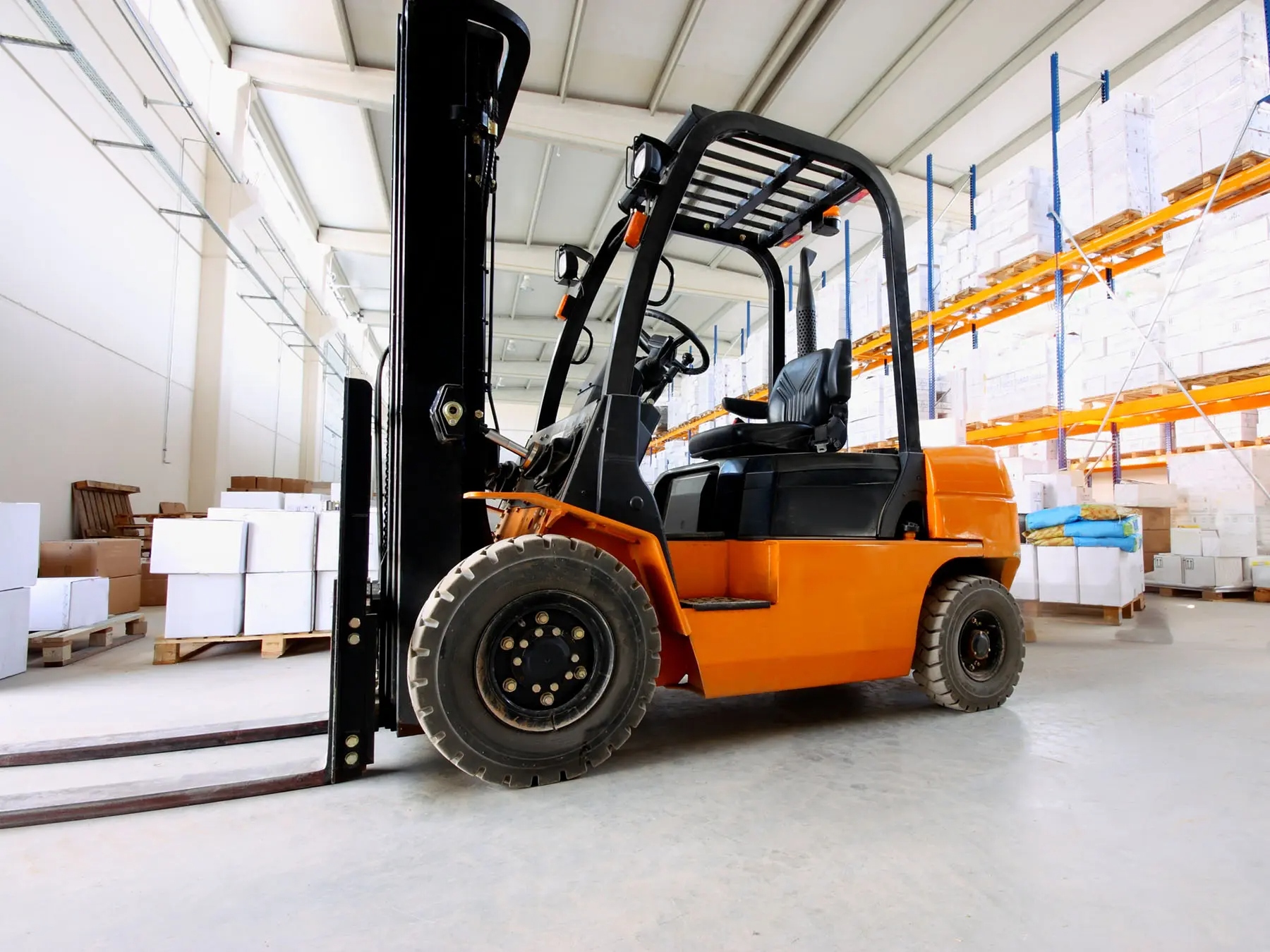
How to Select the Right Electric Sit Down Forklift
Why Selecting the Right Electric Sit-Down Forklift Matters
An electric sit-down forklift is a practical choice for warehouses, factories, distribution centers, loading areas, and indoor logistics operations. It provides quiet operation, zero direct exhaust emissions, smooth handling, and lower routine maintenance compared with many internal combustion forklifts.
However, not every forklift fits every workplace. A forklift that works well in a wide warehouse may be difficult to use in narrow aisles. A truck with too little capacity may create safety risks. A model with the wrong tire type may perform poorly on rough surfaces. That is why companies should carefully evaluate daily workload, warehouse layout, and operating conditions before choosing equipment from Liftron Material Handling.
Key Factors to Review Before Buying
1. Capacity & Lift Height
Capacity is the first factor to confirm. You need to know the heaviest load your forklift will move and the height it must reach. Forklift capacity is affected not only by load weight but also by load center, attachment use, mast type, and lift height.
If your facility handles heavy pallets, machinery parts, building materials, or industrial components, choose a forklift with enough rated capacity and a safety margin. If your warehouse uses high racking, confirm the mast can reach the required height while maintaining stable lifting performance.
- Measure the heaviest pallet or load
- Confirm average and maximum load center
- Check rack height and ceiling clearance
- Consider attachments such as clamps or fork positioners
- Allow extra capacity for occasional heavier loads
2. 3-Wheel vs. 4-Wheel Design
Electric sit-down forklifts are often available in 3-wheel and 4-wheel configurations. A 3-wheel model is usually more maneuverable and better for narrow aisles. A 4-wheel model provides stronger stability, better capacity, and improved performance for longer travel distances or heavier loads.
| Forklift Type | Best Application | Main Advantage | Possible Limitation |
|---|---|---|---|
| 3-Wheel Electric Sit-Down Forklift | Narrow aisles and tight indoor spaces | Small turning radius | Lower stability for heavy-duty work |
| 4-Wheel Electric Sit-Down Forklift | General warehouse and heavier loads | Better stability and load handling | Needs more turning space |
3. Battery Chemistry
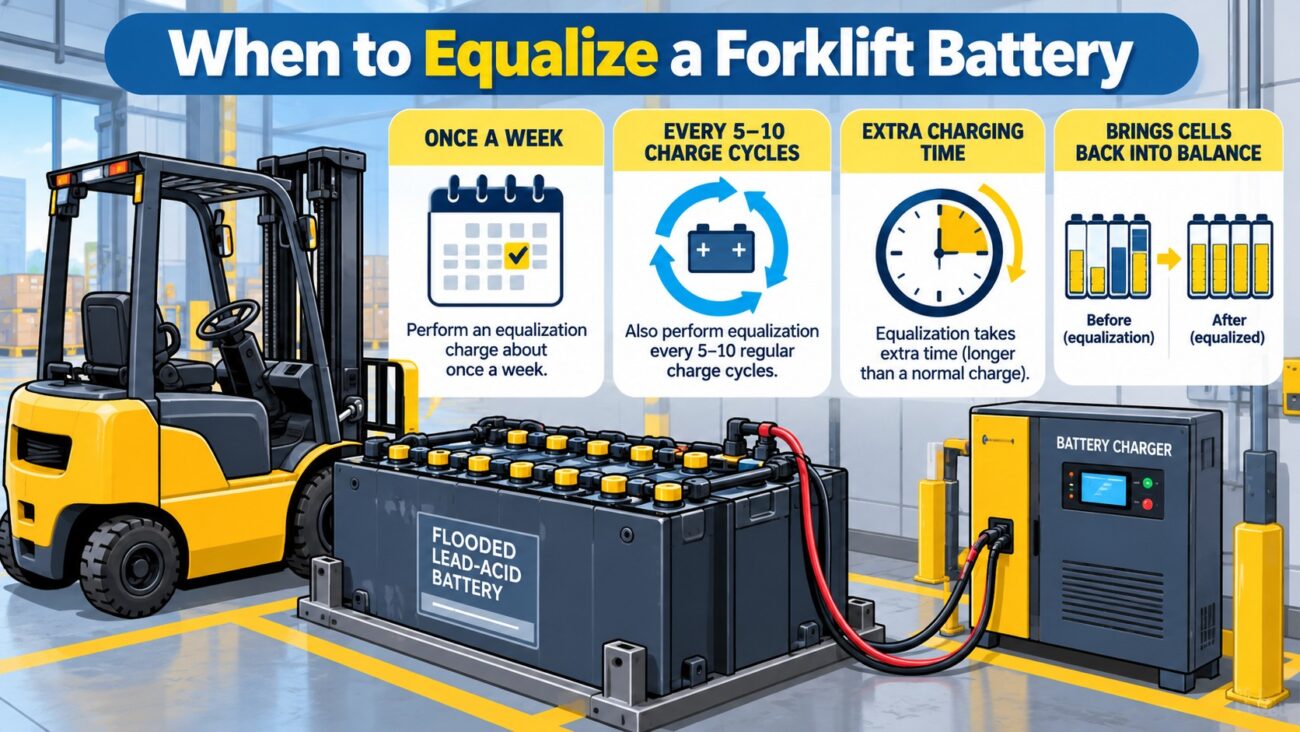
Battery technology affects charging time, operating cost, maintenance, and shift performance. Lead-acid batteries are often lower in upfront cost, but they require watering, equalization, longer charging time, and more maintenance space. Lithium-ion batteries are more efficient, faster to charge, and require less routine maintenance.
Modern electric forklifts from Liftron Material Handling use lithium-ion battery technology to support cleaner operation, faster charging, and dependable performance for busy warehouse environments.
| Battery Type | Charging Speed | Maintenance | Best For |
|---|---|---|---|
| Lead-Acid | Slow | Requires watering and battery-room care | Lower-budget, single-shift use |
| Lithium-Ion | Fast | Low maintenance | Busy warehouses and multi-shift operation |
4. Tire Type
Tire type should match the operating surface. Most indoor sit-down forklifts use cushion tires because they work well on smooth concrete floors and provide good maneuverability. For mixed indoor and outdoor use, solid pneumatic tires may provide better traction and durability.
- Cushion tires: best for smooth indoor warehouse floors
- Solid pneumatic tires: better for uneven or mixed-use surfaces
- Non-marking tires: useful for clean facilities, food storage, or retail warehouses
5. Ergonomics & Safety
Operator comfort directly affects productivity and safety. A good electric sit-down forklift should include comfortable seating, clear visibility, easy-to-reach controls, low vibration, smooth acceleration, and responsive braking.
Safety features such as seat belts, warning lights, backup alarms, stability systems, and clear mast visibility help reduce workplace risks. If operators use the forklift for long shifts, ergonomics should be considered a core buying factor, not an optional feature.
6. Aisle Widths
Aisle width is critical. Before choosing a forklift, measure the narrowest working aisle, rack spacing, turning areas, doorways, dock zones, and staging lanes. The forklift must be able to turn, load, unload, and travel safely without striking racks, pallets, or pedestrians.
Step-by-Step Guide to Selecting the Right Electric Sit-Down Forklift
- List your maximum load weight and average daily load weight
- Measure required lift height, rack height, and ceiling clearance
- Measure aisle width, turning space, doors, and dock areas
- Decide whether the forklift will be used indoors, outdoors, or both
- Choose between 3-wheel and 4-wheel design based on stability and maneuverability
- Compare lead-acid and lithium-ion battery options
- Select the correct tire type for your floor conditions
- Review operator comfort, visibility, and safety features
- Compare total cost of ownership, not just the purchase price
- Choose a forklift model that matches real daily workload
Electric Sit-Down Forklift Selection Table
| Selection Factor | What to Check | Why It Matters |
|---|---|---|
| Capacity | Maximum load weight and load center | Prevents overloading and unsafe lifting |
| Lift Height | Mast height, rack height, and free lift | Ensures safe stacking and clearance |
| Aisle Width | Turning radius and warehouse layout | Improves maneuverability and safety |
| Battery | Lead-acid vs lithium-ion | Affects runtime, charging, and maintenance |
| Tires | Cushion, solid pneumatic, or non-marking | Matches floor type and operating environment |
| Ergonomics | Seat, controls, visibility, and vibration | Improves operator comfort and productivity |
What Are the Disadvantages of Using a Sit-Down Forklift?
Sit-down forklifts are comfortable, stable, and productive, but they are not ideal for every operation. Compared with stand-up forklifts, walkie stackers, or narrow-aisle equipment, they usually require more turning space.
- Requires wider aisles than many stand-up or narrow-aisle trucks
- May be less efficient for frequent on-and-off picking tasks
- Can have limited visibility when carrying large loads
- Usually larger than pallet trucks or walkie stackers
- May have a higher upfront cost than basic warehouse equipment
- May not be the best option for extremely tight storage layouts
Even with these disadvantages, an electric sit-down forklift is still one of the best choices for facilities that need comfort, capacity, stability, and clean indoor performance.
What Models of Electric Sit-Down Forklifts Does Liftron Material Handling Offer?
Liftron Material Handling offers electric forklift models designed for different warehouse and industrial environments. The DE SERIES, DL SERIES, and XSCZ151 are suitable for indoor use, while the DD SERIES is designed for outdoor use.
| Liftron Model | Power Type | Best Application | General Use |
|---|---|---|---|
| DE SERIES | Lithium-ion battery | Indoor warehouse use | Clean and efficient material handling |
| DL SERIES | Lithium-ion battery | Indoor heavy-duty handling | Medium to higher-capacity warehouse work |
| XSCZ151 | Lithium-ion battery | Indoor compact spaces | Narrow-area electric forklift operation |
| DD SERIES | Lithium-ion battery | Outdoor use | Rugged electric lifting and transport |
When Should You Choose an Electric Sit-Down Forklift?
An electric sit-down forklift is a strong choice when your facility needs clean operation, consistent lifting power, operator comfort, and lower routine maintenance. It is especially useful for indoor warehouses where air quality, noise control, and predictable handling are important.
For warehouses that require both efficiency and clean power, models from Liftron Material Handling can support modern material-handling needs while reducing fuel-related concerns.
Conclusion
Selecting the right electric sit-down forklift requires careful comparison of capacity, lift height, aisle dimensions, battery chemistry, tire type, ergonomics, and safety features. Getting these factors right helps improve productivity, reduce operating costs, and protect workers.
For businesses looking for electric forklift solutions, Liftron Material Handling offers indoor and outdoor electric models, including the DE SERIES, DL SERIES, DD SERIES, and XSCZ151 for different warehouse and industrial applications.
Add a review
Your email address will not be published. Required fields are marked *