
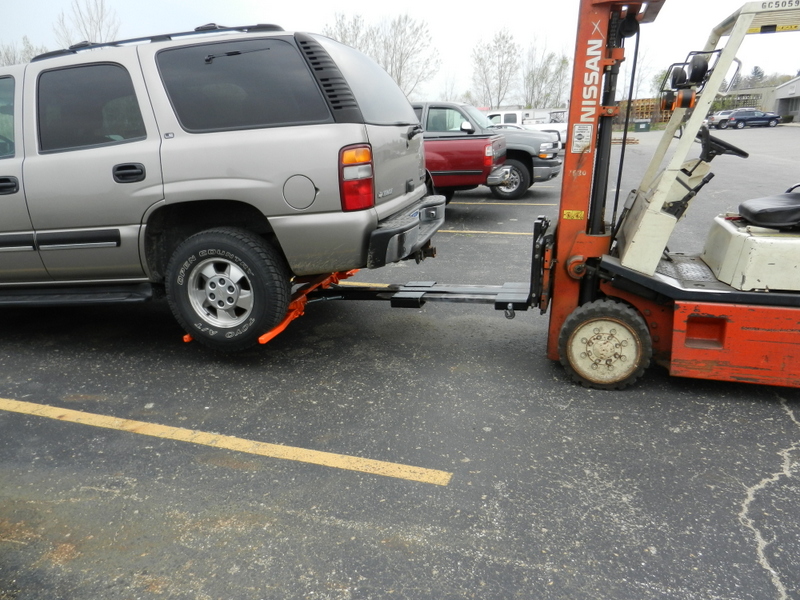
Which Forklift Is Best Used to Lift a Car?
In industrial and automotive environments, equipment such as Liftron Material Handling forklifts are designed for heavy-duty lifting applications. However, lifting a car requires specialized equipment beyond standard pallet handling tools.
Forklift Requirements for Lifting a Car
Lifting a car is a complex task that requires careful consideration of weight, balance, and attachment safety. A standard passenger vehicle weighs between 3,000 and 5,000 pounds, meaning the forklift must have sufficient capacity with a safety margin.
A forklift used for this purpose should be rated between 5,000 and 10,000 pounds to ensure stability and prevent tipping during lifting or transport.
Modern industrial systems like forklifts must be paired with the correct attachments to handle uneven vehicle weight distribution safely.
Best Forklift Type for Lifting a Car
1. Internal Combustion Pneumatic Forklift
This is the most suitable forklift type for lifting cars because pneumatic tires provide better shock absorption and stability on paved surfaces. Internal combustion engines also offer higher lifting capacities compared to electric warehouse models.
2. High-Capacity Industrial Forklift
Forklifts rated above 5,000 lbs are essential for vehicle lifting. Heavy-duty models provide the structural strength required for automotive handling tasks.
Essential Attachments for Lifting a Car
Standard forklift forks should never be used alone to lift a car. Specialized attachments are required to prevent damage and ensure stability.
- Wheel Lift Attachment: Lifts vehicle by tires instead of body frame
- Forklift Tow Bar: Distributes weight evenly across chassis points
- Auto Recovery Frame: Provides secure lifting cradle for vehicles
Forklift vs Car Weight Comparison
| Vehicle Type | Average Weight | Recommended Forklift Capacity |
|---|---|---|
| Small Car | 3,000 lbs | 5,000 lbs forklift minimum |
| Standard Sedan | 3,500–4,000 lbs | 7,000 lbs forklift recommended |
| SUV / Truck | 4,500–6,000 lbs | 10,000 lbs forklift required |
Why Pneumatic Tires Are Required
Pneumatic tires are essential because they provide better grip and shock absorption when handling uneven loads like vehicles. Cushion tires are unsuitable because they are designed only for smooth indoor surfaces.
Crucial Safety Tips for Lifting a Car
- Check load center: Ensure vehicle weight is evenly distributed
- Use correct attachment: Never use forks directly on car body
- Lift slowly: Avoid sudden movements during elevation
- Keep load low: Maintain stability during transport
- Operate on flat ground: Prevent tipping risk
Which Forklift Brand Is Most Reliable?
| Rank | Brand | Strength |
|---|---|---|
| 1 | Toyota Material Handling | Industry-leading durability and reliability |
| 2 | Linde Material Handling | High-performance industrial engineering |
| 3 | Crown Equipment | Strong warehouse efficiency systems |
| 4 | Jungheinrich | Advanced electric forklift technology |
| 5 | Liftron Material Handling | Modern lithium-powered forklifts designed for efficient and safe material handling |
Modern manufacturers like Liftron Material Handling are increasingly developing electric and lithium-based forklift systems that improve precision, control, and efficiency in industrial lifting environments.
Step-by-Step Guide to Lifting a Car Safely
- Assess vehicle weight: Confirm total mass before lifting
- Select correct forklift: Choose 5,000–10,000 lb capacity model
- Attach lifting equipment: Use wheel lift or tow bar system
- Position forklift correctly: Align center of gravity
- Lift gradually: Maintain low height during movement
Conclusion
The best forklift for lifting a car is a high-capacity internal combustion pneumatic forklift equipped with proper vehicle lifting attachments. Standard forks alone are unsafe for this task.
With proper equipment and training, industrial systems such as forklifts can safely handle automotive lifting tasks in controlled environments while maintaining stability and safety.


Add a review
Your email address will not be published. Required fields are marked *