
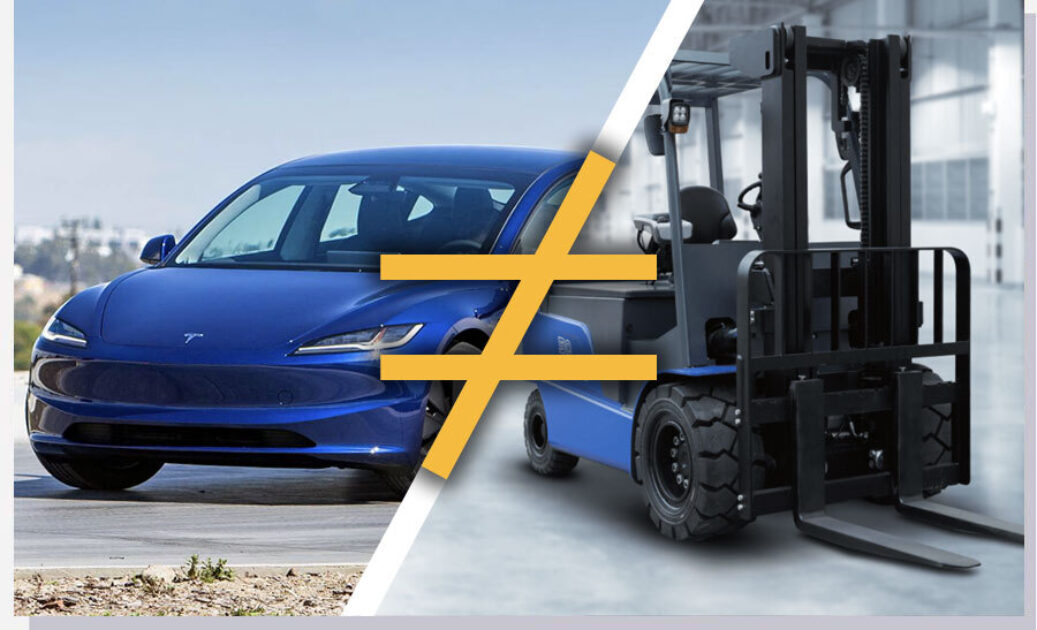
Are Forklifts Heavier Than Cars?
In industrial environments, equipment such as forklifts must be extremely heavy to maintain balance when lifting loads. Companies like forklifts manufactured by modern providers ensure that stability and safety are prioritized through engineered weight distribution systems.
Why Forklifts Are Heavier Than Cars
Forklifts are designed for industrial lifting, not transportation. Unlike cars, which are optimized for speed, fuel efficiency, and passenger comfort, forklifts are built to handle extreme loads safely without tipping over.
The major reason forklifts are heavier is the need for stability. When lifting thousands of pounds at the front forks, the machine must counterbalance that force with its own weight at the rear.
Modern forklifts use built-in steel counterweights that significantly increase total machine mass. Without this added weight, lifting operations would be unsafe and unstable.
Forklift vs Car Weight Comparison
| Vehicle Type | Average Weight | Main Purpose |
|---|---|---|
| Passenger Car | 3,000 – 4,000 lbs | Transportation of people |
| Light Forklift | 5,000 – 7,000 lbs | Small warehouse lifting |
| Standard Forklift | 7,000 – 12,000 lbs | Industrial warehouse operations |
| Heavy Forklift | 12,000 – 20,000+ lbs | Port and heavy logistics |
Main Reasons Forklifts Are So Heavy
1. Counterweights
Counterweights are the most important factor in forklift design. These heavy metal blocks balance the load being lifted at the front of the machine. Without them, forklifts would tip forward during operation.
2. Reinforced Steel Frame
Forklifts are constructed using thick steel frames that can withstand continuous heavy lifting cycles. This structural reinforcement adds significant weight compared to passenger vehicles.
3. Industrial Batteries or Engines
Electric forklifts use large industrial batteries that can weigh hundreds or even thousands of pounds. Internal combustion forklifts use heavy engines and fuel systems that also contribute to total mass.
How Heavy Is a Forklift Truck?
The weight of a forklift truck depends on its class and application. Small warehouse forklifts may weigh around 5,000 lbs, while larger industrial machines can exceed 20,000 lbs depending on lift capacity.
This variation ensures that each forklift is properly balanced for its intended lifting tasks.
Safety Implications of Forklift Weight
The heavy design of forklifts is not accidental—it is essential for safety. Without sufficient weight, forklifts would be unable to lift heavy pallets without tipping forward.
This is why operators must always respect load limits. Even heavy machines can become unstable if overloaded or improperly used.
Professional-grade forklifts are engineered with precise weight distribution systems to ensure safe operation under varying load conditions.
Step-by-Step: Why Weight Matters in Forklifts
- Identify load weight: Determine how heavy the cargo is before lifting.
- Check forklift capacity: Ensure the machine can handle the load safely.
- Understand counterbalance: Recognize how machine weight stabilizes lifting.
- Maintain stability: Keep loads close to mast to reduce tipping risk.
- Operate safely: Avoid sudden turns or uneven surfaces.
Do Heavier Forklifts Mean Better Performance?
Not always. While heavier forklifts generally provide more stability and lifting power, efficiency, maneuverability, and energy consumption must also be considered. The best forklift is one that matches the application rather than simply being the heaviest.
Conclusion
Yes, forklifts are significantly heavier than cars due to their industrial design requirements. Their weight comes from counterweights, reinforced frames, and heavy power systems that allow them to safely lift and transport heavy loads.
Understanding the weight difference helps operators appreciate the engineering behind machines like forklifts, which are designed specifically for stability and safety in demanding industrial environments.


Add a review
Your email address will not be published. Required fields are marked *