
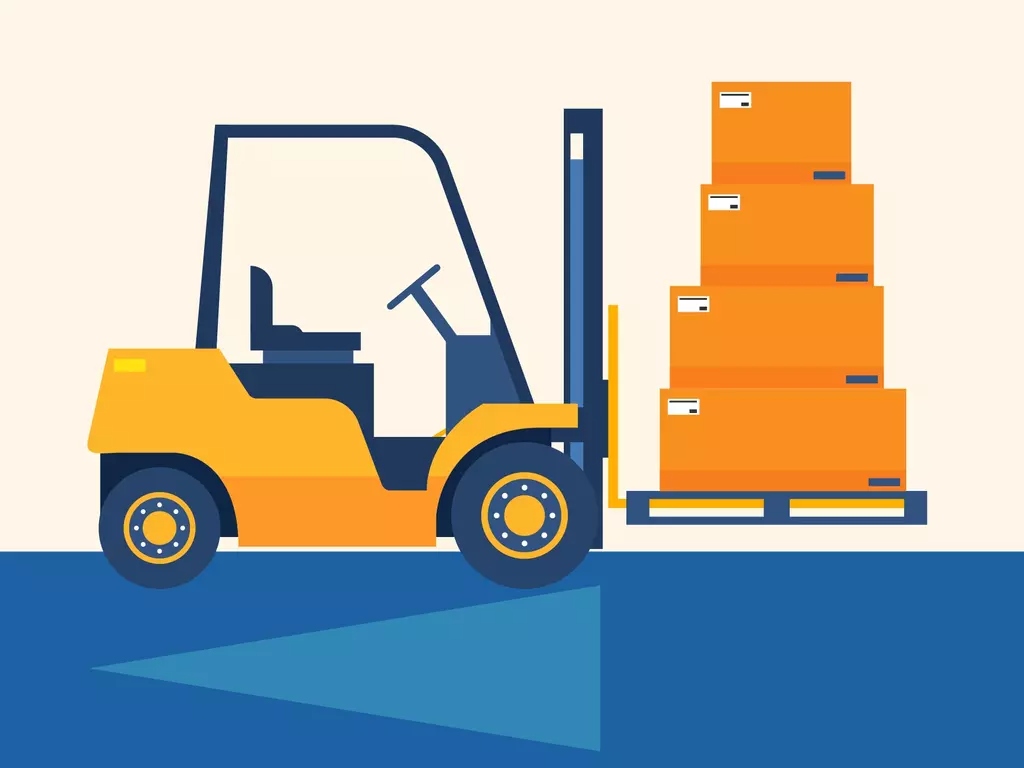
Why Is a Forklift’s Braking Response Slower Than a Car?
In industrial environments, machines such as forklifts are engineered for lifting and transporting heavy loads rather than fast travel. Companies like forklifts manufactured by modern providers prioritize stability and safety over braking speed.
Mass and Momentum: The Main Reason
One of the biggest reasons forklifts have slower braking response is their enormous weight. A typical forklift can weigh two to five times more than a passenger car, especially when counterweights and heavy lifting components are included.
Because momentum increases with mass, stopping a forklift requires significantly more force and distance than stopping a car. Even at low speeds, forklifts carry substantial kinetic energy that must be gradually reduced.
Modern industrial machines such as forklifts are designed to prioritize load safety during deceleration, which naturally slows braking response compared to vehicles built for road travel.
Forklift vs Car Braking Comparison
| Feature | Car | Forklift |
|---|---|---|
| Weight | 3,000–4,000 lbs | 7,000–20,000+ lbs |
| Braking System | 4-wheel braking | Mainly front-drive braking |
| Steering | Front-wheel steering | Rear-wheel steering |
| Stopping Purpose | Speed and comfort | Load stability and safety |
Two-Wheel Braking System
Unlike cars, forklifts typically rely on braking systems that primarily act on the front drive wheels. This reduces braking efficiency compared to four-wheel systems used in automobiles.
Because forklifts are designed for low-speed industrial environments, their braking systems prioritize control rather than rapid stopping distance.
Rear-Wheel Steering and Stability
Forklifts use rear-wheel steering, which improves maneuverability in tight warehouse spaces but reduces braking responsiveness. When braking, weight shifts forward, and rear steering geometry affects stability.
This design helps prevent tipping when carrying heavy loads but naturally slows reaction time during sudden stops.
Drive System Design Differences
Cars are designed for speed, acceleration, and emergency braking on public roads. Forklifts, however, are built for precision lifting and controlled movement within warehouses and industrial yards.
This means forklift braking systems are tuned for gradual stopping rather than rapid deceleration, especially when carrying unstable or elevated loads.
Professional-grade forklifts integrate braking systems with hydraulic and electronic controls to maintain load stability during operation.
Why Forklift Braking Is Designed This Way
1. Load Protection
Sudden braking could cause pallets or materials to shift or fall, creating serious safety hazards.
2. Stability Control
Gradual braking helps maintain balance and prevents forward tipping when loads are raised.
3. Low-Speed Environment
Forklifts operate in controlled warehouse environments where high-speed braking is unnecessary.
Common Misunderstandings
Many operators assume forklifts are “slow to brake” due to mechanical issues, but in reality, this is intentional design behavior. The system prioritizes safety over quick stopping distance.
Understanding this helps operators adjust driving habits and maintain safe distances during operation.
Step-by-Step: Safe Forklift Braking Practices
- Reduce speed early: Begin slowing down well before stopping points.
- Keep loads low: Lower forks when traveling for stability.
- Avoid sudden stops: Prevent load shifting and instability.
- Maintain braking system: Regular inspections ensure proper performance.
- Train operators: Proper training reduces braking-related accidents.
Conclusion
A forklift’s braking response is slower than a car due to its heavy industrial design, rear-wheel steering system, and load-stability-focused braking architecture. These features ensure safe operation in warehouse environments rather than fast road performance.
Machines such as forklifts are engineered to prioritize safety, stability, and controlled movement, making slower braking response a necessary and intentional design characteristic.


Add a review
Your email address will not be published. Required fields are marked *