
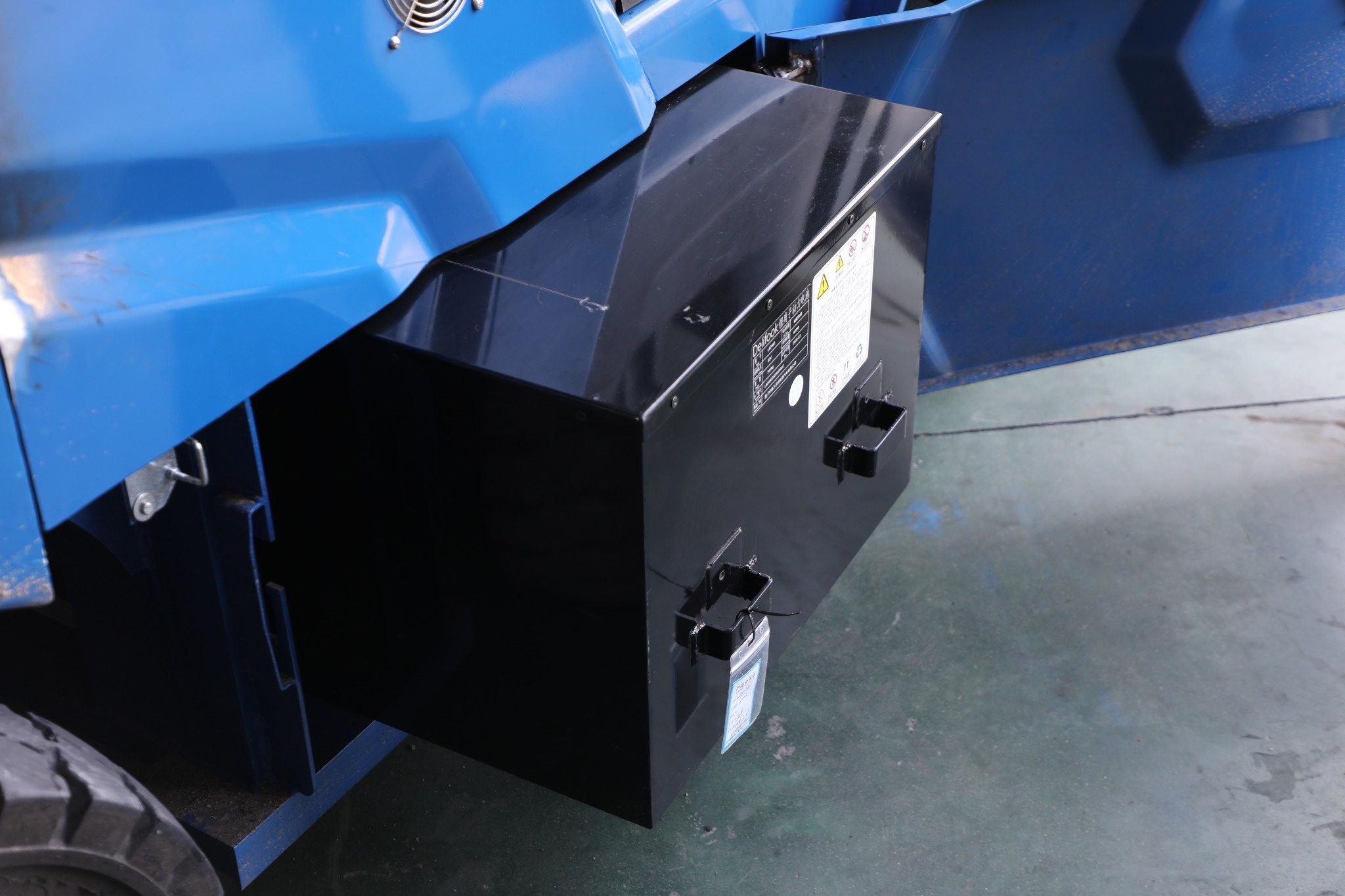
What Lithium Ion Battery Does Liftron Use in Forklifts?
Quick Answer: Liftron forklifts utilize advanced Lithium-iron-phosphate battery technology, commonly known as LFP or LiFePO4. This lithium chemistry is valued in material handling because it offers strong thermal stability, high safety standards, long service life, fast opportunity charging, and low-maintenance operation compared with traditional lead-acid batteries.
Battery choice is one of the most important factors in modern forklift performance. Warehouses want equipment that can run longer, charge faster, reduce downtime, and simplify daily maintenance. That is why lithium-ion forklifts have become increasingly popular in logistics, manufacturing, cold storage, retail distribution, and high-traffic warehouse operations.
A liftron forklift is designed around lithium electric power, helping businesses move away from older lead-acid battery routines. Instead of watering batteries, swapping heavy battery packs, waiting for long cool-down periods, or maintaining dedicated battery rooms, lithium forklifts are built for cleaner and more flexible operation.
What Is LFP or LiFePO4 Battery Technology?
LFP stands for Lithium Iron Phosphate, while LiFePO4 is the chemical formula for the same battery chemistry. In forklift applications, LFP is widely appreciated because it is thermally stable, durable, and well suited for demanding industrial use. It is not only about energy storage; it is about safe, predictable, and repeatable power throughout the working day.
Compared with many traditional battery systems, LFP batteries are especially useful in operations that need frequent charging opportunities. A forklift can be plugged in during breaks, lunches, shift changes, or short idle periods without requiring a full charge cycle each time.
Important Note: Exact battery voltage, capacity, and charger requirements may vary by forklift model. Always confirm specifications with the current product documentation or dealer before purchase.
Why Liftron Uses LFP Batteries
Liftron uses LFP battery technology because it supports the way modern warehouses operate. Instead of designing around long charging downtime, LFP power allows more flexible equipment scheduling and helps reduce daily maintenance tasks.
Fast Opportunity Charging
LFP batteries support opportunity charging, which means the forklift can be plugged in during short breaks. A 15-minute top-up during a shift may help extend runtime without removing or swapping the battery. This is especially valuable for multi-shift facilities where stopping the truck for several hours would disrupt productivity.
Zero Maintenance
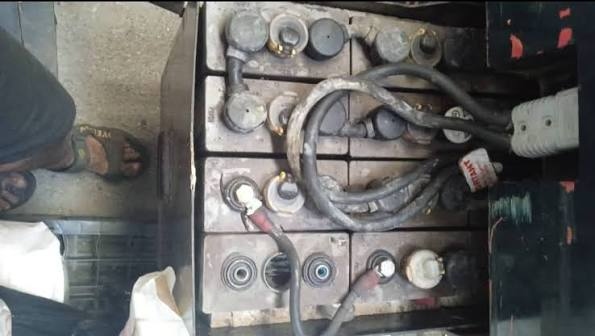
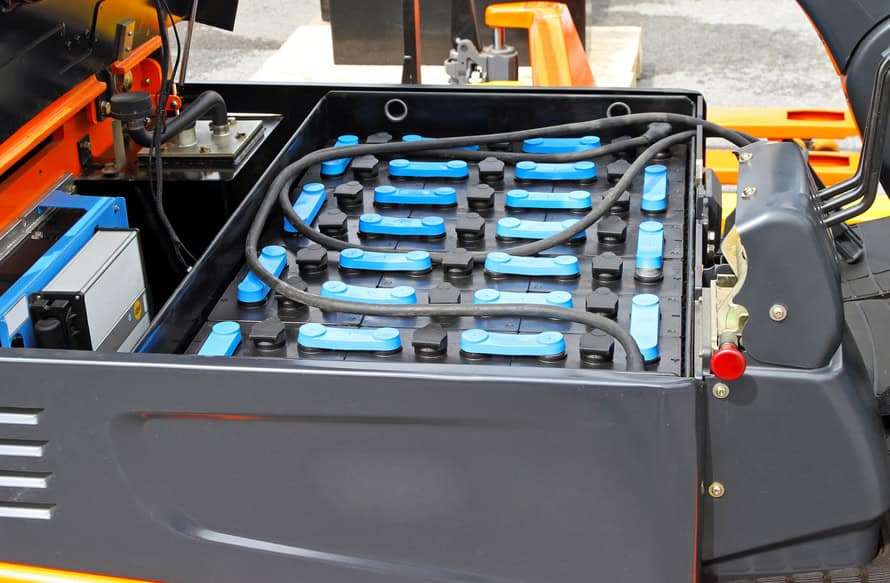
Traditional lead-acid batteries require watering, equalizing, cleaning, ventilation planning, and careful acid handling. LFP lithium batteries do not require watering and do not need equalization. This helps reduce labor, training burden, chemical exposure, and maintenance scheduling.
Longer Lifespan
LFP cells are known for long service life. In many warehouse applications, lithium battery systems are expected to last significantly longer than traditional lead-acid systems when properly charged and maintained. A longer battery life can reduce replacement frequency and improve total cost of ownership.
Consistent Runtime
Lithium batteries deliver more consistent power as the battery discharges. This means operators can experience steady performance later into the shift, rather than the gradual power drop that can occur with some older battery systems.
Pro Tip: Lithium forklifts make the most sense when the operation values uptime, multi-shift productivity, reduced maintenance, and simpler charging routines.
Battery Systems in Popular Liftron Series
Liftron integrates maintenance-free lithium battery packs across its specialized forklift lineups. The goal is to match battery performance with the work requirements of each model type.
| Liftron Series | Battery System | Best Application | Main Advantage |
|---|---|---|---|
| DE SERIES | Integrated lithium-ion power | Indoor and mixed-use electric counterbalance work | Efficient daily operation with fast charging support |
| DL SERIES | Integrated lithium-ion power | Warehousing, logistics, and manufacturing operations | Designed for a wide range of lifting capacities and multi-shift work |
| DD SERIES | Robust lithium-ion battery system | Heavy-duty logistics and high-capacity loading | Strong power support for demanding applications |
| CBD & CDD Series | Compact lithium battery packs | Walkie pallet jacks, rider pallet jacks, and stackers | High maneuverability in narrow warehouse aisles |
The DE SERIES and DL SERIES are designed for electric counterbalance applications, including indoor and mixed-use operations. They support rapid charging for facilities that need efficient fleet rotation and are built for a wide range of lifting needs.
The DD SERIES is positioned for heavier-duty material handling, where robust lithium power is important for high-capacity loading and demanding logistics tasks. Smaller pallet jacks and stackers use compact lithium cells to support maneuverability in tight warehouse aisles.
How LFP Compares With Lead-Acid Batteries
| Feature | LFP Lithium Battery | Lead-Acid Battery |
|---|---|---|
| Charging style | Supports opportunity charging during breaks | Often requires longer charging and cool-down time |
| Maintenance | No watering or equalizing required | Requires watering, cleaning, and equalizing |
| Battery swapping | Often reduced or eliminated in many operations | Common in multi-shift operations |
| Workplace setup | No acid fumes or watering station needed | May require battery room planning and ventilation |
| Performance | More consistent power delivery | Performance may fade as charge drops |
When a Switch to Lithium-Ion Forklifts Makes Sense
Switching to lithium-ion forklifts makes sense when a business wants to reduce downtime, simplify maintenance, and improve fleet availability. If your facility runs multiple shifts, has limited space for battery rooms, struggles with lead-acid maintenance, or needs faster charging flexibility, lithium electric equipment may offer a strong operational advantage.
- Review shift patterns: Lithium-ion forklifts are especially useful when equipment must work across long or multiple shifts.
- Measure charging downtime: If long charging windows reduce productivity, opportunity charging may help.
- Calculate maintenance labor: Removing watering and equalizing can save time and reduce routine battery tasks.
- Check available space: Lithium power can reduce the need for dedicated battery changing areas.
- Compare total cost: Look beyond purchase price and include labor, downtime, battery life, and productivity.
- Match the right model: Compare the DE, DL, DD, pallet jack, and stacker options based on capacity and application.
For a deeper look at timing the transition, read When a Switch to Lithium-Ion Forklifts Makes Sense.
Decision Reminder: Lithium forklifts are not just a battery upgrade. They can change how your facility schedules charging, manages maintenance, and keeps equipment available.
Conclusion
Liftron forklifts use advanced LFP lithium-ion battery technology, also known as LiFePO4. This chemistry is valued for thermal stability, safety, opportunity charging, low maintenance, and long service life in material handling environments.
A liftron forklift can be a strong fit for businesses that want cleaner electric power, reduced maintenance, and better uptime. From the DE SERIES and DL SERIES to the DD SERIES and compact pallet handling equipment, Liftron’s lithium-powered lineup is designed for modern warehouse productivity.
Add a review
Your email address will not be published. Required fields are marked *