
Why Should You Always Wear a Seat Belt on a Forklift?
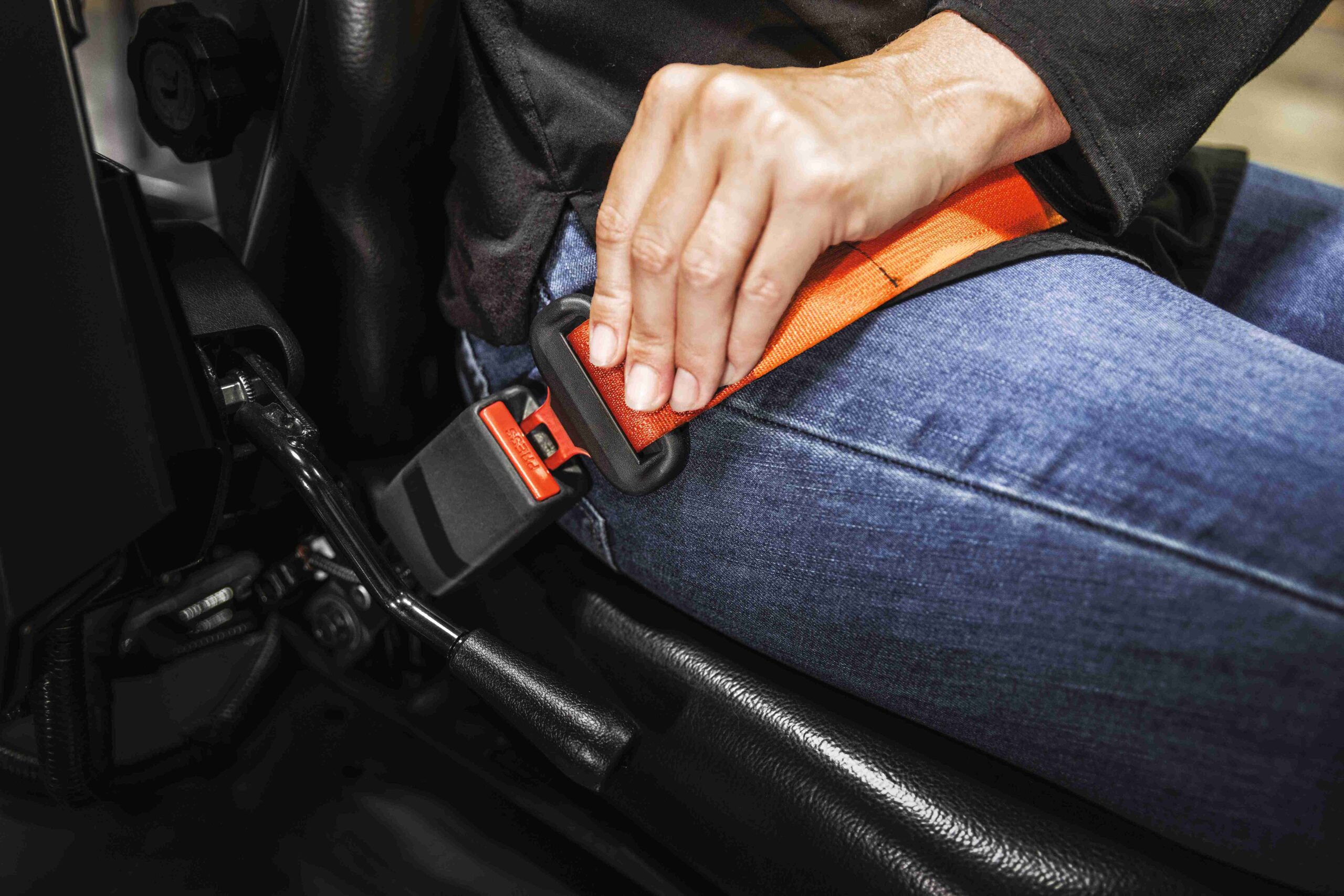
Forklift seat belts are not just a simple comfort feature. They are a critical part of the operator restraint system designed to protect drivers from serious injury or death. If you operate a sit-down forklift, wearing your seat belt should be the first habit you build before moving the truck. The reason is simple: during a forklift tip-over, your best chance of survival is to stay inside the operator compartment, also known as the safety cage or protective zone.
Forklifts are heavy industrial machines with a high center of gravity, especially when carrying loads. Unlike cars, many forklifts steer from the rear, turn sharply, and can become unstable when overloaded, driven too fast, operated on ramps incorrectly, or used on uneven surfaces. When a forklift begins to tip, the operator may instinctively try to jump out. Unfortunately, jumping is often the most dangerous reaction because the operator can be crushed between the forklift and the ground.
Wearing a seat belt while operating a forklift is your primary defense against fatal crushing injuries during a tip-over. Because forklifts are heavy and have a high center of gravity, staying inside the safety cage is essential. A seat belt helps hold you in the protected area so the overhead guard, frame, and operator compartment can do their job.
Why Forklift Seat Belts Matter
A forklift seat belt is designed to restrain the operator during sudden movement, collisions, and tip-over events. It does not prevent every accident, but it can help reduce the severity of injuries by keeping the operator in the correct position. This is especially important on sit-down counterbalance forklifts, where lateral tip-overs can happen quickly.
Many forklift accidents occur during ordinary work tasks: turning at the end of an aisle, backing away from a trailer, traveling down a ramp, carrying an unstable load, or driving over uneven pavement. Operators may feel that a seat belt is unnecessary for short trips, but a tip-over can happen in seconds. The distance traveled does not determine the danger. The stability of the truck, the load, the surface, and the operator’s actions do.
That is why the safest rule is simple: buckle up every time, before every move.
Preventing Crush Injuries During Tip-Overs
The most important reason to wear a forklift seat belt is to prevent crush injuries during tip-overs. Forklifts can weigh several thousand pounds, and larger models can weigh much more. If a forklift tips and the operator is thrown out or attempts to jump, the operator may land in the path of the falling truck. The overhead guard, mast, counterweight, or frame can then crush the operator.
A seat belt helps prevent this by keeping the operator in the seat. When the operator stays inside the compartment, the protective structure of the forklift has a better chance of shielding the driver. In a tip-over, operators are generally trained to stay with the truck, hold the steering wheel firmly, brace their feet, lean away from the direction of the fall, and keep the seat belt fastened.
Without a seat belt, the operator may be thrown sideways or partially ejected. Even a low-speed tip-over can cause severe injuries if the operator leaves the protective zone. The seat belt is one of the simplest tools available to reduce this risk.
Keeping You in the Safety Cage
The operator compartment is designed to provide protection during normal operation and certain emergency conditions. The overhead guard protects against some falling objects, while the frame and operator area help create a protective space during a tip-over. However, that protection only works if the operator remains inside the compartment.
The seat belt helps keep you in the cage. This is especially important because forklift tip-overs can feel sudden and violent. The truck may shift faster than the operator can react. Without a restraint system, the operator may slide, fall, or be thrown from the seat. With a properly fastened seat belt, the operator is more likely to stay in the designed safe position.
This is also why operators should not loosen the belt, sit on top of it, tuck it behind the seat, or buckle it behind their back to silence an alarm. These habits defeat the purpose of the restraint system and can make a serious accident worse.
Regulatory Compliance
Another major reason to wear your forklift seat belt is regulatory compliance. OSHA does not have one single forklift rule dedicated only to seat belts, but OSHA’s enforcement policy is clear: employers are obligated to require operators of powered industrial trucks equipped with operator restraint devices, including seat belts, to use those devices.
In practical terms, if your forklift has a seat belt, you are expected to wear it. Employers must train operators on safe forklift operation, including the manufacturer’s instructions, warnings, and precautions. If the manufacturer provides a seat belt or operator restraint system, it should be used according to the operator manual and workplace policy.
Compliance is not only about avoiding citations. It is about controlling a recognized hazard. Forklift tip-overs are known to cause serious injuries and fatalities. Seat belts are a recognized protective measure, and employers should make their use part of daily forklift safety procedures.
Avoiding Company Penalties
Failing to wear a forklift seat belt can create problems for both the operator and the company. For the employer, inconsistent seat belt enforcement may lead to safety violations, insurance concerns, workers’ compensation claims, and higher risk of serious incidents. For the operator, refusing to wear a seat belt can result in disciplinary action, retraining, removal from forklift duties, or termination depending on company policy.
Many companies include seat belt use in their written forklift safety rules. Supervisors may observe operators during shifts and correct unsafe behavior. Some facilities also use forklift telematics, safety checklists, or alarms to monitor seat belt compliance.
From a business perspective, seat belt compliance supports a safer workplace, reduces downtime, protects employees, and helps preserve equipment. A forklift accident can damage products, racks, trailers, building structures, and the forklift itself. Preventing serious injuries and accidents is always less costly than responding to them afterward.
What Does OSHA Say About Seat Belts on Forklifts?
OSHA’s position is that when a powered industrial truck is equipped with a seat belt or operator restraint system, the employer must require the operator to use it. OSHA has also explained that it may enforce the use of these devices under the General Duty Clause because forklift tip-over hazards are recognized and can cause serious harm.
OSHA also addresses seat belt-related training. Forklift operator training should include the operating instructions, warnings, and precautions listed in the operator’s manual for the type of truck being used. If the operator manual includes instructions for seat belt or restraint system use, that information should be part of training.
For older forklifts, employers should check manufacturer guidance and retrofit programs. If a forklift did not originally include a seat belt, the employer should not simply ignore the issue. A qualified dealer, manufacturer, or service provider can help determine whether an approved retrofit kit is available. Employers should not remove seat belts from forklifts, and they should not allow damaged or non-functioning restraint systems to remain in service.
Common Reasons Operators Skip Seat Belts
Some operators avoid seat belts because they believe they are only driving a short distance. Others may think the belt slows them down when they get on and off the forklift frequently. Some may find the belt uncomfortable, dirty, stuck, or hard to buckle. While these concerns are common, they do not outweigh the safety risk.
If the seat belt is uncomfortable or difficult to use, the solution is maintenance or adjustment, not ignoring it. A seat belt that does not retract, latch, or fit properly should be reported. A dirty or damaged belt should be cleaned or replaced. Operators should also adjust the seat position before driving so they can reach the controls comfortably while wearing the belt.
Short trips are not an exception. Many accidents happen during routine movements in familiar areas. A forklift can tip while turning, crossing a dock plate, braking suddenly, or contacting an obstacle. Wearing the seat belt every time removes the need to guess when it might be needed.
Seat Belt Safety Checklist
Before operating a forklift, check the seat belt as part of the pre-operation inspection. Pull the belt out and look for cuts, fraying, burns, chemical damage, or excessive wear. Confirm that the buckle latches securely and releases properly. Make sure the belt retracts if it is a retractable design. Check that mounting points are secure and not loose, bent, or missing hardware.
If the seat belt is damaged or does not work correctly, report it immediately and do not operate the forklift until the issue is resolved according to company policy. A damaged restraint system may fail when it is needed most.
Choosing Equipment with Operator Safety in Mind
When selecting forklifts for a warehouse, logistics center, manufacturing plant, or industrial yard, operator safety should be a key factor. A modern Liftron forklift can support material handling operations with practical features designed for productivity, comfort, and workplace safety.
Fleet managers should look for forklifts with reliable seat belts, comfortable operator seats, clear visibility, ergonomic controls, good stability, and easy maintenance access. Operators are more likely to follow safety procedures when equipment is well maintained and comfortable to use. Seat belts should be inspected regularly, replaced when damaged, and included in all operator training programs.
Conclusion
You should always wear a seat belt on a forklift because it helps protect you from fatal crushing injuries during a tip-over. The seat belt keeps you inside the safety cage, supports OSHA compliance, and helps companies avoid serious safety failures and penalties. Forklifts are powerful machines with unique stability risks, and a tip-over can happen faster than an operator can react.
The best safety habit is simple: sit down, adjust your position, buckle the seat belt, check your surroundings, and then operate the forklift. Every shift, every trip, and every load should begin with the same rule: wear the seat belt before the forklift moves.
Add a review
Your email address will not be published. Required fields are marked *