
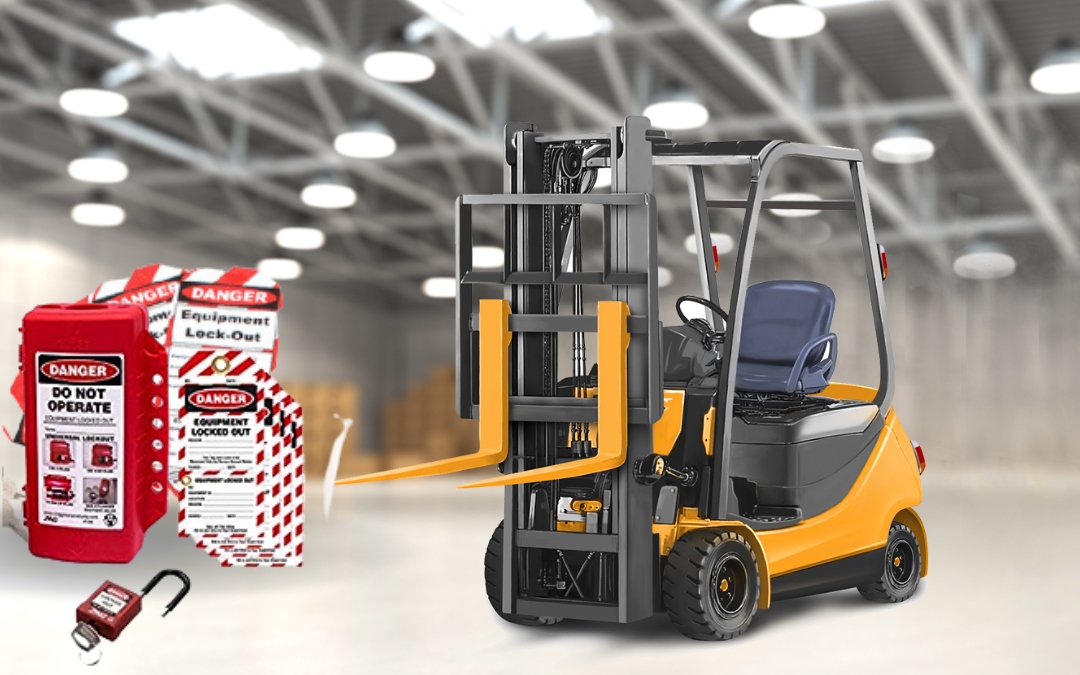
Which Safety Precaution Applies to Forklifts?
The most important forklift safety precautions are wearing a seatbelt, keeping the load low and stable while traveling, never exceeding rated capacity, inspecting the forklift before use, maintaining pedestrian awareness, and operating at safe speeds.
Forklifts are essential machines in warehouses, manufacturing facilities, construction sites, distribution centers, and industrial operations. However, because they carry heavy loads and operate around people, improper use can create serious risks such as tip-overs, falling loads, collisions, and caught-between accidents.
Following proper forklift safety precautions helps protect operators, pedestrians, products, and equipment while ensuring compliance with workplace safety standards.
Why Are Forklift Safety Precautions Important?
Forklifts are powerful industrial vehicles designed to lift and transport heavy materials. Their ability to carry thousands of pounds makes them extremely useful, but also creates potential hazards if operated incorrectly.
A safe forklift operation depends on several factors:
| Safety Factor | Purpose |
|---|---|
| Operator training | Ensures drivers understand controls, hazards, and safe procedures |
| Equipment inspection | Identifies mechanical problems before accidents occur |
| Load control | Prevents falling materials and instability |
| Speed management | Reduces collisions and tip-over risks |
| Pedestrian awareness | Prevents struck-by accidents |
Key Forklift Safety Precautions
1. Drive With the Load Low
One of the most important forklift safety rules is keeping the load as low as practical while traveling.
A raised load increases the forklift’s center of gravity and reduces stability. If the operator turns suddenly or travels over uneven ground, the forklift becomes more likely to tip.
| Safe Practice | Unsafe Practice |
|---|---|
| Carry loads close to the ground | Travel with forks raised high |
| Tilt the mast slightly backward when appropriate | Carry unstable loads forward |
| Lower the forks before traveling | Lift loads while moving quickly |
2. Always Wear Your Seatbelt
Seatbelts are one of the simplest and most effective forklift safety devices.
During a tip-over, operators should remain inside the protective operator compartment rather than attempting to jump out. The seatbelt helps keep the operator positioned safely inside the truck.
If a forklift begins to tip, stay seated, hold the steering wheel, brace your feet, and lean away from the direction of the fall. Do not jump from the forklift.
3. Never Exceed the Rated Weight Capacity
Every forklift has a maximum lifting capacity shown on its data plate. Operators must understand that capacity changes depending on:
- Load weight
- Load center distance
- Lift height
- Mast type
- Attachments
| Factor | Effect on Capacity |
|---|---|
| Heavy load | Reduces available lifting margin |
| Long load center | Creates additional forward tipping force |
| High lift height | Reduces stability |
| Unapproved attachments | May change rated capacity |
Never guess the weight of a load. If the weight is unknown, determine the load information before lifting.
4. Protect Pedestrians and Blind Spots
Forklifts operate in areas where workers and vehicles often share the same space. Pedestrian safety is a critical part of forklift operation.
Operators should:
- Slow down near intersections
- Sound the horn at blind corners
- Maintain clear visibility
- Yield to pedestrians
- Use mirrors and warning systems when available
| Location | Safety Action |
|---|---|
| Blind corners | Sound horn before entering |
| Doorways | Slow down and check visibility |
| Busy aisles | Maintain pedestrian awareness |
| Loading areas | Keep safe distance from workers |
5. Navigate Ramps Properly
Forklift operation on ramps requires special attention because slopes affect stability and braking.
General ramp safety practices include:
- Keep the load upgrade when traveling with a load
- Travel straight up and down ramps
- Do not turn on inclines
- Keep forks low while traveling
- Maintain controlled speed
6. Park the Forklift Safely
Proper parking prevents unexpected movement and protects other workers.
| Parking Procedure | Reason |
|---|---|
| Lower forks completely | Prevents trip hazards and accidental contact |
| Set parking brake | Keeps forklift stationary |
| Place controls in neutral | Prevents unintended movement |
| Turn off power when required | Reduces unauthorized operation |
7. Perform Pre-Operation Inspections
Every forklift should be inspected before each shift. A pre-operation inspection identifies problems before they become safety hazards.
| Inspection Area | Check |
|---|---|
| Forks | Damage, cracks, bends, and wear |
| Tires | Condition and proper inflation |
| Brakes | Stopping ability |
| Steering | Proper response |
| Horn and warning devices | Working condition |
| Hydraulic system | Leaks and performance |
What Are the OSHA Guidelines for Forklift Safety?
OSHA requires employers to establish safe forklift operating procedures and ensure operators receive proper training before operating powered industrial trucks.
| OSHA Forklift Requirement | Description |
|---|---|
| Operator training | Workers must complete training and evaluation before operation |
| Daily inspections | Forklifts must be checked before use |
| Safe operation | Operators must maintain control and follow workplace rules |
| Capacity compliance | Loads must remain within rated limits |
| Workplace evaluation | Employers must identify and control hazards |
How to Operate a Forklift Safely
-
Complete training.
Learn forklift controls, hazards, and operating procedures. -
Inspect the forklift.
Check all safety components before starting work. -
Understand the load.
Verify weight, size, and stability. -
Drive carefully.
Maintain safe speed and keep loads low. -
Communicate with pedestrians.
Use horns, signals, and awareness. -
Park correctly.
Secure the forklift after operation.
Modern Forklift Safety Features
Modern forklifts include technology designed to improve safety and productivity.
| Feature | Safety Benefit |
|---|---|
| Speed control systems | Reduce unsafe travel speeds |
| Warning lights | Improve pedestrian awareness |
| Cameras and sensors | Reduce blind spot risks |
| Electric drive systems | Provide smooth and controlled operation |
Modern solutions from manufacturers such as forklift providers help businesses improve workplace efficiency while maintaining strong safety practices.
Common Forklift Safety Mistakes
- Driving too fast
- Carrying loads too high
- Ignoring the capacity plate
- Failing to inspect equipment
- Not wearing the seatbelt
- Ignoring pedestrians
- Turning sharply with heavy loads
Conclusion
The most important forklift safety precautions include wearing a seatbelt, keeping loads low, following capacity limits, inspecting equipment, and maintaining awareness of pedestrians.
Safe forklift operation requires trained operators, properly maintained equipment, and consistent attention to workplace hazards.
Whether operating a traditional truck or a modern forklift solution, following these safety precautions helps prevent accidents and creates a safer working environment.
Add a review
Your email address will not be published. Required fields are marked *